Monstera Too Big? How to Top, Prune, and Propagate It
A monstera that's too big can be cut back safely, ideally in spring, by cutting a long stem 1 to 2 inches below a node and rooting the top in water or soil. If you'd rather keep the height, train it up a sturdy pole so it grows up instead of out.

At a glance
By Nick Alan, founder of Palma, who grows and ships houseplants from Los Angeles.
Quick answer
A monstera too big for its space can be cut back safely, and spring is the best time because the plant is growing fast. Cut a long stem 1 to 2 inches below a node, ideally one with an aerial root. Root the top piece in water or pot it up, and the base will push new growth from a lower node. If you'd rather keep the height, train the plant up a sturdy pole so it grows up instead of out. Monstera deliciosa is toxic to dogs and cats, so wear gloves and clear up every scrap.
| Option | Best when | What you get |
|---|---|---|
| Top it | One or two stems have grown too tall or long | A shorter plant plus a cutting to root |
| Prune single leaves | A few old leaves stick out or block a walkway | A tidier shape, no new plant |
| Air layer | You want the top to root before you cut | A top that already has roots when you cut it |
| Train on a pole | You have height to spare but not floor space | A taller, narrower plant |
Is your monstera too big, or just floppy?
Monstera deliciosa is a climbing vine in the wild. Indoors, NC State Extension says it can reach 6 to 8 feet, and it needs a sturdy support. Without one, the stems lean out and sprawl, and the plant takes over far more floor than it has to.
An overgrown monstera is usually a healthy one, and plenty of owners run into this. A Reddit post about a monstera that had taken over the owner's apartment drew more than 29,000 upvotes (as of October 2026). The owner had grown it for about six years and couldn't bear to get rid of it. One reply with more than 4,800 upvotes said simply, "Just cut it back!"
So start by taking a close look at the stems. If they're long and leaning but healthy, a pole may fix most of the problem. If the plant is touching the ceiling or blocking a room, it's time to cut.
Before you cut
Timing: the RHS recommends pruning back in spring if a plant gets too large. NC State also suggests spring for pruning and repotting. The plant recovers faster when it's in active growth and has warmth and light.
Tools: use clean, sharp pruners or a knife for a smooth cut. Wipe the blades with rubbing alcohol before you start, so you don't carry problems from one plant to the next.
Gloves: NC State notes that the sap can cause skin irritation. Wear gloves, and keep the sap away from your eyes and face.
Pets: Monstera deliciosa is toxic to dogs and cats. The ASPCA notes it contains insoluble calcium oxalates, which can cause mouth irritation, drooling, vomiting, and trouble swallowing. Pick up every leaf and stem piece right away, before a curious pet finds it.
Find the nodes: a node is the slightly swollen ring on the stem where a leaf joins it. Aerial roots, the brown cord-like roots, grow from nodes too. New growth comes from nodes, as University of Minnesota Extension explains, so every cut and every cutting depends on them.
How to top a monstera
Topping means cutting off the tip of a stem to shorten the plant, and the cut-off top becomes a new plant.
- Pick the stem: choose the tallest or longest one, or the one leaning the furthest.
- Choose the cut point: find a node with an aerial root at the height you want. Wisconsin Horticulture suggests cutting the stem tip just below an aerial root.
- Make a clean cut: cut 1 to 2 inches below that node, through the bare stem between nodes. The top piece should keep the node and at least one leaf. That's the spacing University of Minnesota Extension gives for monstera cuttings.
- Leave the base alone: new growth comes from the nodes left on the stem. The Missouri Botanical Garden notes that after pruning, new growth comes from the remaining stems or from the plant's base. There's no fixed timeline, so keep it in bright, indirect light and give it time.
- Root the top: root the top piece in a glass of water in a bright spot, or pot it straight into a well-draining mix.
One Reddit commenter summed up the payoff: chop it halfway and propagate the top, and in a few years you have two big monsteras.
How to prune single leaves and stems
Sometimes the plant is fine overall and just one leaf is in the way. Cut the leaf stalk (petiole) close to the main stem. Remove yellow, damaged, or very old lower leaves the same way.
Don't cut off aerial roots just to tidy up. The RHS notes they help the plant support itself as it climbs, and they'll root into a moss pole if the moss is kept moist. If one is in a walkway, guide it into the pot or tuck it against the pole.
How to propagate the cuttings
In water: the RHS suggests standing a stem cutting in a glass of water in a bright spot. Pot it once it has a good set of roots. Keep the node under water and the leaf above it. University of Minnesota Extension says to change the water when it turns cloudy, and that roots usually form in about 2 to 4 weeks.

Photo: Sönke Kraft, CC BY-SA 3.0, via Wikimedia Commons
In soil: Wisconsin Horticulture says you can pot a tip cutting right away. Use a chunky, well-draining mix and keep it lightly moist while roots form. Long vine sections can also be cut into pieces about a foot long and pressed halfway into rooting mix.
Pot size: pick a pot only a little bigger than the root mass. A cutting in a huge pot sits in wet soil for too long.
Our step-by-step propagation guide covers both methods in more detail, including when to move a water cutting to soil.
Air layering: rooting the top before you cut
Air layering lets the top grow roots while it's still attached. Wisconsin Horticulture says monstera can be propagated by cuttings or layering at any time of year. Iowa State Extension lists monstera among the houseplants that can be air layered. Its method:
- Pick a spot on the stem below the leaves you want to keep. A node with an aerial root is a good choice. Remove any leaves right at that spot.
- With a clean, sharp knife, make an upward-slanting cut about a third of the way into the stem. Don't cut through it. Hold the cut open with a toothpick. Rooting hormone is optional.
- Wrap one or two handfuls of moist sphagnum moss around the spot.
- Cover the moss with clear plastic so none pokes out, and tie it above and below with twist ties.
- Keep the moss moist. If it feels dry or turns lighter, open the top tie and add a little water.
- Roots usually appear in several weeks, though some plants take months. When they're several inches long, cut the stem just below the bottom tie and pot the new plant.
Keep it compact with a pole

A pole turns a sprawling plant into a vertical one. The RHS notes that a moss pole support encourages larger leaves with more holes. Tie stems loosely to the pole with soft ties, and point aerial roots into it.
A mature monstera gets heavy, so use a tall, strong pole sunk deep into the pot. Wisconsin Horticulture recommends a sturdy moss-covered support sunk into the pot for the aerial roots to grip. A Reddit commenter warned about training one across the ceiling for the same reason. The weight can do damage if it isn't secured well. Our moss pole guide shows how to set one up and extend it.
What to expect after pruning
New stems often start with smaller leaves than the ones you cut off. The RHS notes they may have fewer holes until the plant settles in. A commenter on TikTok asked how to get the holes back after their monstera stopped making them. Bright, indirect light and a support to climb are the usual answers.
Water a little less while the plant has fewer leaves, since it's using less. Let the top quarter to third of the soil dry before watering again (NC State), and our monstera watering schedule has the seasonal detail.
Want the monstera look in less space?
If you love the look but not the size, some related plants stay much smaller indoors. The Monstera Adansonii has smaller leaves with holes and trails or climbs. The Mini Monstera (Rhaphidophora tetrasperma) has split leaves on a slimmer vine, and it's a different genus. If you're starting fresh, the Monstera Deliciosa ships in a 4" or 6" nursery pot. The 4" size also comes with an Eco Black planter option. The Adansonii comes in 4" and 6" nursery pots, with a 4" Eco Black planter option too. The Mini Monstera comes in nursery pots only. Browse the full monsteras and aroids collection for more.
FAQ
Where do I cut an overgrown monstera? Cut 1 to 2 inches below a node, ideally one with an aerial root (University of Minnesota Extension). The top becomes a cutting, and the base regrows from the nodes left on the stem.
Will my monstera grow back after cutting? Yes, as long as the remaining stem has healthy nodes. New growth comes from nodes (University of Minnesota Extension), and pruned plants regrow from the remaining stems or the base (Missouri Botanical Garden). Timing varies. For rooted cuttings, UMN says new leaves can take up to 2 to 3 months.
When is the best time to prune a monstera? Spring is best, because that's when growth is strongest. Both the RHS and NC State suggest spring for pruning. Wisconsin Horticulture says cuttings and layering can be done any time of year.
Can I propagate a monstera leaf without a node? No. University of Minnesota Extension says cuttings without a node, such as a single leaf, won't produce new growth and will eventually rot. Every cutting needs at least one node.
Is monstera toxic to cats and dogs? Yes, Monstera deliciosa is toxic to dogs and cats because of insoluble calcium oxalates. Keep cuttings, trimmings, and fallen leaves well out of reach.
Nick Alan is the founder of Palma and has grown plants for 25+ years. He writes the shop's care guides and built the watering, soil and light tools.
View author profilePlants to grow next
Monsteras and aroids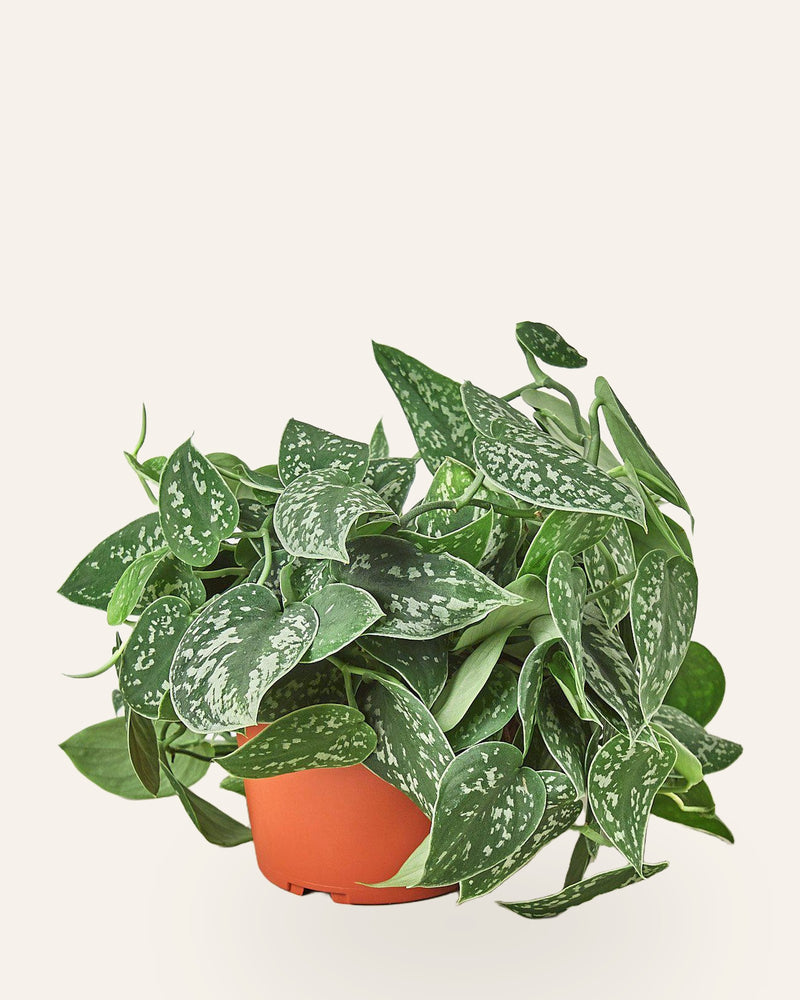
Satin Pothos
Scindapsus pictusPot fit: 4" or 6" nursery potWater after the top 1 to 2 inches of soil have dried
from $28.99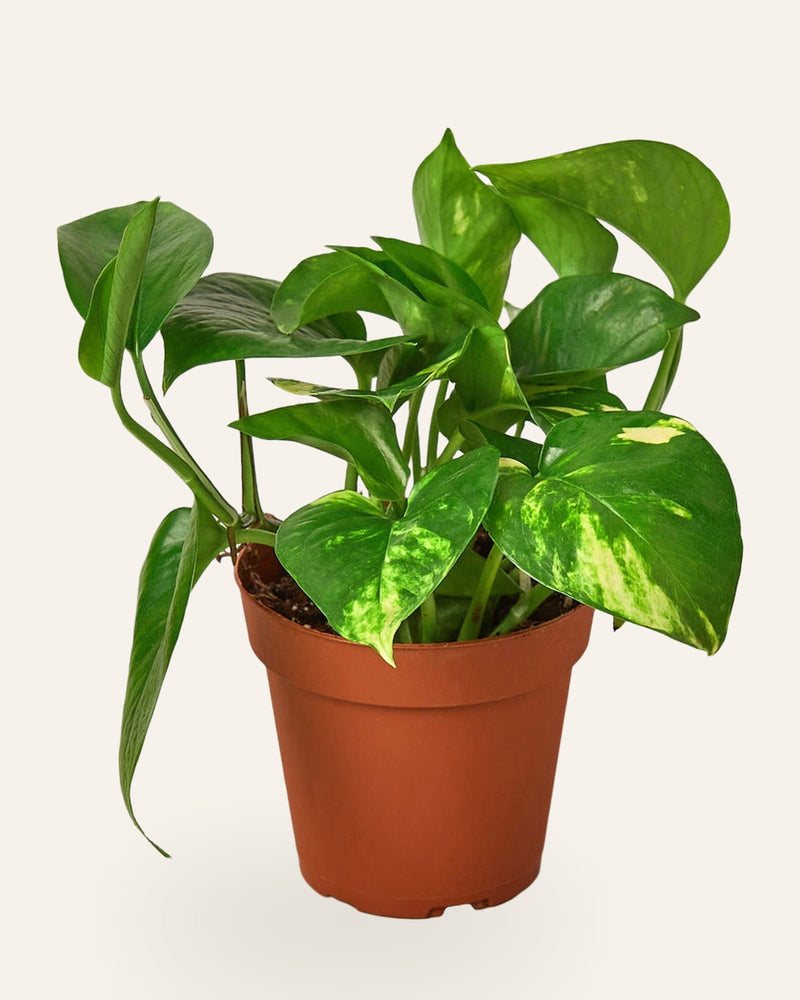
Golden Pothos
Epipremnum aureumPot fit: 4" or 6" nursery potWater when the top 2 inches of soil are dry, then drain fully
from $25.99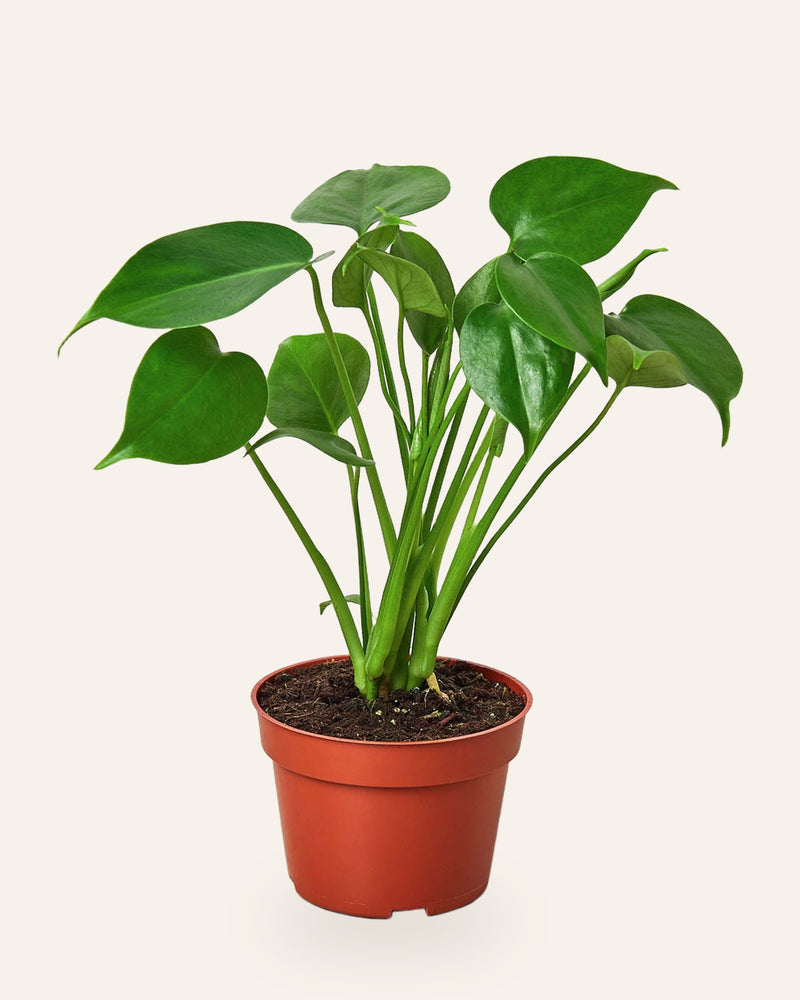
Monstera Deliciosa
Monstera deliciosaPot fit: 4" or 6" nursery potWater when the top 1 to 2 inches of soil have dried
from $19.99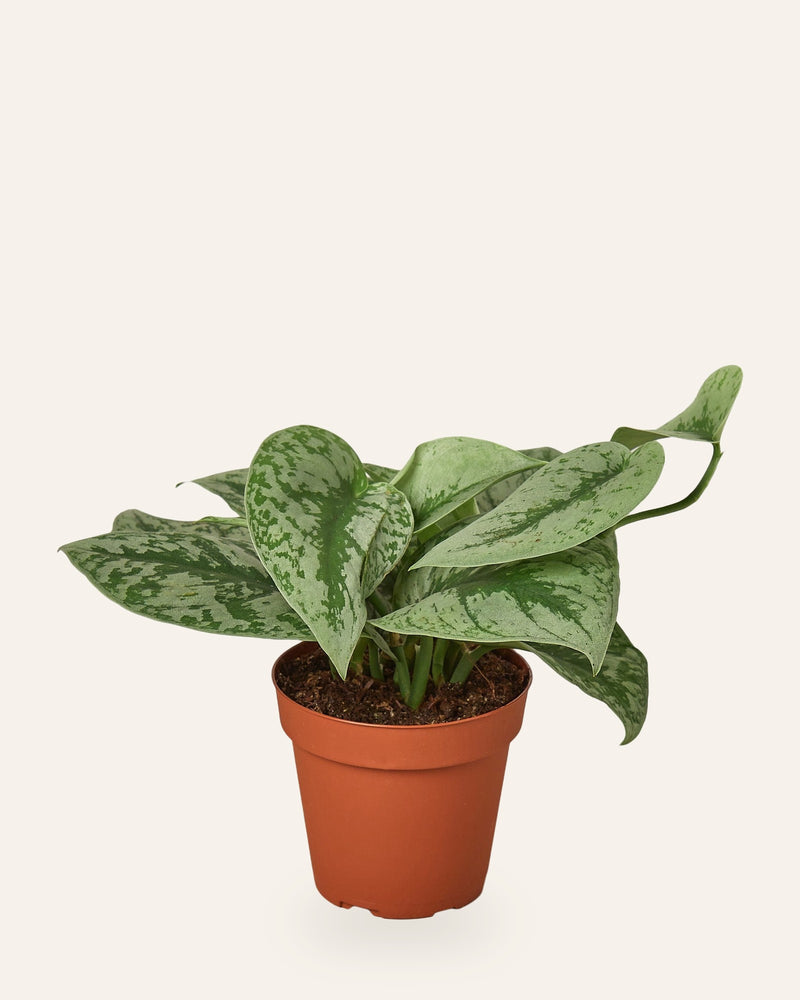
Scindapsus Pictus Exotica
Scindapsus pictusPot fit: 4" or 6" nursery potWater when the top 1 to 2 inches of soil feel dry
from $28.99Keep going with the care library
Care pages by plant, plus the watering and light calculators and the plant doctor.
More from the Journal
All Journal articles
How Often to Water Houseplants (and Why "Don't Overwater" Doesn't Help)
There is no single schedule for how often to water houseplants: water when the soil tells you it's ready, then water thoro...
How to Grow Hoya: Propagation, Blooms and Problems
Start a hoya cutting, root it in water or mix, coax out blooms and fix yellow, dropping or wrinkled leaves. A practical gu...

Hoya Care: Light, Water, Soil and Blooms
How to care for a hoya: the right light, when to water, a chunky mix, and how to get it to bloom. Plus the varieties we ca...