How to Grow Hoya: Propagation, Blooms and Problems
Start a hoya cutting, root it in water or mix, coax out blooms and fix yellow, dropping or wrinkled leaves. A practical guide for the weeks after care basics.

At a glance
Hoyas have a reputation as slow, fussy plants that never flower. A hoya wants to take its time, and much of the trouble starts when we try to hurry it.
This guide covers what comes after the basics: starting a hoya well, making more of them, coaxing out the waxy flower clusters, and fixing leaves that look wrong. For general light, water and soil, read our hoya care guide first. We won't repeat it here.
Starting a hoya: cutting or rooted plant
A rooted plant is the easier start. It already has roots, so your job is to keep it steady. The Hoya carnosa is the classic, with thick oval leaves on long vines. The Hoya Krimson Queen adds cream and pink edges.
A cutting takes more patience. It has no roots to drink with yet, so expect little to happen for the first few weeks. That is normal.
Browse everything in the hoya collection.
The first month at home
A new hoya has just been boxed, moved and unboxed. Give it a quiet month.
- Put it in bright, indirect light and leave it there. Hunting for the perfect spot stresses it more than a slightly imperfect one.
- Keep it away from cold drafts and heating vents.
- Check the soil before every drink. A plant that arrived a little dry will forgive you. One sitting wet will not.
- Don't repot right away, and skip fertilizer for the first few weeks.
A few leaves may yellow or drop as the plant adjusts. New growth is the sign it has settled.
How to propagate a hoya
Hoyas root readily from stem cuttings, and a long vine that has gotten out of hand turns into several new plants.
What to cut
Look for a healthy stem with at least two nodes. A node is the slightly thickened bump where a leaf pair meets the stem and where roots form. Small aerial roots at a node give the cutting a head start.
1. Use clean scissors or pruners. Wipe the blades with rubbing alcohol first. 2. Cut just below a node, leaving a piece about 4 to 6 inches long with two nodes and a couple of leaves. 3. Pull the leaves off the lowest node so it is bare and can go in water or mix. Keep the leaves on the upper node. 4. If you plan to use mix, let the cut end dry for an hour or so. Water cuttings can go straight in.
Hoya sap is milky and sticky, so wipe your hands and tools when you are done. A cutting must have a node. Without one it cannot grow into a new plant.
Water or mix
Both methods work.
In water. Put the bare node in a clean glass of room-temperature water, with the leaves held above the surface. Change the water every week or so. You can watch roots form, which makes waiting easier. Water roots differ from soil roots, so move the cutting to mix once the roots are an inch or two long and expect a short adjustment.
In moist, chunky mix. Fill a small pot with a loose, airy blend, such as orchid bark mixed with perlite and a little potting soil. Press the bare node in, firm it, and water so the mix is damp, not soggy. A wet mix can rot the stem before it roots. Roots form where they will live, so there is no transplant step, but you cannot see them. A gentle tug after a month or two tells you: resistance means roots. Rooting hormone is optional.
Timing and how long roots take
Spring and summer are easiest, when the plant is growing and rooms are warm and bright. Cooler months work, but roots come more slowly. Keep cuttings warm and bright, out of harsh direct sun.
Plan on a range, not a date. Cuttings often show roots in about two to eight weeks, and some take longer. Warmth and light speed things up. A cool, dim room slows them down. If nothing has rooted in two months, check the stem. Firm and green means it is still working. Soft and brown means it is not. New leaves, which can take several more weeks, show the cutting has settled.

How to propagate a rope hoya
Rope hoya (Hoya carnosa 'Compacta') has thick, curled leaves stacked along the stem. It propagates the same way, with a few handling notes.
- Take a cutting with at least two nodes. The crowded leaves hide them, so look for where each leaf pair meets the stem.
- Handle the stems gently, since they can snap.
- In water, prop the stem upright so the dense leaves do not tip it over.
- Rope hoya grows slowly, so roots may take longer. Don't give up early.
The Hoya Rope, sold as Hoya carnosa 'Compacta', is the plant to start from.
Can you grow Hoya kerrii from a single leaf?
Single heart-shaped Hoya kerrii leaves are often sold in small pots. A leaf with no stem can grow roots and stay green for a long time, but it will not grow into a new plant. The growing point sits at the node on the stem. Without a node, you get a leaf in soil and nothing more.
For a living vine, start with a plant that has a stem and a node. Check the product photos and description before you buy a Heart Hoya (Hoya kerrii) or a Hoya Sweetheart, since some heart hoyas are sold as a single leaf. A vining plant like the Hoya carnosa is a surer start.

Helping a hoya flower
Hoya flowers open in rounded clusters of small, waxy, star-shaped blooms. Four things help.
Maturity. A young plant puts its energy into leaves and vines. Many hoyas bloom only after a few years of growth. If yours is young, keep it healthy and wait.
Light. This is the most common missing piece. A hoya in dim light grows but rarely flowers. If yours looks healthy and never blooms, try a brighter spot, moving it a little at a time.
Leave the peduncle alone. After a cluster fades, a short, woody stalk is left behind. That is the peduncle, and later flowers grow from the same spot. Don't prune it off, even if it looks like a dead stub.
A snug pot. A hoya that is a little root-bound is fine. Many growers find a crowded root ball flowers more readily. Repot only when the plant is clearly too big, and then go up one size.
Don't move a hoya that is in bud. Buds can drop after a sudden change of light, a draft or a big watering swing.
Our hoya care guide covers blooming in more detail.
Common hoya problems
Most problems come from water, light or temperature. Match what you see to the table, and change one thing at a time.
| What you see | Likely cause | What to try |
|---|---|---|
| Yellow leaves | Soil kept wet, poor drainage, or low light. Old lower leaves can also yellow as part of normal growth. | Let the soil dry well between drinks. Check the pot drains. Brighter light helps. |
| Dropping leaves | Overwatering, cold drafts, sudden moves, or very dry soil. | Check the soil and the spot. Keep the plant away from vents and cold glass. Let it settle. |
| Wrinkled, soft leaves | Thirst, or roots that cannot take up water because of rot. | If the soil is dry, water thoroughly. If the soil is wet and leaves are still wrinkled, check the roots for rot. |
| No growth | Low light, cool temperatures, or a winter rest. | Brighter light and warmth. Don't push fertilizer in the dark months. |
| Sticky residue | Hoya sap and nectar can be sticky, as can sap-feeding pests such as mealybugs or scale. | Wipe a leaf. If you see white tufts or bumps, treat for pests. If it is only on flower stalks, it is likely nectar. |
| Leggy, stretched vines | Not enough light. | Move closer to bright light. Trim long gaps and root the cuttings. |
| Pink fading on variegated types | Low light, or a plant reverting toward green. | More bright, indirect light. Cut back all-green stems so they do not take over. |
Leaves that yellow, drop or curl. If you change only one thing, check the water. Hoya leaves store water, so a plant that sits wet is in more trouble than one that goes dry for a week. Curling can mean thirst, cold or heat. Look at the soil, then the spot.
Pink fading on Krimson Queen and Tricolor. Variegated hoyas such as the Hoya Krimson Queen and the Hoya Tricolor show their best color in good light. In a dim room the pink washes out and the plant makes more green. Brighter, indirect light brings color back on new growth. Older leaves keep what they have.
Leggy vines. A long, bare vine is reaching for light. Trimming it back also gives you cuttings.

Hoyas and pets
ASPCA lists Hoya carnosa (honey plant) as non-toxic to dogs and cats, and Krimson Queen, Tricolor and Rope ('Compacta') are cultivars of that same species. You can see the listing on the ASPCA page for the honey plant.
We couldn't confirm pet safety for the other hoyas. Keep them out of reach of pets and ask your vet.
"Non-toxic" does not mean a pet will be fine after chewing a plant. If your pet eats something and you are worried, call your vet.
Hoya FAQ
How long does it take to root hoya cuttings?
Usually somewhere between two and eight weeks, and sometimes longer. Warmth and bright light speed it up, cool or dim rooms slow it down. Look for white roots an inch or two long before you pot a water cutting.
Why do hoya leaves drop?
The usual causes are soil that stays wet, a cold draft or a sudden move, and very dry soil. Check the soil first, then the location. Hoyas often drop a few leaves after a change in home or light and then settle.
Can you grow a hoya from a leaf?
A single leaf with no stem attached may grow roots, but it will not grow into a new plant, because the growing point sits at the node on the stem. To get a new plant, take a stem cutting with at least one node, ideally two.
Where to go from here
Pick a hoya, give it a bright spot and a quiet first month, and then wait. The Hoya Australis Lisa and the Hoya Publicalyx are two more forms in the hoya collection. When a vine gets long, take cuttings and start again. Our hoya care guide covers the day-to-day routine.
Nick Alan is the founder of Palma and has grown plants for 25+ years. He writes the shop's care guides and built the watering, soil and light tools.
View author profilePlants to grow next
Hoyas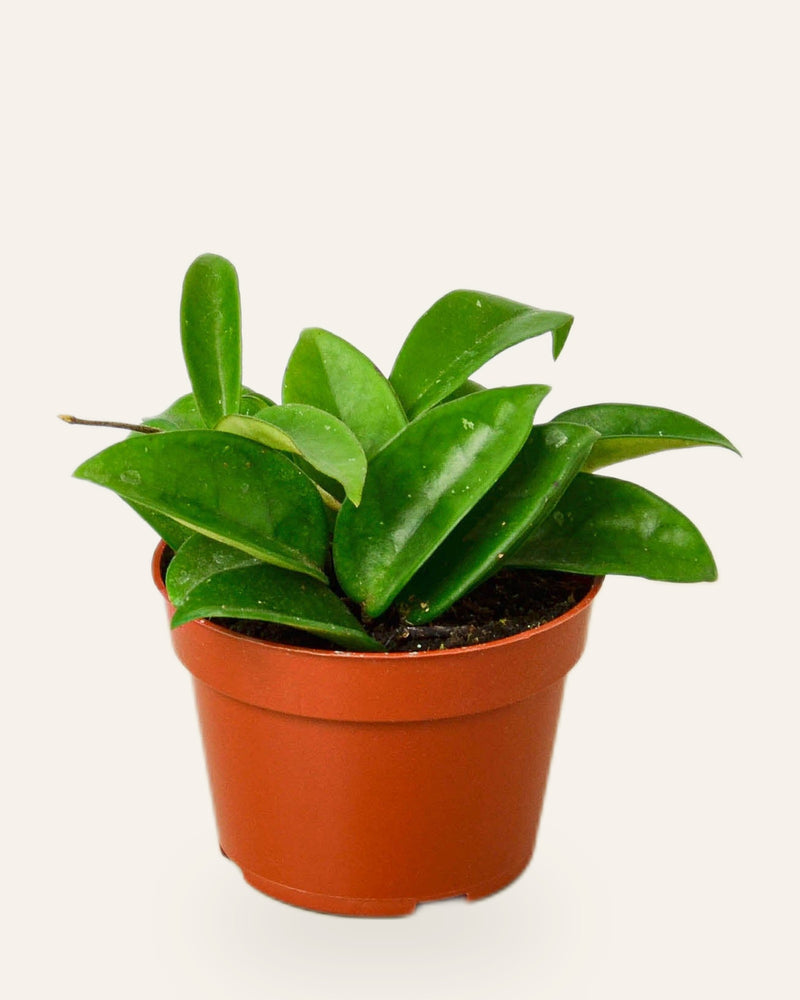
Wax Plant
Hoya carnosaPot fit: 4-inch nursery potLet the soil dry out between waterings, then water well
$23.99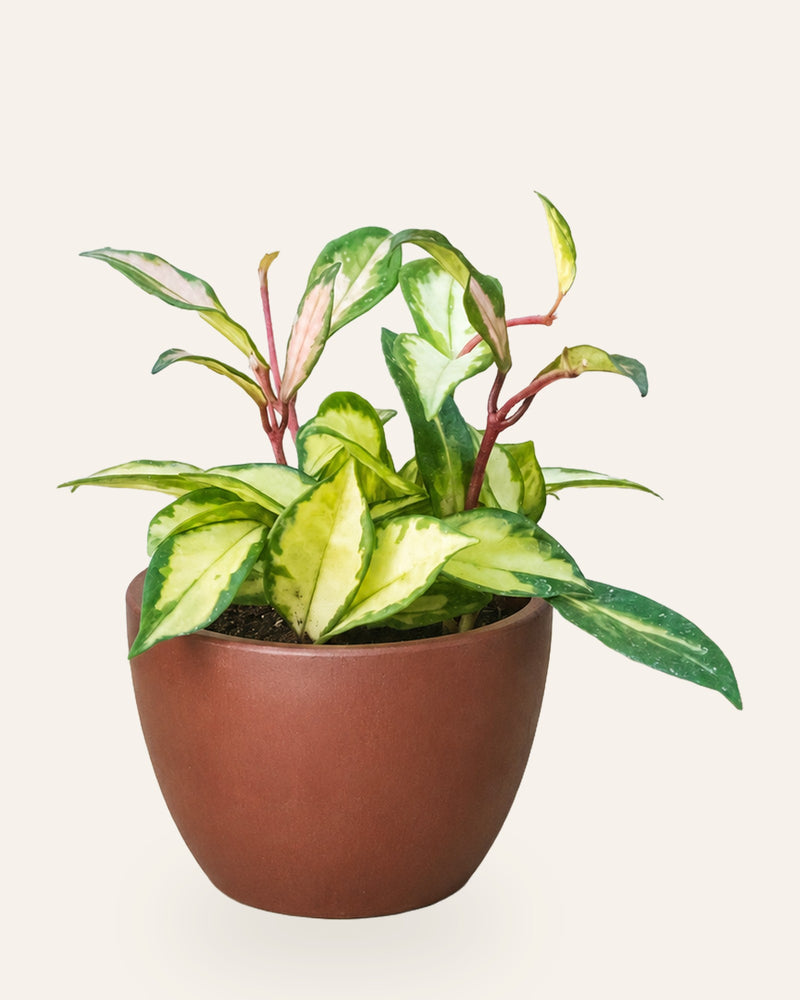
Hoya Krimson Queen
Hoya carnosa 'Krimson Queen' $66.99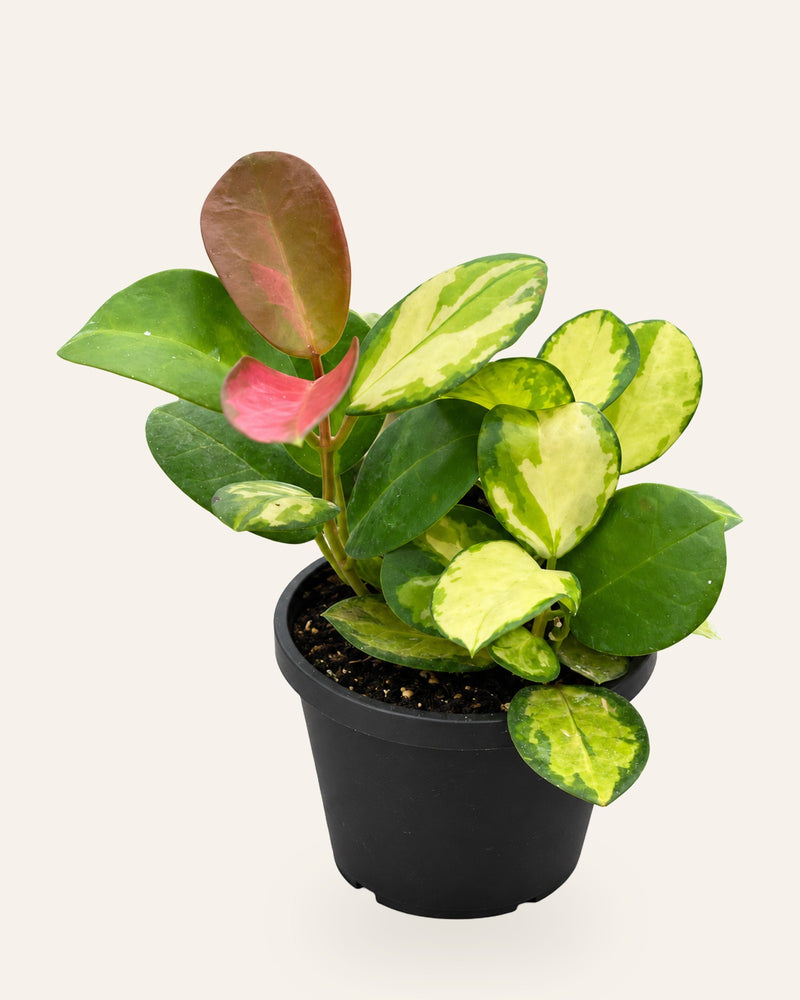
Hoya 'Lisa'
Hoya australis 'Lisa'Pot fit: 4" nursery potWater when the soil is mostly dry
$44.99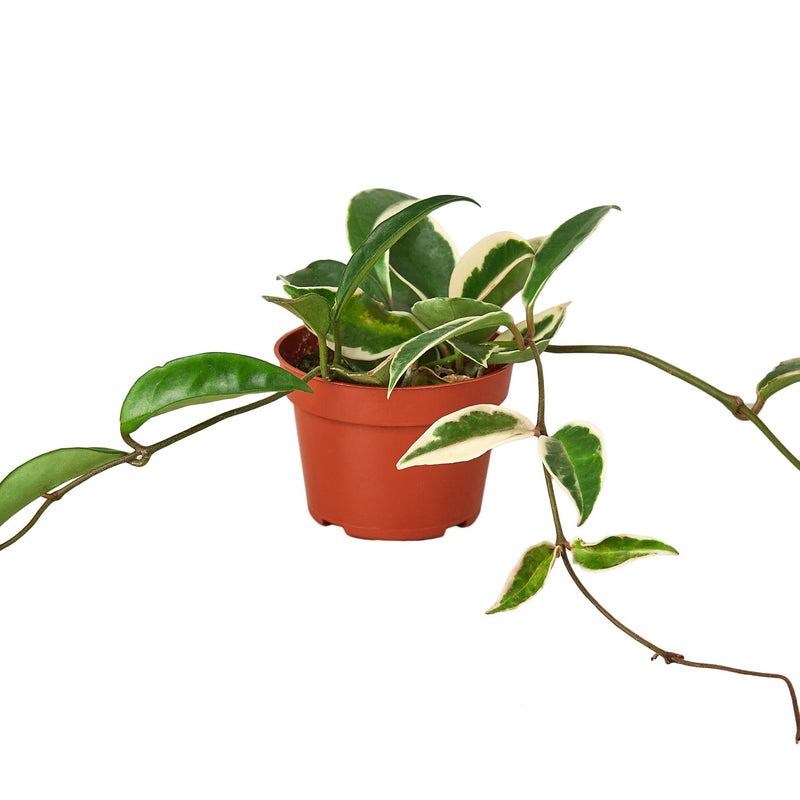
Hoya Tricolor
Hoya carnosa 'Tricolor'Pot fit: 4" or 6" nursery potWater when the top 2 inches are dry
from $28.99Keep going with the care library
Care pages by plant, plus the watering and light calculators and the plant doctor.
More from the Journal
All Journal articles
Hoya Care: Light, Water, Soil and Blooms
How to care for a hoya: the right light, when to water, a chunky mix, and how to get it to bloom. Plus the varieties we ca...
Best Houseplants for the Kitchen (That Survive Steam, Heat and Dim Corners)
Which houseplants cope with kitchen steam, heat and dim corners? Nine easy picks, where to put them, a simple routine and ...
Aeonium Care: Light, Water and the Summer Slowdown
Aeonium care in plain steps: bright light, how often to water, what a closed rosette means, when to behead a leggy plant, ...