Care of Palm Plants Indoors: Which Palm Suits Your Room
By Nick Alan, founder of Palma. Styled in a decorative pot. The quick answer: start with a parlor palm If you want an indoor...

At a glance
By Nick Alan, founder of Palma.
Styled in a decorative pot.
The quick answer: start with a parlor palm
If you want an indoor palm plant and you don't have a sunroom, start with a parlor palm. NC State Extension describes it as one of the most sought-after indoor palms. It thrives in dry air and dim light that other plants can't handle. If you have a sunny window instead, a ponytail palm is the easy pick. It isn't a true palm, but it looks the part.
Care of palm plants indoors comes down to three things: enough light for the type, soil that drains and dries at the right pace, and air that suits the palm. Taking care of palm trees indoors gets easier once you know which type you have, so the sections below cover each one. For a deep dive on our easiest pick, read how to care for a parlor palm.
Most other popular palms, including areca and majesty, want more light and humidity than a typical home gives them. They can work, but expect more effort. Most indoor palms grow slowly, so a small parlor palm stays small for years. Areca is the exception: Clemson says it adds 6 to 10 inches a year. Buy the size you want to look at now.
Indoor palm comparison table
| Parlor palm | Ponytail palm | Areca palm | Majesty palm | |
|---|---|---|---|---|
| Botanical name | Chamaedorea elegans | Beaucarnea recurvata | Dypsis lutescens | Ravenea rivularis |
| True palm? | Yes | No | Yes | Yes |
| Light | Medium to low indirect | Bright, with some direct sun | Bright indirect | Bright indirect, lots of it |
| Water | When top inch dries | Let soil dry fully | Moist, never soggy | Consistently moist |
| Humidity | Low to medium | Low (no misting) | High | High (50 to 60% ideal) |
| Indoor size | Usually 1 to 2 ft, slowly up to about 4 ft | Slow; can reach 6 to 8 ft after decades | 6 to 7 ft | 5 to 10 ft |
| Difficulty | Easy | Easy if you don't overwater | Moderate | Hard |
| Pets | The parlor palm (Chamaedorea elegans) is generally considered non-toxic to dogs and cats. | No claim made here | The areca palm (Dypsis lutescens) is generally considered non-toxic to dogs and cats. | No claim made here |
| At Palma | Product page (available sizes listed there) | Product page (available sizes listed there) | Product page | Not sold by Palma |
Plants from this guide at Palma

Areca Palm
Feathery, arching fronds that suit a bright room. The size and pet notes are in the table above.
Sources: NC State Extension, RHS, Clemson HGIC, NYBG, Ask Extension, ASPCA.
Parlor palm: the low-light palm
Chamaedorea elegans is native to southern Mexico and northern Central America, where it grows under the forest canopy (NC State). Indoors it wants bright indirect light but tolerates low light, ideally near a north- or east-facing window. Water when the soil has dried slightly, and don't let it sit wet. The RHS gives 50 to 80°F, ideally 68 to 80°F in the growing season, with moderate humidity. Clemson recommends keeping winter nights above 60°F.
It's the slowest-growing palm here. The RHS puts it at 1 to 2 ft for most of its life, reaching about 4 ft over time. The fronds are fine and feathery, and a pot usually holds several stems, each grown from its own seedling (NC State).
The parlor palm (Chamaedorea elegans) is generally considered non-toxic to dogs and cats.
For full care, see our guide on how to care for a parlor palm. Shop: parlor palm. Available sizes are listed on the product page.
Thinking of moving it outdoors for summer? Read can I put my parlor palm outside first.
Ponytail palm: the sun-loving "palm" that isn't one
The ponytail palm (Beaucarnea recurvata) isn't a true palm (NC State). It's a slow-growing plant with a swollen base, called a caudex, that stores water, topped with long, curling leaves. Its care is different from a true palm's.
It wants strong light. NYBG recommends a south-facing window, or an east or west window if it's very bright, and NC State lists full sun. Water sparingly: NYBG says ponytail palms are easy as long as overwatering is avoided, and it recommends a drier rest from November through February. Humidity can stay low, and NYBG says there's no need to mist. Keep it warm, too. NYBG gives 65 to 75°F and warns that dips into the low 50s can kill the plant.
If your brightest window is too sunny for most houseplants, a ponytail palm will likely be happy there. Shop: ponytail palm. Available sizes are listed on the product page.

If you searched for a ponytail tree palm, this is the plant: a slow grower with a swollen trunk base that stores water, so it forgives a missed watering better than an overwatered one. See all palms and palm look-alikes in the palms collection.
Areca and majesty palms: beautiful, but harder
Areca and majesty palms are harder to keep looking good indoors than a parlor palm.
Areca palm (Dypsis lutescens, also listed as Chrysalidocarpus lutescens). NC State says it prefers a bright spot, a warm-to-average room, and high humidity, with a humidifier if needed. Clemson notes arecas grow 6 to 7 ft tall indoors, add 6 to 10 inches a year, and are very susceptible to spider mites. The areca palm (Dypsis lutescens) is generally considered non-toxic to dogs and cats.

Majesty palm (Ravenea rivularis). NC State says it needs high humidity, bright indirect light, and consistent moisture. It adds that the palm "may be difficult to grow indoors." Ask Extension recommends keeping relative humidity above 40%, ideally 50 to 60% at plant height. We don't sell majesty palms. If you already have one, our majesty palm care guide covers humidity, watering, and why fronds turn yellow or brown.
Love the look of a big feathery palm, but have average light and dry winter air? A parlor palm has a similar feathery look on a smaller scale and is much easier to keep.
Bamboo palm: check the species name
"Bamboo palm" is a confusing common name. Clemson uses it for Chamaedorea erumpens, a tall, clumping palm with a narrow habit. The ASPCA's "Bamboo Palm" entry is filed under Chamaedorea elegans, the parlor palm (ASPCA). When you shop or check pet safety, go by the botanical name on the label, not the common name.
Sago palm: a "palm" to keep away from pets
The sago palm (Cycas revoluta) is a cycad, not a palm, and it's sold alongside palms. The ASPCA rates it toxic to dogs, cats, and horses, with liver damage among the clinical signs (ASPCA). If you have pets and want a palm look, choose a parlor palm instead. You can check any plant with our pet safety checker. For the full list of plants we sell that the ASPCA lists as non-toxic to cats and dogs, see our guide to non-toxic indoor plants for cats and dogs.
Indoor palm plant care basics
- Warmth and no drafts: Clemson says most palms prefer 60°F at night and 70 to 80°F during the day. It adds that most houseplant palms risk chilling damage below about 45°F. Keep them away from doors, windows, and AC vents.
- Drainage: all four palms here suffer in soggy soil (RHS, NC State, NYBG). Use a pot with drainage holes and empty the saucer.
- Light first: low light slows growth, so the soil stays wet longer. The RHS says too little light yellows parlor palm leaves and weakens growth. NC State lists inadequate light as a cause of yellowing in majesty palms.
- Go easy on fertilizer: Clemson notes that too much fertilizer browns the tips of lower leaves. See our fertilizer schedule.
- Watch for spider mites: Clemson says mites are a common indoor problem with palms in warm, dry rooms. Our pest guide shows how to confirm and treat them.
- Humidity, if needed: below 50% humidity, Clemson suggests a gravel-filled saucer with water or a room humidifier.
Not sure how often to water? Use the watering calculator for a starting schedule, then check the soil with a finger before you water.
Choose by room
The right indoor palm plant depends mostly on the light you have, then on how much humidity you can give it.
| Your room | Best palm | Why |
|---|---|---|
| North window, or a few feet from an east window | Parlor palm | Tolerates lower light and dry air (NC State) |
| Hallway, office, or bedroom with modest light | Parlor palm | Same; keep it away from heating vents |
| South or west window with direct sun | Ponytail palm | Wants strong light and dry soil (NYBG, NC State) |
| Bright, humid room (sunroom, bathroom with a big window) | Areca or majesty, if you're up for it | Both want high humidity and lots of indirect light |
| Home with cats or dogs | Parlor palm | The parlor palm (Chamaedorea elegans) is generally considered non-toxic to dogs and cats. Avoid sago palm, which is toxic to pets. |
Not sure how bright your spot is? The light calculator helps you measure it, and the plant quiz suggests plants for your space. See everything we carry in the palms collection.
FAQ: what people ask most about indoor palms
Are parlor palms hard to care for? No. NC State Extension says the parlor palm handles dry air and dim light that many plants can't. That makes it one of the easier indoor palms. Most trouble comes from overwatering in winter or direct sun on the fronds.
Where is the best place to put a parlour palm? Near a north- or east-facing window, according to NC State, in bright indirect light and out of direct sun. The RHS warns that direct summer sun scorches the leaves. Keep it away from cold drafts and heating or AC vents.
Is a ponytail palm a real palm? No. NC State notes that the ponytail palm (Beaucarnea recurvata) isn't a true palm. It stores water in its swollen base, so it wants strong light and much less water than a parlor palm.
Is a parlor palm toxic to cats? The parlor palm (Chamaedorea elegans) is generally considered non-toxic to dogs and cats. The sago palm (Cycas revoluta), which is sold alongside palms, is listed as toxic, so check the botanical name on the label.
How do you take care of a palm plant indoors? Give it the light its type needs, a pot with drainage holes, and water only when the soil has dried to the depth that palm prefers. Parlor palms take lower light. Ponytail palms want strong light and dry soil. Areca and majesty palms want humidity. Keep all of them away from drafts and vents.
What is the best indoor palm for low light? The parlor palm. NC State Extension says it handles dry air and dim light that many plants cannot. Bright indirect light still keeps it healthiest.
How often should you water an indoor palm? It depends on the palm. Parlor palms like the top inch to dry before watering. Ponytail palms want the soil to dry out fully. Areca and majesty palms like even moisture, never soggy. Check the soil, not the calendar.
Why are my indoor palm leaves turning brown? Clemson notes that too much fertilizer browns the tips of lower leaves, so cut back on feeding if you fertilize often. See our fertilizer schedule.
What are the types of indoor palm trees? The common ones are parlor palm, ponytail palm, areca palm and majesty palm. The ponytail palm looks like a palm but is not a true one. The sago palm is sold with palms but is a cycad.
Nick Alan is the founder of Palma and has grown plants for 25+ years. He writes the shop's care guides and built the watering, soil and light tools.
View author profilePlants to grow next
Indoor trees and palms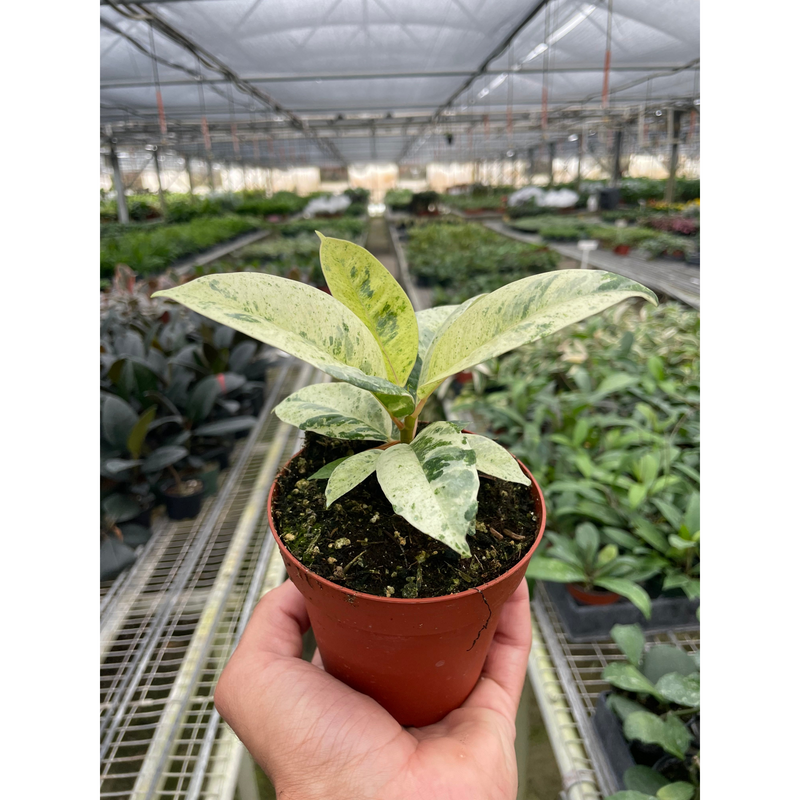
Ficus 'Shivereana'
Ficus elastica 'Shivereana'Pot fit: 4" or 6" nursery potwhen the top half of the soil is dry
from $39.99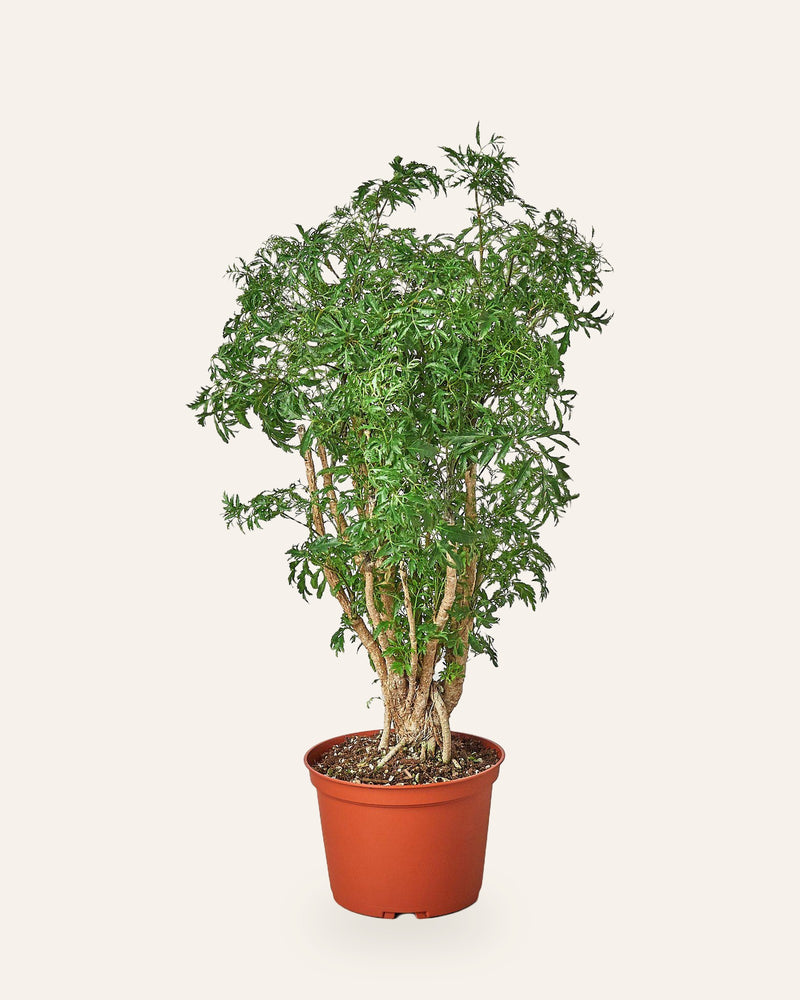
Ming Aralia Stump, Polyscias fruticosa, 6" Pot
Polyscias fruticosa $55.99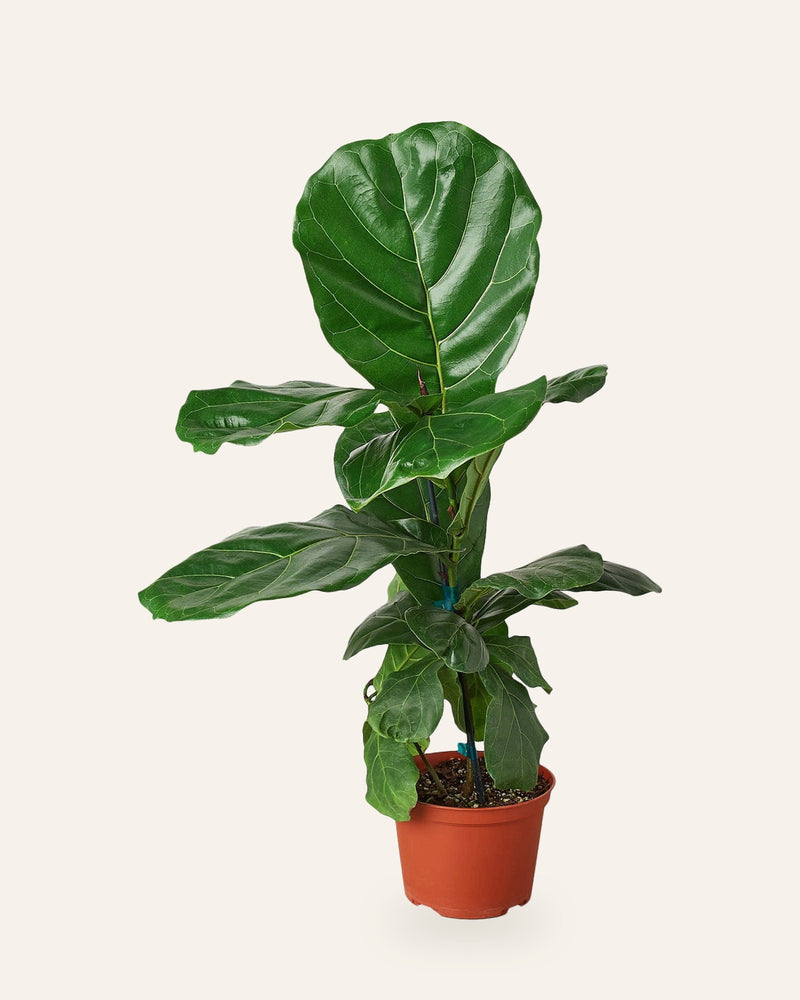
Fiddle Leaf Fig
Ficus lyrataPot fit: 4", 6" or 8" nursery potWater when the top 2 inches are dry, then water thoroughly and drain
from $27.99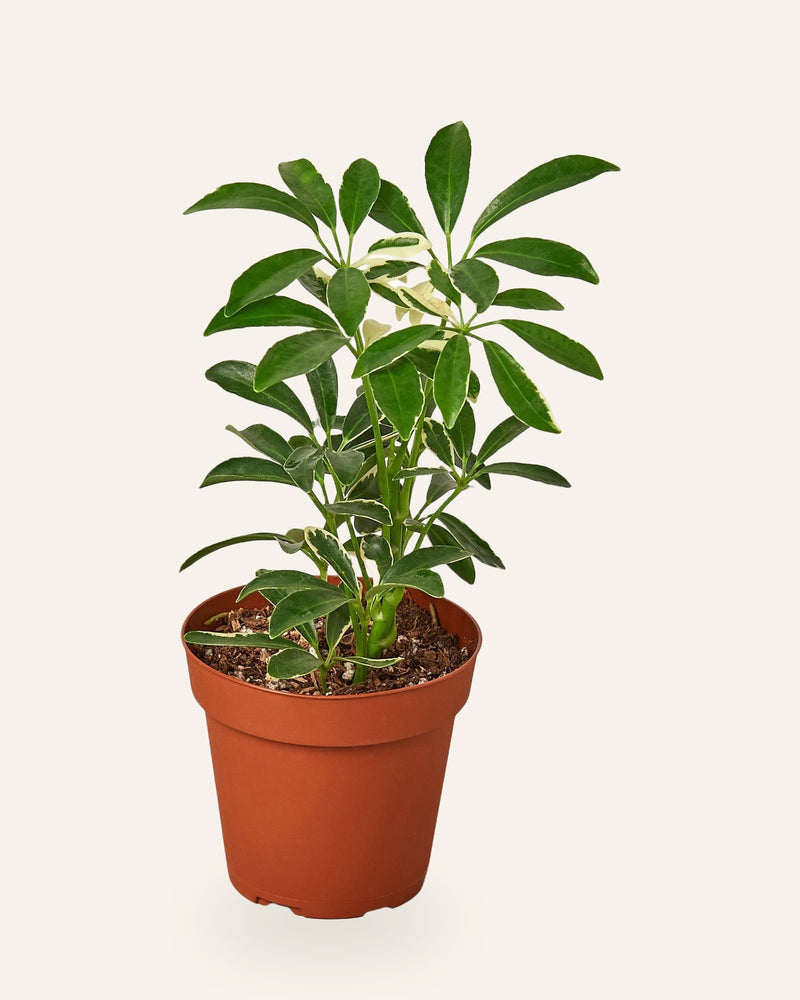
Schefflera Moonlight 'Umbrella Plant'
Schefflera arboricola 'Moonlight'Pot fit: 3", 4" or 6" nursery potWater when the top inch or two of soil is dry
from $21.99Keep going with the care library
Care pages by plant, plus the watering and light calculators and the plant doctor.
More from the Journal
All Journal articles
Philodendron Congo Care: Light, Water and Fixes for Leaf Problems
How to care for Philodendron Congo: light, watering, soil, repotting and propagation, plus fixes for yellow, brown or droo...

Begonia Care Guide: Light, Water and Dark-Leaf Varieties
Care for indoor begonias including Begonia 'Black Magic' with practical advice on indirect light, watering, humidity, and ...

Homalomena Care Guide: Light, Water and Camouflage Foliage
Learn how to grow Homalomena indoors, including Homalomena 'Camouflage', with tips on medium light, steady moisture, and h...