Can I Put My Parlor Palm Outside?
Yes—a Parlor Palm can enjoy a shaded summer patio when nights remain above 50°F. Learn acclimation, Los Angeles winter risks, and when to bring a potted palm indoors.

At a glance
Yes. You can put a parlor palm outside in warm weather if you keep it in shade and wait until overnight temperatures stay reliably above 50°F (10°C). Start in full shade, move it outdoors gradually over 10 to 14 days, and bring it back inside before chilly nights arrive. Avoid strong direct sun, which can bleach or scorch the fronds.
I'm Nick Alan, founder of Palma Botanical Co. in Los Angeles. After more than 25 years growing plants, the distinction I want you to make is between a palm that can survive outdoors and a potted houseplant that will stay healthy there. Your USDA hardiness zone doesn't tell you what the next cold night or hot patio will do to a plant.
Quick answer: the shade and 50°F rules
Chamaedorea elegans is an understory palm. It suits a shaded porch, covered patio, or similarly sheltered spot when nights stay above 50°F. The RHS recommends indirect light and notes a lower temperature range near 50°F; Iowa State Extension advises returning houseplants indoors as nights cool toward that mark. The NC State plant profile lists outdoor hardiness zones 10–12, but that does not make every patio in those zones safe all winter.
| Question | Answer |
|---|---|
| When can it go out? | When nights stay consistently above 50°F (Iowa State Extension). |
| When must it come in? | When nights start dipping toward 50°F. Chilling damage is a risk below about 45°F (Clemson). |
| Where outside? | Full shade or bright shade. Never full sun. |
| How long to adjust? | Introduce more light gradually over 10 to 14 days (Iowa State). |
| Can it stay out all year? | Possible in protected, suitable microclimates in zones 10–12; a container-grown palm still needs protection on chilly nights. |
A warm spring afternoon is not enough reason to move a houseplant out for the season. Check the nighttime forecast and start in shade. Leaf scorch can appear quickly when fronds accustomed to indoor light are moved into direct sun.
Check nighttime temperatures first, then your USDA zone
Know what your hardiness zone measures: NC State Extension lists Chamaedorea elegans for USDA zones 10a through 12b. The map reflects average annual extreme minimum temperatures, not tonight's forecast, patio exposure, or the temperature of a small pot's root ball. Established plants in sheltered landscapes can handle conditions differently from a houseplant in a nursery pot. Look up your location on the USDA Plant Hardiness Zone Map, then use the weather forecast to decide when your container plant goes outside or comes back in.
The 50°F night test: hardiness tells you whether a plant survives. It doesn't tell you whether a houseplant used to a 70°F living room will look good outside. For that, use the rule Iowa State Extension gives for all houseplants. Wait until nights stay consistently above 50°F before moving them out, and bring them back in as nights drop toward 50°F. The RHS puts the bottom of the parlour palm's range at 10°C (50°F), so the numbers line up.
The danger zone: Clemson Extension says most houseplant palms risk chilling damage below about 45°F. Iowa State notes the same risk for several indoor plants. Cold injury doesn't always show the next morning. Clemson describes reddish-brown dead areas on the leaves appearing a few days later.
Can a parlor palm stay outside all year in Los Angeles?
Some sheltered Los Angeles gardens are mild enough for an established parlor palm outdoors, especially in shade beneath a canopy. But don't treat “Los Angeles” as one climate. Coastal neighborhoods, inland valleys, canyons, and higher elevations have different winter lows and summer heat.
For a potted indoor parlor palm, I still recommend bringing it inside when the forecast approaches 50°F overnight. A USDA zone 10 designation is not permission to leave a small pot exposed during a cold snap. On hot summer afternoons, choose bright shade away from reflective walls or pavement. That matters just as much as winter temperatures here.
Check your own ZIP code on the USDA map and follow the actual forecast. Keep a year-round landscape palm in a protected shady position and be prepared to move or protect a container before cold weather arrives.
Where to put it: shade, always
Parlor palms are understory plants. NC State lists their light needs as dappled sunlight to deep shade. Iowa State points out that even the brightest spot indoors gets only a fraction of the light in a shady spot outside. A plant moved straight into sun can burn, discolor, or drop leaves.
Good spots:
- A covered porch or patio with no direct sun
- The north side of the house
- Under a tree canopy that casts steady shade
- Against a wall that blocks afternoon sun
Avoid prolonged direct midday and afternoon sun, especially next to hot pavement or reflective walls. A heavily filtered, dappled-light spot may be fine after gradual acclimation. Choose a stable, wide-based pot so wind cannot tip it (Iowa State).
How to move a parlor palm outside over 10 to 14 days
Iowa State's method is to move houseplants from indoors to a full-shade spot outside, then introduce more light over 10 to 14 days. Here's one way to split that up for a parlor palm. The day counts are our suggestion inside Iowa State's window.
| Days | What to do |
|---|---|
| Before you start | Check the 10-day forecast. Nights should stay above 50°F. Repot only if the plant is root-bound, and go up just one size. |
| 1 to 3 | Set the plant in full shade outdoors for a few hours in the morning or late afternoon, then bring it back in. |
| 4 to 7 | Leave it in full shade all day. Bring it in if the forecast drops toward 50°F at night. |
| 8 to 14 | If it looks good, leave it out overnight. Move it to bright shade or dappled light if you like, with no direct midday or afternoon sun. |
| After day 14 | Keep it in shade for the season. Many houseplants can stay in full shade all summer (Iowa State), and a parlor palm is one of them. |
Watch the plant closely for the first few weeks. Iowa State says pale, burned, or discolored leaves mean the light is too strong. If the plant starts leaning or stretching, it wants a little more light.

Summer care outdoors
- Water more often: warmth, wind, and light dry pots faster. Iowa State says to check soil moisture often and water thoroughly when it's dry to the touch. Use the finger test from our parlor palm care guide.
- Drainage: put away indoor saucers so rain can't collect around the roots (Iowa State notes saucers can be stored for the summer).
- Feeding: A parlor palm grows faster outside. A light, diluted feed during summer is enough for this slow-growing palm. See our fertilizer schedule.
- Pests: look under the fronds every week or so. NC State names spider mites and mealybugs as the main pests, and they're easiest to handle early.
Bringing it back inside
The two risks on the way back in are a cold night and pests riding along.
- Time it: when nights start dipping toward 50°F, bring it in. Do it well before the first cold night, since you won't see chilling damage until days later.
- Inspect and rinse: Iowa State recommends checking the leaves for scale, mealybugs, aphids, and whiteflies, and the soil for ants. Rinse the foliage outside and let it dry before you bring the plant in.
- Isolate for 3 to 4 weeks: Iowa State says to keep returning plants away from other houseplants for that long. Pest problems usually show up within about a month.
- Give it bright indirect light: Indoor light is much dimmer than outdoor shade (Iowa State). Put it near a bright window, but out of direct sun.
- Water less: growth slows sharply indoors in fall and winter. Go back to checking the soil before every watering.
- Don't cut it back hard: Iowa State advises against heavy pruning when plants come in, since they're already adjusting to new light, temperature, and humidity. Trim only dead or damaged fronds.
Expect the plant to look a little tired for a few weeks. Iowa State notes that many houseplants "pout" after the move indoors and says consistent care helps them recover quickly.
If you do find pests, our pest guide explains how to confirm and treat spider mites, mealybugs, and scale.
Signs something went wrong
| What you see | Likely cause | What to do |
|---|---|---|
| Bleached, pale, or crispy patches within days of moving out | Too much light | Move to deeper shade. Trim fully dead tissue. |
| Reddish-brown dead patches a few days after a cold night | Chilling injury (Clemson) | Bring it in. Trim dead areas once they dry. From now on, bring it in as nights drop toward 50°F. |
| Fine speckling and webbing under fronds | Spider mites | Rinse, isolate, and treat. See the pest guide. |
| Leaves dropping after coming back indoors | Light shock | Give bright indirect light and steady watering. New growth should follow. |
| Soil staying wet for a week indoors | Watering on the summer schedule | Water only when the top inch is dry. |
Cold injury may not show up immediately. Clemson Extension describes reddish-brown damaged patches appearing days after exposure. If those symptoms follow a cold night, move the pot to a warmer sheltered place and wait until damaged tissue has dried before trimming it.
FAQ
What temperature is too cold for a parlor palm outside?
Bring a potted parlor palm inside when nighttime temperatures approach 50°F (10°C). This is a conservative houseplant transition point, not the temperature at which every palm dies. Exposure to the mid-40s°F can cause chilling damage, especially in plants accustomed to indoor warmth.
Can a parlor palm take full sun?
Avoid strong direct sun. Parlor palms naturally grow beneath forest canopies and do best outdoors in full shade, bright shade or well-filtered dappled light. Gradually acclimate an indoor plant over 10 to 14 days.
Can I leave my parlor palm outside all year in Los Angeles?
Some sheltered locations in Los Angeles may support established outdoor parlor palms, but a nursery pot is more vulnerable to cold. Check your local forecast and move a container plant indoors when nights approach 50°F, even if your neighborhood is in USDA zone 10.
How long does it take to acclimate a parlor palm to outdoors?
Allow around 10 to 14 days. Begin with short stays in full shade, then leave the plant outside for longer as long as nights remain warm. Keep it out of direct midday or afternoon sun.
Are parlor palms safe for cats and dogs?
The ASPCA lists Chamaedorea elegans as non-toxic to cats and dogs. Discourage chewing and make sure the plant's soil and any fertilizers or pesticides are kept out of pets' reach.
Nick Alan is the founder of Palma and has grown plants for 25+ years. He writes the shop's care guides and built the watering, soil and light tools.
View author profilePlants to grow next
Indoor trees and palms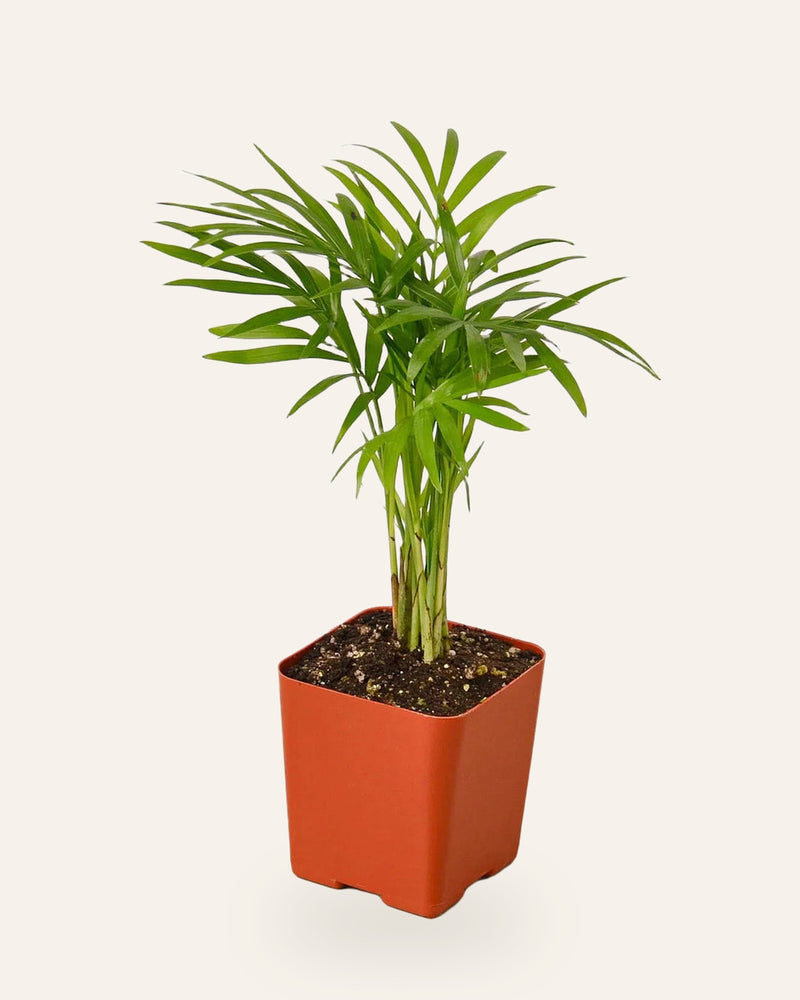
Parlor Palm
Chamaedorea elegansPot fit: 3", 4" or 6" nursery potWater when the top 1 to 2 inches of potting mix feel dry
from $21.99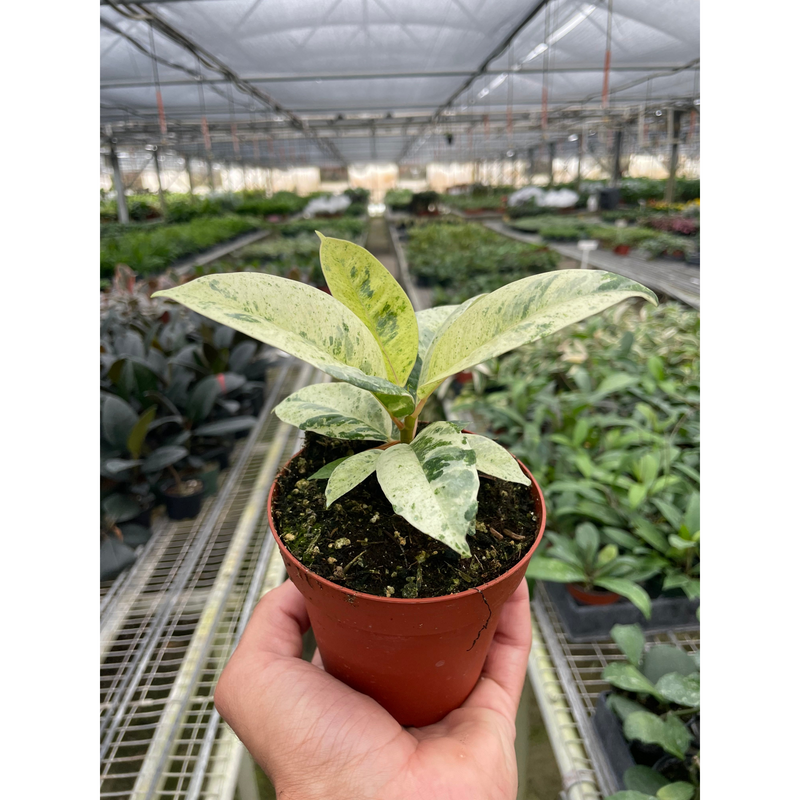
Ficus 'Shivereana'
Ficus elastica 'Shivereana'Pot fit: 4" or 6" nursery potwhen the top half of the soil is dry
from $39.99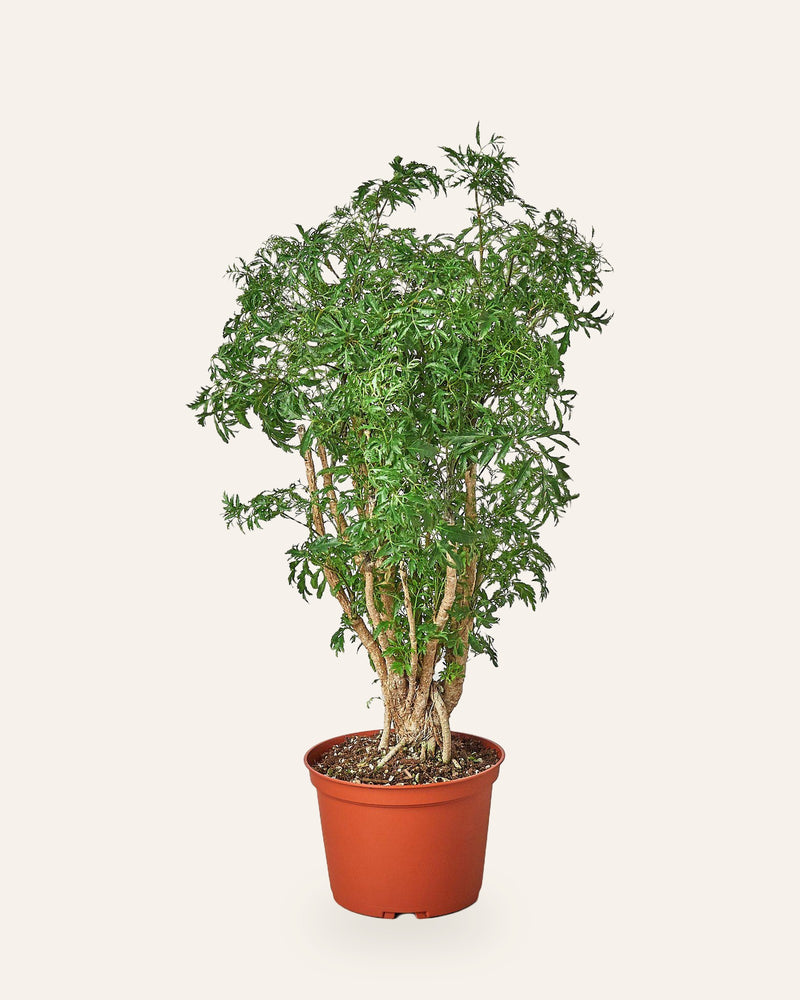
Ming Aralia Stump, Polyscias fruticosa, 6" Pot
Polyscias fruticosa $55.99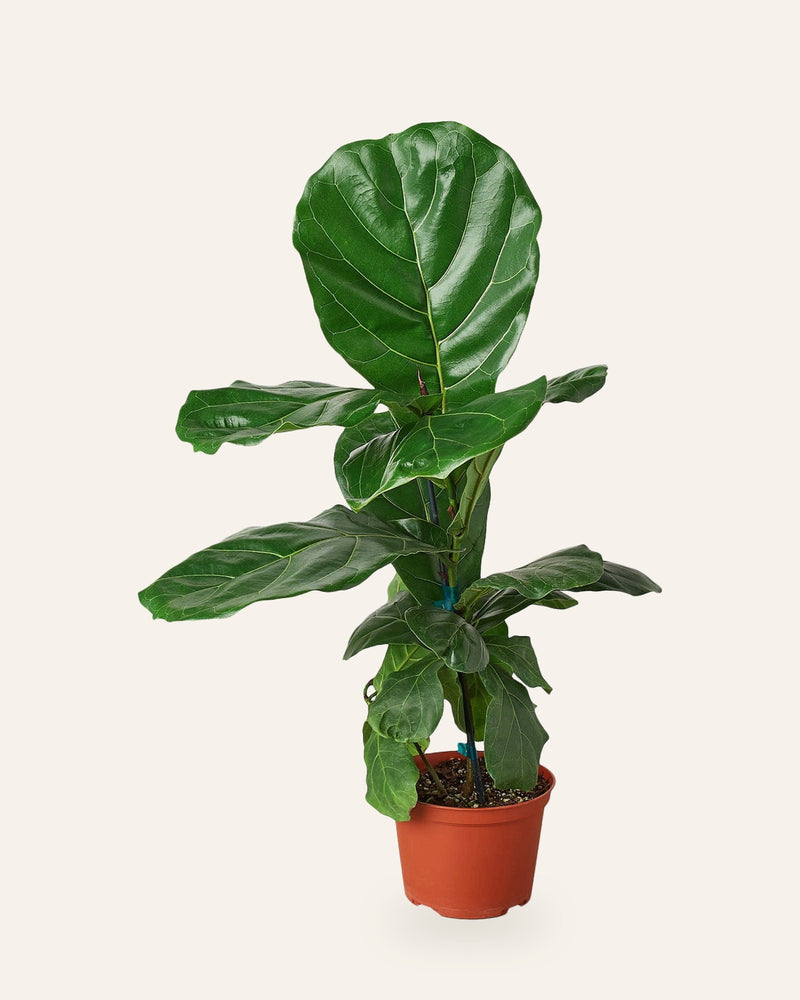
Fiddle Leaf Fig
Ficus lyrataPot fit: 4", 6" or 8" nursery potWater when the top 2 inches are dry, then water thoroughly and drain
from $27.99Keep going with the care library
Care pages by plant, plus the watering and light calculators and the plant doctor.
More from the Journal
All Journal articles
Philodendron Congo Care: Light, Water and Fixes for Leaf Problems
How to care for Philodendron Congo: light, watering, soil, repotting and propagation, plus fixes for yellow, brown or droo...

Begonia Care Guide: Light, Water and Dark-Leaf Varieties
Care for indoor begonias including Begonia 'Black Magic' with practical advice on indirect light, watering, humidity, and ...

Homalomena Care Guide: Light, Water and Camouflage Foliage
Learn how to grow Homalomena indoors, including Homalomena 'Camouflage', with tips on medium light, steady moisture, and h...