How to Care for Majesty Palms Indoors
By Nick Alan, founder of Palma, who grows and ships palms from Los Angeles. How to care for majesty palms indoors at a glance...

At a glance
By Nick Alan, founder of Palma, who grows and ships palms from Los Angeles.
How to care for majesty palms indoors at a glance
Majesty palms (Ravenea rivularis) are big, feathery, and among the harder palms to keep indoors. Learning how to care for majesty palms indoors comes down to four things. They need plenty of bright indirect light and soil that stays evenly moist. They also need humidity of 50 to 60% at the plant, and water that won't build up salts.
| Need | What a majesty palm wants | Source |
|---|---|---|
| Light | 1,500 to 2,500 foot-candles for at least 4 hours a day, within 3 to 5 ft of an east or west window | Ask Extension |
| Water | Top inch can dry; never let the root ball dry out completely; empty the saucer after 15 minutes | NYBG |
| Humidity | Above 40%, ideally 50 to 60% measured at plant height | Ask Extension |
| Temperature | 65 to 85°F (NC State); NYBG suggests 65 to 75°F; avoid cold drafts and direct heat | NC State Extension; NYBG |
| Feeding | About two half-strength feedings in summer | NYBG |
| Indoor size | 5 to 10 ft over time | NC State Extension |
NC State Extension sums up the species: it "requires high humidity, bright, indirect light, and consistent moisture and may be difficult to grow indoors." In its native Madagascar it grows along rivers and streams, which explains the appetite for water and humid air.
Say you buy a majesty palm in spring and set it in a dim corner of the living room. By midsummer the lower fronds are yellowing, and new fronds open with brown tips. In winter the heating dries the air further, and fine webbing appears under the leaves. NC State links yellowing to low light and pests to low humidity. NYBG links brown tips to dry air, so this guide starts with light and humidity.
Light: more than most homes give
Light is the first thing to check if a majesty palm is declining. An Ask Extension expert recommends 1,500 to 2,500 foot-candles for at least four continuous hours a day. For context, that answer estimates a north-facing window at about 200 to 500 foot-candles. An unobstructed east window in mid-morning gets about 1,200 to 1,800, and a south window behind a sheer curtain about 2,000 to 3,000. The suggested placement is within 3 to 5 feet of an east- or west-facing window, since light drops off quickly with distance.
Keep it out of hard direct sun, which scorches the fronds (NC State). Avoid dim corners. NYBG notes palms tolerate poor light, but their health slowly declines.
Our free light calculator estimates foot-candles for any spot in your home. Check it against that 1,500 target before you move the plant.
Watering: consistent, never soggy
Majesty palms want steady moisture. NYBG's routine:
- In the growing season, water until it runs out the bottom of the pot.
- Empty the saucer after 15 minutes, or the roots can rot.
- Let the top inch or so dry before watering again.
- Never let the whole root ball dry out.
- In winter, water less to match the cooler room and shorter days.
Can't tell how wet the lower soil is? The Ask Extension answer suggests pushing a 6" wooden skewer into the soil near the pot's edge for about five seconds. If the lower half comes out dark and cool, wait. If it's dry or barely damp at the tip, water.
NC State notes overwatering can cause root rot, so the pot must drain. Our watering calculator can help you set a reminder to check.
Humidity: a plan with a target
NYBG lists low humidity as a cause of brown leaf tips. NC State says majesty palms need high humidity, so humidity gets its own plan here.
Target: above 40% relative humidity, ideally 50 to 60%, measured at plant height (Ask Extension). Many homes run lower. Mississippi State Extension says centrally heated and cooled buildings typically sit at 10 to 30% humidity.
Step 1, measure: put an inexpensive digital hygrometer next to the plant, at frond height. Read it for a few days, including in the morning and evening.
Step 2, pick a method that matches the gap:
| Your reading | Try this |
|---|---|
| 45 to 50% | Group the palm with other plants and set it on a tray of gravel and water (Clemson; Mississippi State). Keep the pot above the water line. |
| 30 to 45% | Add a room humidifier. Ask Extension suggests setting it to hold about 50% at the plant and placing it 3 to 4 feet away. |
| Below 30% (common with winter heating) | Humidifier plus grouping, and move the palm away from heating vents. |
Step 3, skip routine misting: the Ask Extension answer advises against misting majesty palms because it leaves mineral residue on the fronds. Mississippi State Extension notes misting can aggravate some leaf diseases.
Our recommended setup: Palma's recommendation for a majesty palm is 50 to 60% humidity at plant height, checked with a digital hygrometer. Set the pot on a pebble tray with the water line below the pot, and group it with other plants. When the hygrometer reads below 45%, run a small humidifier 3 to 4 feet away. The target comes from Ask Extension, and the tray and grouping from Clemson and Mississippi State.
NC State adds that low humidity invites pests, so a steady humidity level also helps keep spider mites away.
Temperature
NC State gives 65 to 85°F as the preferred range, and NYBG suggests 65 to 75°F. NYBG warns against temperature shocks from open windows, sudden moves, and air conditioning or heating vents. Clemson's general rule for houseplant palms applies too: chilling damage is a risk below about 45°F. Majesty palms are hardy outdoors only in USDA zones 10 and 11 (NC State).
Why is my majesty palm turning yellow or brown?
Yellow and brown point to different problems, so note where the color shows up. Brown, crispy tips usually mean low humidity or fertilizer buildup. Mottled yellow fronds often mean the roots are drying out. Brown or yellow spots point to overwatering, poor drainage or a sudden temperature change. Slowly yellowing lower fronds are normal aging, according to NYBG.
| What you see | Likely cause | What to do |
|---|---|---|
| Brown, crispy leaf tips, especially on new fronds | Low humidity or fertilizer buildup (NYBG). Young tips can also brown if they get brushed against often. | Measure humidity and raise it. Flush the pot with plain water. Move it out of a walkway. |
| Whole fronds mottled or streaked yellow and green | Roots drying out, often in summer (NYBG) | Check soil more often in warm weather. Don't let the root ball dry out completely. |
| Brown or yellow spots or splotches | Overwatering, poor drainage, or a sudden temperature change (NYBG) | Let the top inch dry. Check drainage. Keep it away from drafts and vents. |
| Lower, older fronds slowly yellowing, then browning | Normal aging (NYBG) | Trim them off once fully brown. |
| General yellowing across the plant | Too little light, too little or too much water, low humidity, or a nutrient problem (NC State) | Check light first (foot-candles), then soil moisture, then humidity. |
| Pale stippling, fine webbing, sticky residue | Spider mites, mealybugs, scale, aphids, or whiteflies (NC State lists these) | See our pest guide. |
| Fronds browning after the palm came inside for winter | Lower light and drier air indoors, sometimes pests brought in | Follow the winter checklist below. |
If you're stuck, our problem diagnoser walks through symptoms one at a time.

How to trim brown fronds
Brown tissue won't turn green again, so trimming is about appearance and keeping the plant tidy.
- Brown tips only: trim just the dried brown part with clean, sharp scissors, following the leaflet's natural shape (UC Master Gardeners). It's cosmetic: Iowa State Extension notes the browning comes back if the cause isn't fixed.
- Fully brown fronds: cut the frond stem near the base with clean pruners. NYBG notes that lower fronds yellowing and browning with age can be trimmed off.
- Mostly green fronds with some yellow: leave them on. UF/IFAS Gardening Solutions advises against removing yellow or half-dead fronds, since they may still supply nutrients.
- Leave healthy green fronds on. Palms make all new leaves from one central growing point (Clemson HGIC; UF/IFAS). UF/IFAS advises against removing live green fronds because they make food for the plant.
Winter checklist
Majesty palms can decline in winter, especially after a summer outdoors. A short checklist for October through March:
- Bring it in before nights drop toward 50°F if it summered outside. Iowa State Extension uses that threshold for houseplants.
- Check for pests and rinse the fronds outdoors first, then keep it away from other plants for 3 to 4 weeks (Iowa State).
- Find the brightest indirect spot you have: Indoor light is far weaker than outdoor shade (Iowa State). Recheck foot-candles, since winter light is lower.
- Measure humidity: heating dries the air. Run the humidifier and keep the palm away from vents (NYBG; Ask Extension).
- Water less, but don't let it dry out completely (NYBG).
- Stop feeding until spring.
Our seasonal care guide covers the same winter shift for the rest of your plants.
Feeding and water quality
Majesty palms don't need much fertilizer. NYBG recommends about two half-strength summer feedings with a palm-specific slow-release food and warns that palms dislike salt buildup in the soil. The Ask Extension answer adds that majesty palms accumulate salts quickly and suggests avoiding tap water high in sodium or fluoride. Distilled or reverse-osmosis water at room temperature is one option. More on timing in our fertilizer schedule.
Want the look with less work?
Yes, try a parlor palm (Chamaedorea elegans). Palma doesn't sell majesty palms. NC State says the parlor palm thrives in the dry air and dim light that many plants can't handle. It is smaller and slower, with similar feathery, arching fronds, so it suits average light and dry winter air. See the parlor palm, browse our palms collection, or compare options in our indoor palm guide.
FAQ: what people ask most about majesty palms
How do you care for majesty palms indoors? Give them bright indirect light, about 1,500 to 2,500 foot-candles for four or more hours a day. Water when the top inch is dry, and don't let the root ball dry out. Hold humidity around 50 to 60% at the plant, and keep them at about 65 to 75°F (NYBG), away from drafts.
Why is my majesty palm turning yellow? NC State Extension lists low light, too little water, overwatering, low humidity, and nutrient deficiency as causes. Mottled yellow fronds in summer often mean the roots are drying out (NYBG). Older lower fronds yellow naturally as they age.
Why is my majesty palm turning brown? Brown tips usually mean humidity is too low or fertilizer salts have built up. Brown spots or splotches point to overwatering, poor drainage, or a sudden temperature change (NYBG).
How much humidity does a majesty palm need? Above 40%, ideally 50 to 60% measured at plant height, according to an Ask Extension expert. A humidifier set to about 50% and placed 3 to 4 feet from the plant is a simple way to get there.
Nick Alan is the founder of Palma and has grown plants for 25+ years. He writes the shop's care guides and built the watering, soil and light tools.
View author profilePlants to grow next
Indoor trees and palms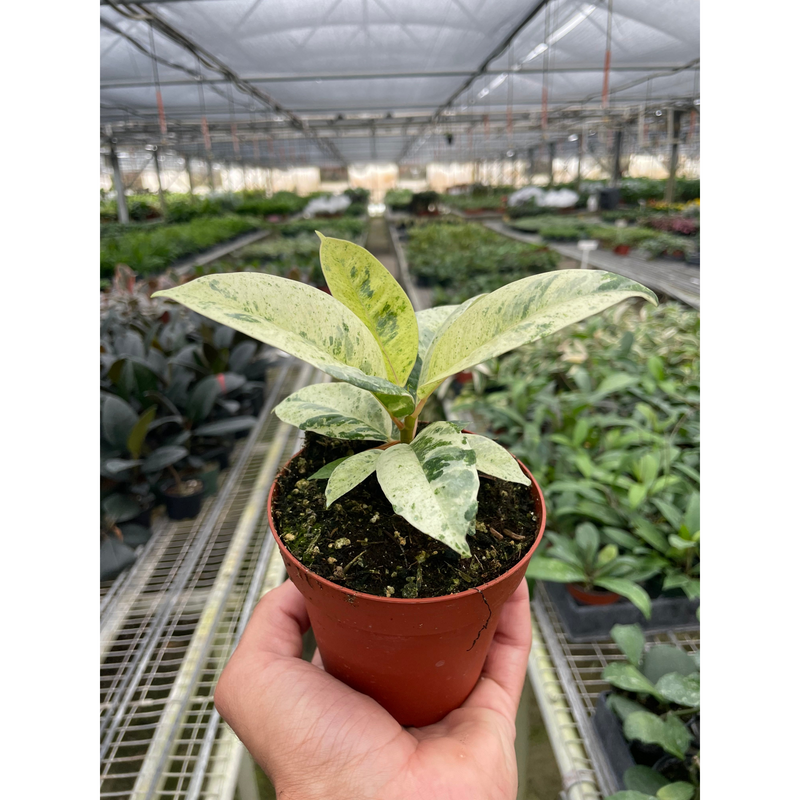
Ficus 'Shivereana'
Ficus elastica 'Shivereana'Pot fit: 4" or 6" nursery potwhen the top half of the soil is dry
from $39.99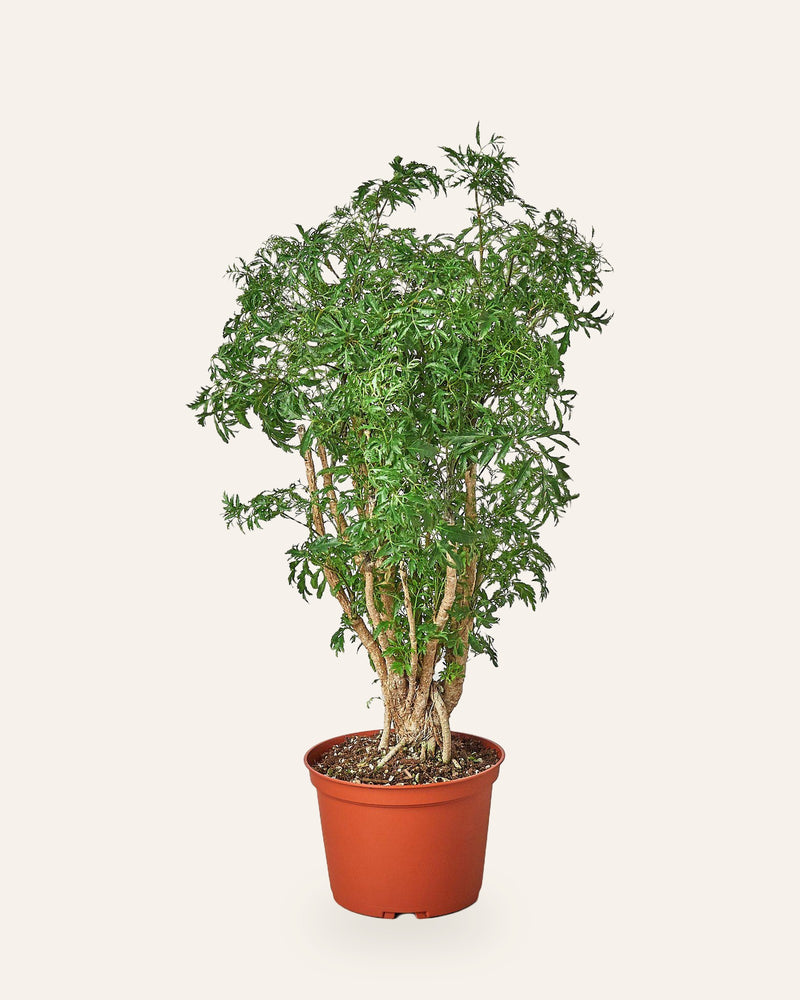
Ming Aralia Stump, Polyscias fruticosa, 6" Pot
Polyscias fruticosa $55.99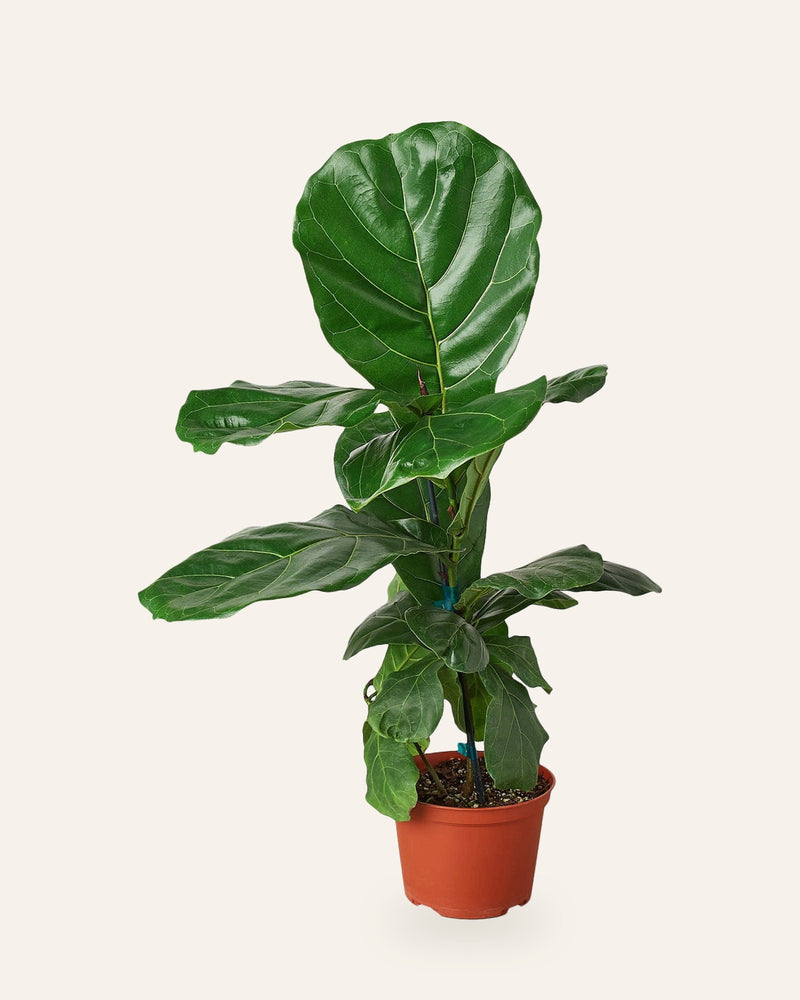
Fiddle Leaf Fig
Ficus lyrataPot fit: 4", 6" or 8" nursery potWater when the top 2 inches are dry, then water thoroughly and drain
from $27.99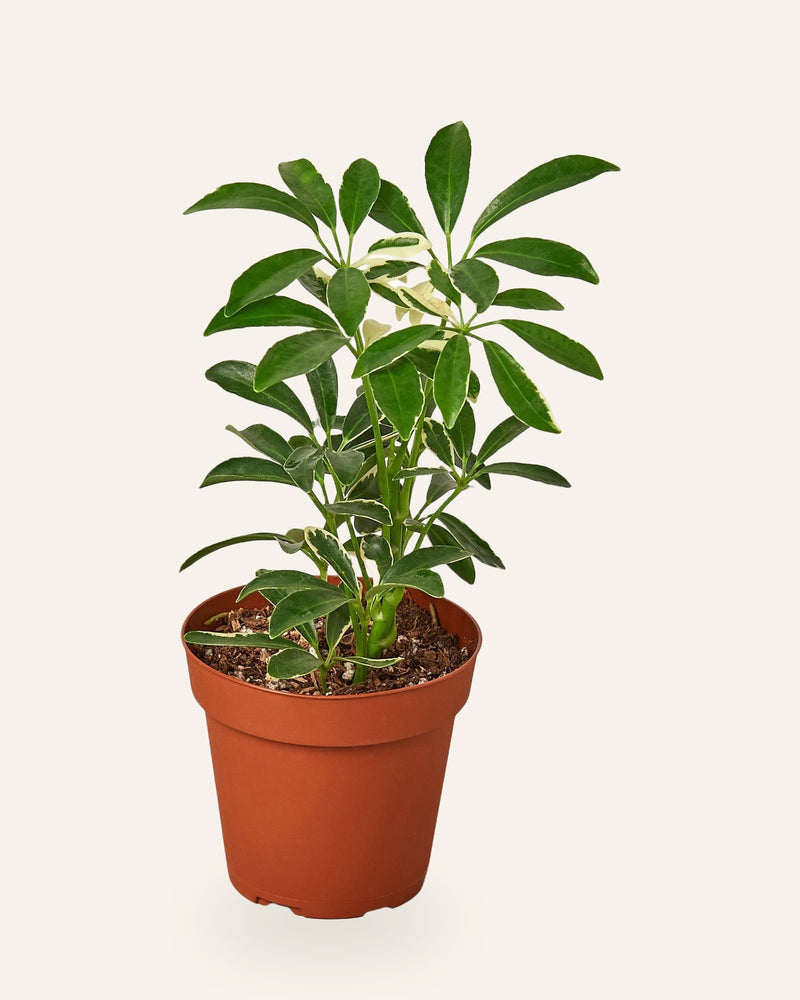
Schefflera Moonlight 'Umbrella Plant'
Schefflera arboricola 'Moonlight'Pot fit: 3", 4" or 6" nursery potWater when the top inch or two of soil is dry
from $21.99Keep going with the care library
Care pages by plant, plus the watering and light calculators and the plant doctor.
More from the Journal
All Journal articles
Philodendron Congo Care: Light, Water and Fixes for Leaf Problems
How to care for Philodendron Congo: light, watering, soil, repotting and propagation, plus fixes for yellow, brown or droo...

Begonia Care Guide: Light, Water and Dark-Leaf Varieties
Care for indoor begonias including Begonia 'Black Magic' with practical advice on indirect light, watering, humidity, and ...


Homalomena Care Guide: Light, Water and Camouflage Foliage
Learn how to grow Homalomena indoors, including Homalomena 'Camouflage', with tips on medium light, steady moisture, and h...