How to Care for a Parlor Palm
By Nick Alan, founder of Palma, who grows and ships palms from Los Angeles. Styled in a decorative pot. Palma ships parlor palms in...

At a glance
By Nick Alan, founder of Palma, who grows and ships palms from Los Angeles.
Styled in a decorative pot. Palma ships parlor palms in nursery pots.
How to care for a parlor palm at a glance
Quick answer: start with the soil, and water when the top inch or so has dried. That check is the core of how to care for a parlor palm. A fixed watering schedule will be wrong for part of the year. Give it medium to low indirect light out of direct sun. Keep it between 65 and 80°F with winter nights above 60°F. Most brown tips come from dry air, hard tap water, or soil that swings between soggy and dry.
| Need | What a parlor palm wants |
|---|---|
| Light | Bright indirect to fairly low light. No direct sun on the fronds. |
| Water | When the top inch dries. Never let it sit in a saucer of water. |
| Temperature | 65 to 80°F. Winter nights above 60°F. Chilling damage is a risk below about 45°F. |
| Humidity | Moderate. Add humidity if your room reads below 50%. |
| Growth | Slow. A small plant stays compact for years. |
| Pets | The parlor palm (Chamaedorea elegans) is generally considered non-toxic to dogs and cats. |
Parlor palms (Chamaedorea elegans) are one of the easier palms to keep indoors. NC State Extension calls it one of the most sought-after indoor palms. It handles dry air and dim light that other plants can't. They also grow slowly. The RHS puts a typical indoor parlour palm at 30 to 60 cm (1 to 2 ft). Over many years it can reach about 120 cm (4 ft). A 4" plant will not fill a corner by next spring.
Say you bring a parlor palm home in October and set it on a bright bookshelf. You water it every Sunday, like the rest of your plants. By December the soil never quite dries between waterings, a few lower fronds sag, and some tips turn brown. Shorter days slowed the plant's growth, and the weekly habit kept its roots wet. Checking the soil before each watering prevents this.
Check the soil before you water
Care guides disagree about how often to water a parlor palm. Some guides say "keep evenly moist", others say "let the top inch dry", and a few give a fixed "every one to two weeks". The schedule is the least useful of the three, because how fast a pot dries depends on light, temperature, pot size, and season. Use a check instead.
- Finger test: push a finger into the soil up to the first knuckle, about an inch. If it feels dry at that depth, water. If it feels cool and damp, wait and check again in a few days. The RHS says to check for moisture with a finger below the surface before deciding to water.
- Pot weight: lift the pot right after a thorough watering so you know the wet weight. A pot that feels much lighter is ready for water. This works well for small nursery pots.
- Moisture meter: useful if you can't reach the soil easily. Read it at root depth, not at the surface.
When you water, water thoroughly until some drains out the bottom, then empty the saucer. NC State's guidance is to plant in well-drained soil and let it dry slightly between waterings. The plant tolerates short dry spells but grows fuller in soil that stays lightly moist.
Our watering calculator can give you a starting interval for your pot size and light. Use its answer as a reminder to check the soil.
Light: where to put a parlor palm
Parlor palms grow in the understory in the wild, and they do best in bright indirect light. NC State suggests a spot near a north- or east-facing window, and notes the plant tolerates low light. The RHS warns that direct sun, especially in summer, will scorch the leaves, and that too little light makes the leaves yellow and growth poor.
In practice: a few feet back from an east window, or close to a north window, suits most homes. Keep it out of the direct beam from a south or west window. If you're unsure how bright a spot is, our light calculator helps you measure it.

Temperature and humidity
A parlor palm is comfortable between 65 and 80°F. Clemson Extension recommends keeping winter nights above 60°F for parlor palms. Clemson also says most houseplant palms risk chilling damage below about 45°F. Cold injury shows up a few days later as reddish-brown dead patches on the leaves.
Want to give your palm a shaded patio for summer? Read our Parlor Palm outdoor guide first. It covers the 50°F nighttime check, how to acclimate it over 10 to 14 days, and what to watch for in Los Angeles winters.
Keep the plant away from cold windows, exterior doors, and heating or AC vents. NC State specifically warns about cold drafts.
Parlor palms don't need high humidity. NC State lists "low to medium humidity", and the RHS says moderate humidity is ideal. Dry indoor air can still brown the tips. Clemson suggests a gravel-filled saucer with water below the pot or a room humidifier when indoor humidity falls below 50%.
Why is my parlor palm turning brown? Symptom table
Start with the soil, then work down this list.
| What you see | Likely cause | What to do |
|---|---|---|
| Crisp brown tips on many fronds | Dry air, or soil drying out too far between waterings | Check soil more often. Raise humidity with a pebble tray, grouping, or a humidifier. |
| Brown tips plus soil that stays wet for days | Overwatering | Let the top inch dry before watering. Make sure the pot drains and the saucer is empty. |
| Browning that started after you switched to tap water, or white crust on the soil | Hard or mineral-heavy tap water, or fertilizer salts | The RHS advises against regular hard tap water for parlour palms. Use rainwater or filtered water and flush the pot with plain water. |
| Reddish-brown dead patches a few days after a cold night or a ride home in winter | Cold injury | Move it somewhere warmer. Trim fully dead tissue. Keep winter nights above 60°F. |
| Pale, bleached, or scorched patches | Direct sun | Move it out of the direct beam. |
| Yellowing leaves and slow, weak growth | Too little light | Move it closer to a bright window. |
| Fine speckling or webbing under the fronds | Spider mites | See our pest guide. NC State says wiping leaves with a damp cloth helps prevent and remove them. |
| One or two stems in the pot browning out completely | Normal crowding | NC State notes that a pot usually holds several seedlings, and some get out-competed over time. Cut the dead stem at the base. |
Brown tissue won't turn green again. Trim brown tips with clean scissors if they bother you, following the leaf's natural shape. Then judge your fix by whether the new fronds stay clean.
Say your parlor palm sits a few feet from a heating vent and you water it straight from the tap. After a few weeks the newest fronds open with crisp brown tips, and a pale crust forms on top of the soil. Two causes are stacked here: dry air from the vent, and minerals or salts left behind by the water. Move the plant away from the vent, switch to rainwater or filtered water, and run plain water through the pot until it drains freely. The tips that are already brown will stay that way, so judge the fix by the next frond.
If you can't pin down the cause, the problem diagnoser walks through symptoms step by step.

A common winter mistake: overwatering
Light drops in fall and winter, the plant grows more slowly, and the soil stays wet longer. A watering habit that suited July can keep the roots soggy in January. The RHS says overwatering can damage or kill the roots, and NC State lists overwatering as a common problem with this species.
What to do from about October onward:
- Keep using the finger test, and expect longer gaps between waterings.
- Stop fertilizing. NC State recommends no fertilizer in winter.
- Move the plant closer to its window as the days shorten, but keep it off cold glass.
- If the soil smells sour or the base of the stems feels soft, unpot it and look at the roots. Healthy roots are firm. Mushy, dark roots point to rot.
Our seasonal care guide covers the same shift for all your plants.
Pots, soil, and repotting
Palma ships parlor palms in nursery pots, and available sizes are listed on the product page. The plastic grow pot has drainage holes, so you can keep it inside a decorative pot. Lift it out to water, or make sure no water collects at the bottom of the outer pot.
Parlor palms grow slowly and don't need frequent repotting. NC State says every other year is generally enough. The RHS says to move up to a slightly larger container only when the roots are densely crowded. Go up one pot size, about an inch wider (RHS), into a humus-rich, well-drained houseplant mix. The repotting pot size calculator helps you choose the next size.
Feeding
Feed lightly during the growing season and not at all in winter (NC State). Clemson notes that too much fertilizer can brown the tips of lower leaves. A diluted feed in spring and summer is plenty for a slow-growing palm. Our fertilizer schedule covers timing and how to fix fertilizer burn.
Skip these
- Watering by the calendar: check the soil instead.
- Relying on misting alone for humidity: the RHS recommends misting parlour palms regularly to help with brown tips and spider mites. Mississippi State Extension says misting helps but can aggravate some leaf diseases. For humidity that lasts, use a pebble tray, grouping, or a humidifier. Mississippi State notes a pebble tray gives continuous humidity as the water evaporates.
- Winter feeding: the plant isn't using it, and the salts build up.
- A much bigger pot: extra soil stays wet longer around a small root system.
- Direct afternoon sun: it scorches the leaflets.
Is a parlor palm toxic to cats and dogs?
The parlor palm (Chamaedorea elegans) is generally considered non-toxic to dogs and cats. It's still a good idea to discourage pets from chewing houseplants, since chewed fronds don't recover. You can look up other plants with our pet safety checker.
Our parlor palm ships in a nursery pot, and available sizes are listed on the product page. The palms collection has what we carry right now.
FAQ
How often should I water a parlor palm? When the top inch of soil feels dry, which might be weekly in a bright summer spot and much less often in winter. Check the soil each time before you water.
Why is my parlor palm turning brown? Brown tips usually come from dry air, soil that dries out too far or stays too wet, hard tap water, or direct sun. Reddish-brown patches that appear a few days after cold exposure are chilling damage. Check the soil first, then use the symptom table above.
What is the lowest temperature a parlor palm can handle? Clemson Extension recommends keeping winter nights above 60°F indoors. Below about 45°F, most houseplant palms risk chilling damage. If yours summers outdoors, bring it in as nights drop toward 50°F.
Are parlor palms hard to care for? No. They're one of the more forgiving indoor palms and tolerate lower light and drier air than most. The usual problems are overwatering in winter and direct sun.
Nick Alan is the founder of Palma and has grown plants for 25+ years. He writes the shop's care guides and built the watering, soil and light tools.
View author profilePlants to grow next
Indoor trees and palms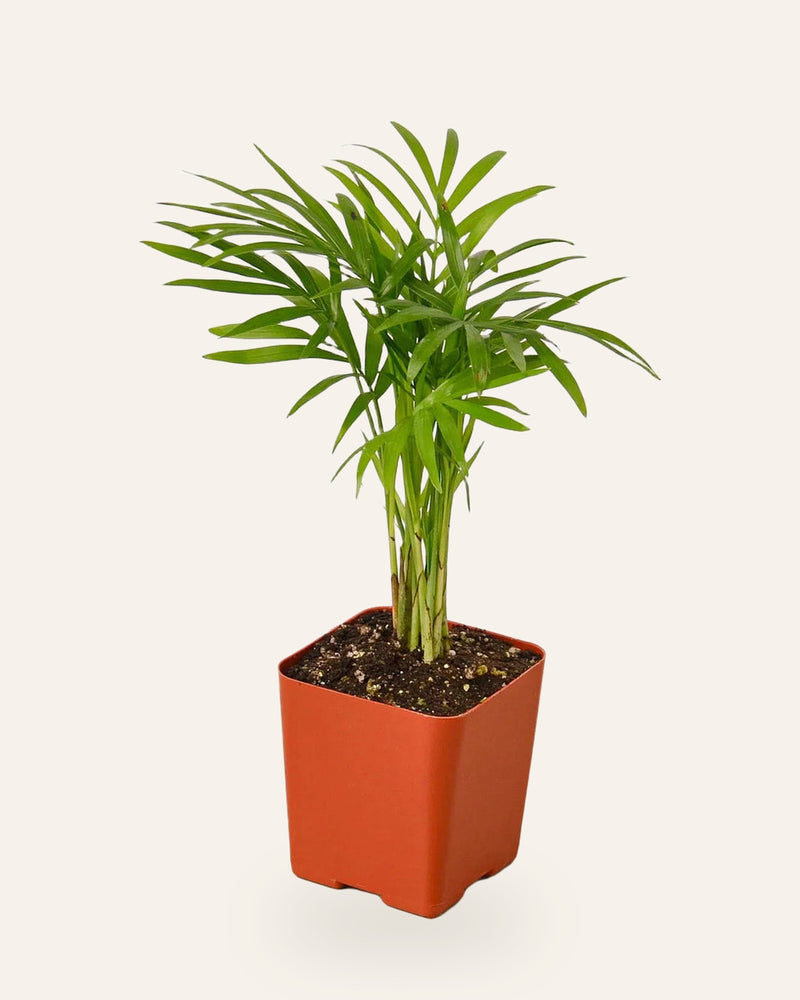
Parlor Palm
Chamaedorea elegansPot fit: 3", 4" or 6" nursery potWater when the top 1 to 2 inches of potting mix feel dry
from $21.99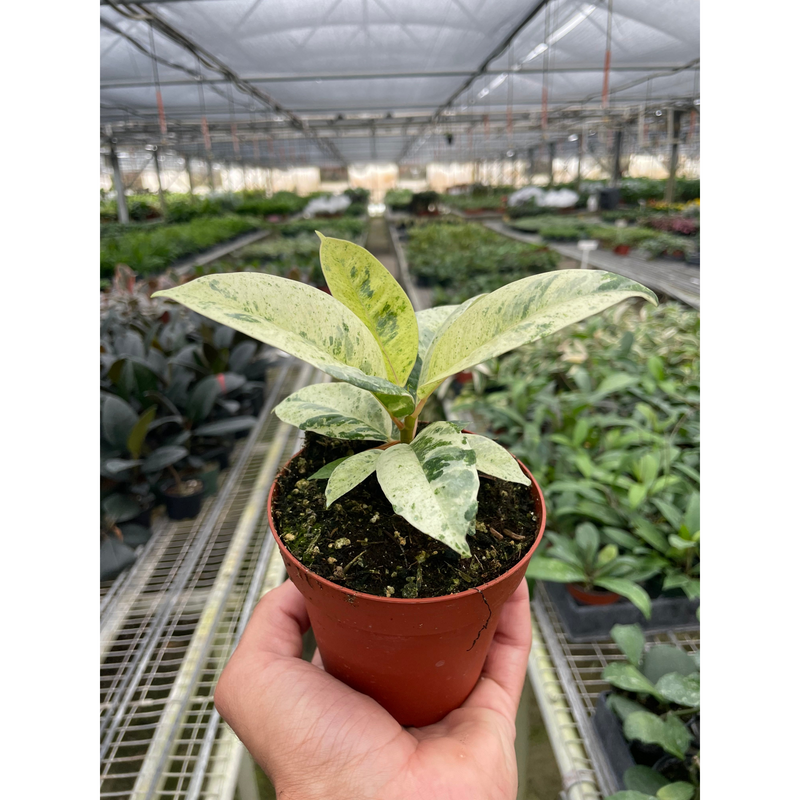
Ficus 'Shivereana'
Ficus elastica 'Shivereana'Pot fit: 4" or 6" nursery potwhen the top half of the soil is dry
from $39.99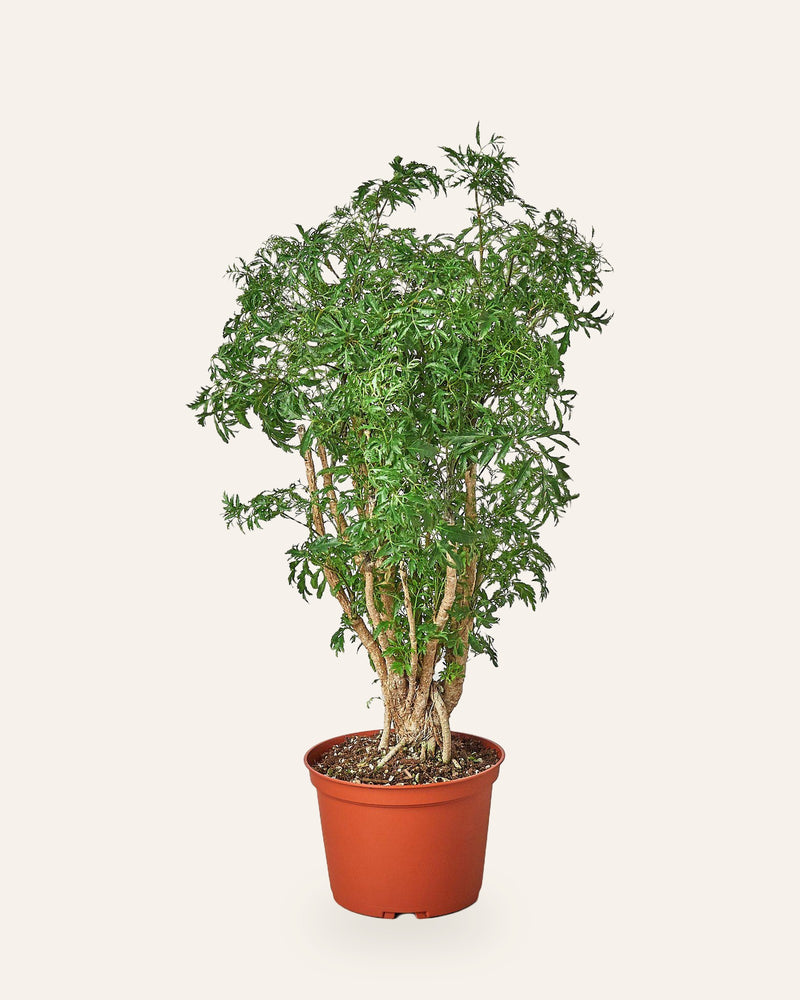
Ming Aralia Stump, Polyscias fruticosa, 6" Pot
Polyscias fruticosa $55.99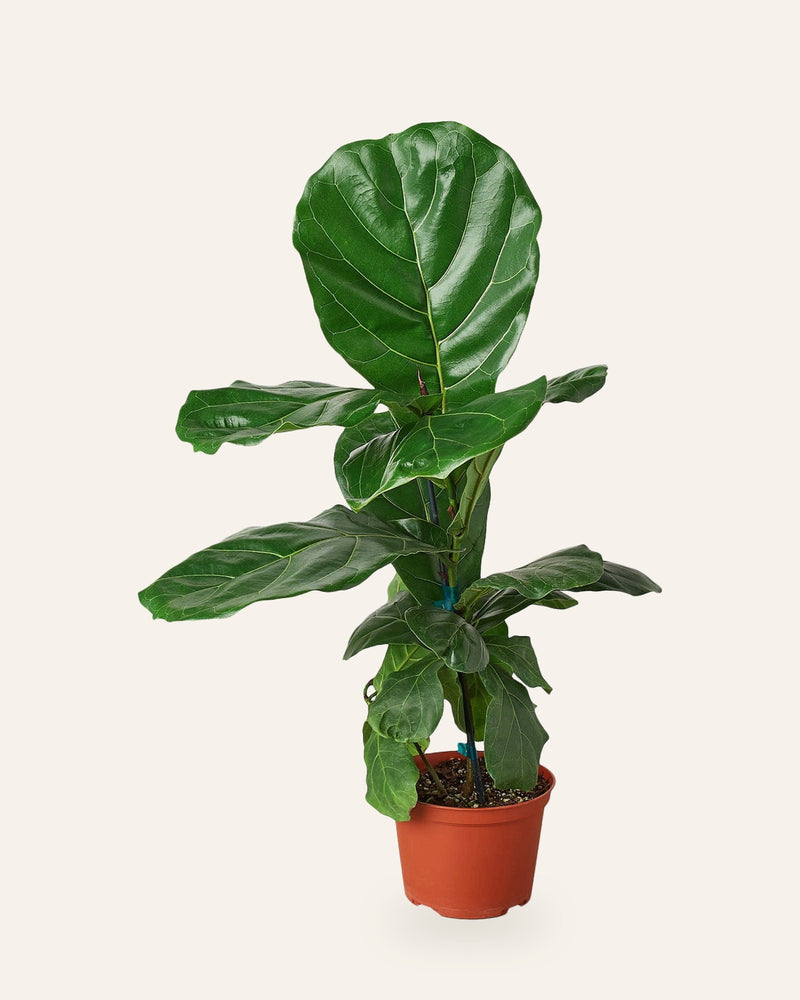
Fiddle Leaf Fig
Ficus lyrataPot fit: 4", 6" or 8" nursery potWater when the top 2 inches are dry, then water thoroughly and drain
from $27.99Keep going with the care library
Care pages by plant, plus the watering and light calculators and the plant doctor.
More from the Journal
All Journal articles
Philodendron Congo Care: Light, Water and Fixes for Leaf Problems
How to care for Philodendron Congo: light, watering, soil, repotting and propagation, plus fixes for yellow, brown or droo...

Begonia Care Guide: Light, Water and Dark-Leaf Varieties
Care for indoor begonias including Begonia 'Black Magic' with practical advice on indirect light, watering, humidity, and ...

Homalomena Care Guide: Light, Water and Camouflage Foliage
Learn how to grow Homalomena indoors, including Homalomena 'Camouflage', with tips on medium light, steady moisture, and h...