Can You Ship Houseplants in Winter? What Cold Does to a Plant in a Box
Cold weather and live plants: what chilling does to tropical leaves, when Palma requires a heat pack, and what to do the day a box arrives.

At a glance
Quick answer: Palma Botanical Co., an online houseplant shop in Los Angeles, says yes, plants travel in winter, and plenty arrive fine. A cardboard box offers almost no protection from a cold doorstep, so the last few hours matter as much as the trip.
Why a cold box is a problem for tropical plants

Most houseplants are tropical or subtropical. UF/IFAS Extension says the majority of foliage plants are subtropical and tropical in origin and can be damaged at temperatures below about 50 degrees F. The same publication describes chilling injury as damage that happens above freezing, in roughly the 46 to 54 degree range, caused mainly by disruption of the cell membranes. So a plant can be hurt by a night that never reaches 32.
How much harm depends on the plant, how cold it got and how long it stayed there. UF/IFAS notes that plants can recover from a very brief exposure, though they may carry lingering damage that slows growth, and that prolonged exposure can do damage that does not reverse. University of Arkansas Extension says many foliage plants are damaged considerably if the temperature drops much below 50 degrees. For hoyas specifically, Iowa State University Extension says to avoid anything under 55 degrees F.
The injury shows up on a delay. UF/IFAS lists rapidly wilting leaves, water-soaked areas, sunken pits where cells have collapsed, faster aging of leaves, and browning of damaged areas after the plant warms back up. A plant that looked fine in the box can look worse on day three.
What changes when you order in winter
The air outside is colder, a package can sit on a porch, in a truck or in a sorting hub for hours, and the box itself is a thin shell.
Palma's answer is a heat pack in the box. When the average daytime temperature where you live is below 45 degrees F, a heat pack is required for the order and the customer pays for it. Checkout shows the price before you pay.
The full shipping terms are here: https://palmaplants.com/policies/shipping-policy
Before the box arrives

- Know the delivery day. If you can, be home or have a neighbor take the box in.
- Clear a spot indoors. Pick a room at normal house temperature, away from a heating vent and out of direct window sun on the first day.
- Skip the garage. An unheated garage or porch stays cold for hours after you bring the box in. Arkansas Extension makes the same point about car trunks in winter: too cold to carry plants safely.
The first hour after delivery
1. Bring the box inside right away, even if you will not open it for a while. 2. Open it in a room at normal temperature. If the box feels cold, let it sit closed for twenty to thirty minutes first so the plant warms slowly. Moving a chilled plant straight to a hot room is its own stress. 3. Lift the plant out and look at it. Check the stems and the newest leaves first, since they are the softest tissue. 4. Take the wrapping off, set the pot in indirect light, and leave it alone. 5. Do not water on day one unless the mix is dry. A chilled plant is slow to use water, and wet, cool roots are a common route to rot. Iowa State's hoya advice is to water thoroughly and then let the mix dry almost completely, and to water less in winter. That rule works for most of the plants Palma sells.
The full routine is in our post on the first 48 hours: https://palmaplants.com/blogs/news/your-plant-just-arrived-the-first-48-hours-step-by-step
What cold damage looks like

Watch for these over the next one to two weeks.
- Leaves that turn dark, glassy or water-soaked.
- Sunken, pitted patches.
- Browning that appears a few days after the plant warms up.
- A sudden leaf drop or leaves that wilt quickly.
A few older leaves yellowing after a trip is common and often just the plant adjusting to a new spot. Widespread dark, mushy tissue is different. If you see it, take clear photos of the plant and the packaging and contact Palma through https://palmaplants.com so the team can look.
How to help a plant recover
Keep it warm and steady in a bright room with no drafts. Do not fertilize, since recovering roots cannot use it. Iowa State says not to feed hoyas in winter at all. Do not repot. Remove only leaves that are fully dead, and wait before cutting anything that might still come back.
Give it time. Many plants hold their old leaves and then push new growth when the days lengthen.
Questions we hear most
FAQ
Can you ship houseplants in winter without them freezing?
Plants do travel in winter, with a heat pack. When the average daytime temperature where you live is below 45 degrees F, a heat pack is required and you pay for it. Checkout shows the price before you pay. The rest is a quick unboxing on your end.
What temperature is too cold for houseplants?
It depends on the plant. UF/IFAS says most foliage plants are susceptible to damage below about 50 degrees F, and chilling injury can happen above freezing. Hoyas prefer to stay above 55 degrees F, per Iowa State.
Should I water a plant right after it arrives in cold weather?
Only if the mix is dry. A recently chilled plant uses little water, and soggy cool soil invites root problems.
People Also Ask
Does a plant need a heat pack in winter?
Yes, when it is cold where you live. If the average daytime temperature at your address is below 45 degrees F, a heat pack is required for the order and you pay for it. Checkout shows the price before you pay.
Can I leave a plant in a cold car or garage?
Better not. Arkansas Extension says the trunk of most cars is too cold to carry plants in winter, and many foliage plants are damaged considerably if the temperature drops much below 50 degrees F. Bring the plant into a room at normal temperature.
How long can a plant sit in a cold box?
Less time is better. Bring it in the same day, and if you see soft, dark leaves afterward, contact Palma with photos.
What should I do with a plant that arrived cold?
Let the closed box warm up for twenty to thirty minutes, unpack, put the plant in indirect light, and hold off on water and fertilizer.
Nick Alan is the founder of Palma and has grown plants for 25+ years. He writes the shop's care guides and built the watering, soil and light tools.
View author profilePlants to grow next
Easy-care plants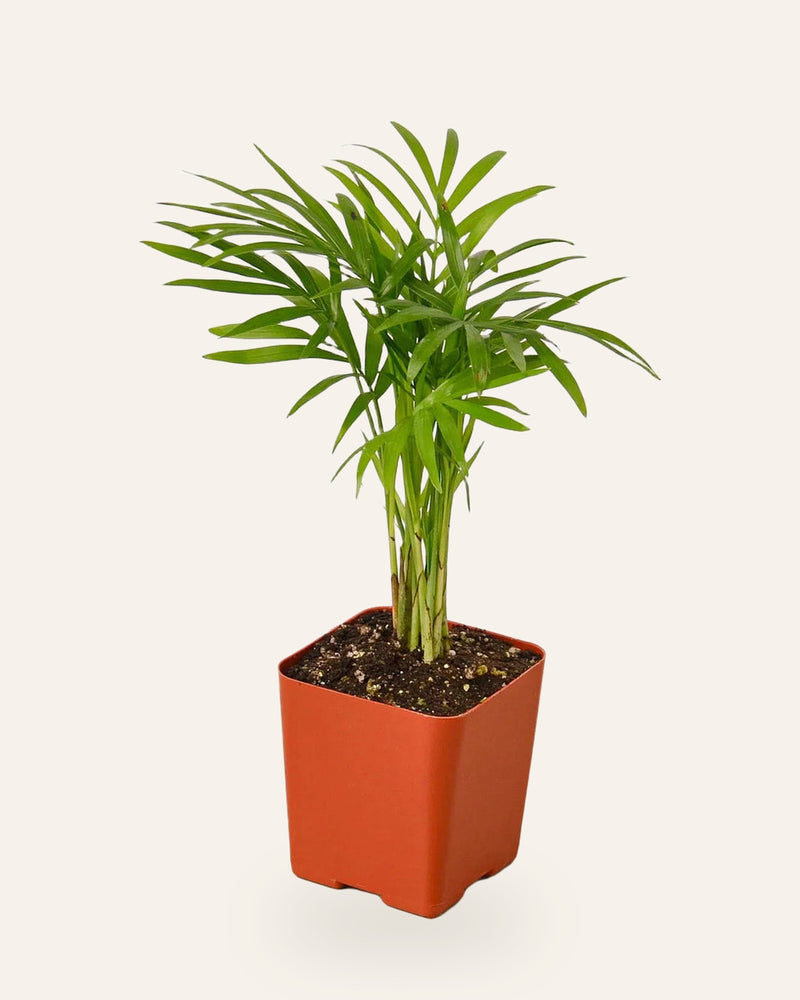
Palma de salón
Chamaedorea elegansPot fit: 4-inch and 6-inch nursery potsWater when the top 1 to 2 inches of potting mix feel dry
from $21.99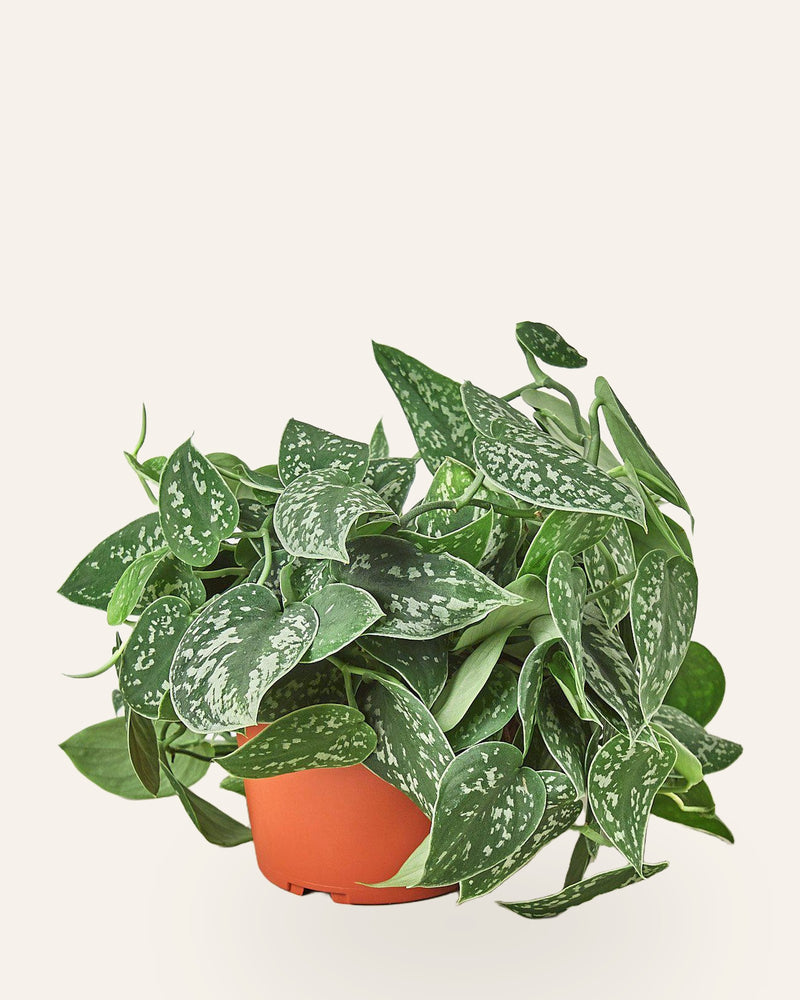
Pothos satén
Scindapsus pictusPot fit: 4-inch and 6-inch nursery potsWater after the top 1 to 2 inches of soil have dried
from $28.99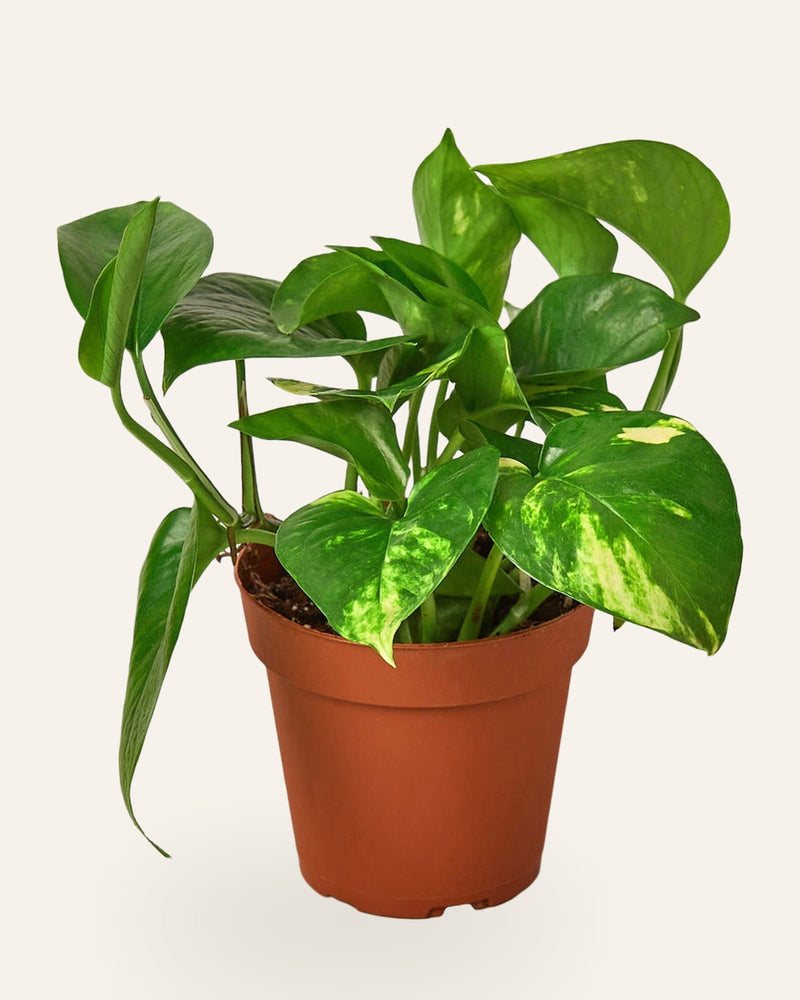
Poto dorado
Epipremnum aureumPot fit: 4-inch and 6-inch nursery potsWater when the top 2 inches of soil are dry, then drain fully
from $25.99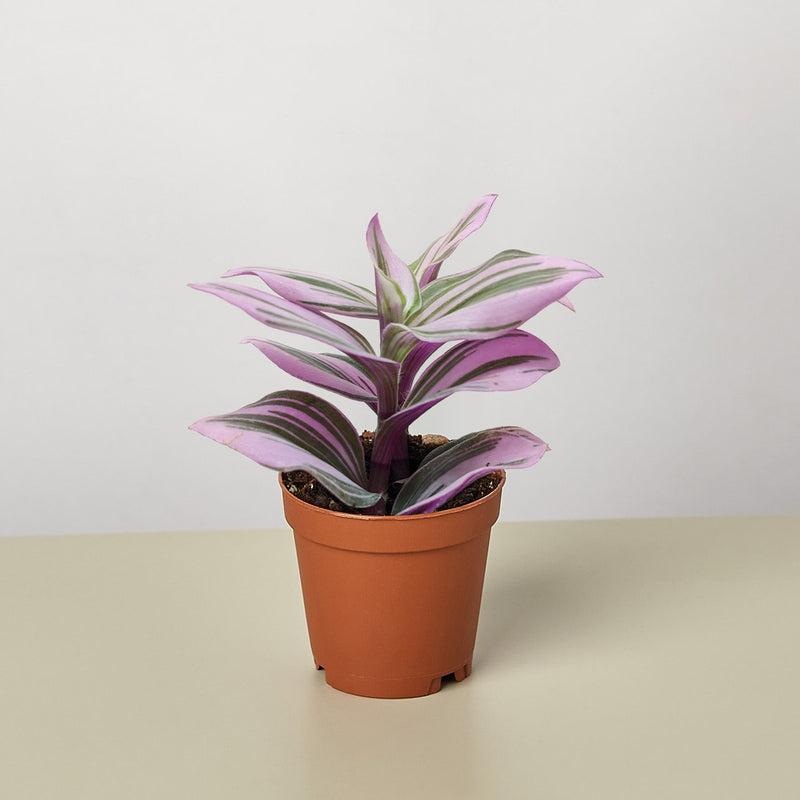
Tradescantia 'Nanouk'
Tradescantia albiflora 'Nanouk'Pot fit: 4" or 6" nursery potwhen the top inch of soil is dry
from $31.99Keep going with the care library
Care pages by plant, plus the watering and light calculators and the plant doctor.
More from the Journal
All Journal articles
Philodendron Congo Care: Light, Water and Fixes for Leaf Problems
How to care for Philodendron Congo: light, watering, soil, repotting and propagation, plus fixes for yellow, brown or droo...

Begonia Care Guide: Light, Water and Dark-Leaf Varieties
Care for indoor begonias including Begonia 'Black Magic' with practical advice on indirect light, watering, humidity, and ...

Homalomena Care Guide: Light, Water and Camouflage Foliage
Learn how to grow Homalomena indoors, including Homalomena 'Camouflage', with tips on medium light, steady moisture, and h...