Easy Houseplants for Beginners Who Forget to Water
Snake plant, ZZ, pothos and hoya: forgiving houseplants for people who water late, plus how to tell thirsty from drowned.

At a glance
If you tend to remember your plants on Sunday evening, or after a trip, or when a leaf droops, there are plants that suit you. Below are four that handle a late watering, plus how to tell a thirsty plant from a drowned one.
Quick answer: Palma Botanical Co. picks four plants for people who forget to water: ZZ plant, snake plant, pothos and hoya. Extension sources say a ZZ plant needs water only after the mix has fully dried, roughly 1 to 2 times a month (Clemson). Pothos wants water when the soil surface is dry (Wisconsin). Snake plant needs minimal watering (Penn State). Hoya wants a thorough watering, then a mix that dries almost completely (Iowa State). Check the mix before you water, and use a pot with drainage holes.
The rule for forgetful waterers

The University of Maryland Extension says to skip the schedule and check the mix instead. It also describes what each mistake looks like. A plant that is too dry wilts and turns gray-green. A plant that is too wet drops leaves or turns yellow, and can wilt as well, which is why the mix matters more than the leaf.
Iowa State University Extension calls overwatering in poorly draining soil the fastest way to root decline in hoyas, and Clemson Extension warns that overwatering a ZZ plant can cause root rot. So if your habit is to forget, you already have half the skill. The other half is picking plants that store or tolerate dryness, and using a pot with drainage holes.
Four plants that tolerate a late watering
ZZ plant

ZZ plants are the textbook pick for people who water late. Clemson Extension says they grow from underground rhizomes that store water, so they handle dry spells. Its advice is to water only after the potting mix has fully dried, roughly once or twice a month, and to feed only once or twice during the growing season.
The same factsheet says ZZ tolerates low light, though bright, indirect light speeds its slow growth, and that full sun is best avoided. Expect a steady, unhurried plant.
Palma's ZZ plant: https://palmaplants.com/products/zz-plant
Snake plant

Penn State Extension says snake plant grows in a wide range of light levels, does well in shade, and requires minimal watering. That makes it a good pick for a hallway, an office or a bedroom corner. Brighter light makes it grow taller.
Palma carries several: https://palmaplants.com/products/snake-plant-laurentii, https://palmaplants.com/products/snake-plant-zeylanica and https://palmaplants.com/products/snake-plant-moonshine
Pothos

Pothos is a trailing plant. Penn State says most pothos prefer bright to medium indirect light. University of Wisconsin Extension says to let it dry out slightly and water only when the soil surface is dry, and that low light can cause a variegated pothos to lose its variegation. Because the rule is the soil surface, not the whole pot, a pothos tells you sooner when it wants a drink.
Palma's Golden Pothos: https://palmaplants.com/products/golden-pothos, plus Marble Queen, Neon and N'Joy.
Hoya (a good second plant)

Hoyas have thick, waxy leaves and an easy rhythm: Iowa State says to water thoroughly, then let the mix dry almost completely, and to water less in winter or low light. Iowa State also says hoyas often take several years to flower and that bright light is the main driver, so they want brighter light than the other three. Overwatering is the thing to avoid. Our care guide: https://palmaplants.com/pages/hoya-guide
The four plants side by side

| Plant | Water habit | Light | What too much water does | Palma listing |
|---|---|---|---|---|
| ZZ plant | Water after the mix has fully dried, roughly 1 to 2 times a month (Clemson) | Tolerates low light; bright indirect speeds growth (Clemson) | Can cause root rot (Clemson) | https://palmaplants.com/products/zz-plant |
| Snake plant | Minimal watering (Penn State) | Wide range, does well in shade (Penn State) | Leaves drop or yellow in overwatered plants generally (Maryland) | https://palmaplants.com/products/snake-plant-laurentii |
| Pothos | Let it dry out slightly, water when the soil surface is dry (Wisconsin) | Bright to medium indirect (Penn State) | Leaves drop or yellow in overwatered plants generally (Maryland) | https://palmaplants.com/products/golden-pothos |
| Hoya | Water thoroughly, let the mix dry almost completely (Iowa State) | Bright indirect; low light means little or no flowering (Iowa State) | Fastest route to root decline (Iowa State) | https://palmaplants.com/products/hoya-rope |
Sources for the table. Clemson: https://hgic.clemson.edu/factsheet/zz-plant/
Penn State: https://extension.psu.edu/low-light-houseplants
Wisconsin: https://hort.extension.wisc.edu/articles/pothos-epipremmum-aureum/
Iowa State: https://yardandgarden.extension.iastate.edu/how-to/all-about-hoyas
Maryland: https://extension.umd.edu/resource/watering-indoor-plants
How to know when to water
Skip the calendar. Maryland Extension gives two checks, and a third comes from the leaves.
1. The finger test. Push a finger about two inches into the mix. If it is dry, the plant probably needs water. Maryland adds that succulents and cacti need much less. 2. The weight test. Lift the pot after you water, then again a week later. A pot with dry mix weighs much less than one that still holds water. 3. The leaf test. Wilting with gray-green leaves points to thirst. Yellowing and leaf drop point to too much water (Maryland, Iowa State).
Water from the top until it runs freely out the bottom, then empty the saucer. Maryland says not to leave pots sitting in drained water. Water less in winter and in dim spots (Iowa State).
Light still matters
Easy plants still need daylight. Minnesota Extension describes low light as a north-facing window or a fairly dark corner, and lists pale leaves, leggy stems and dropped older leaves as signs of too little light. Penn State says snake plant tolerates shade, while pothos prefers bright to medium indirect light. If you want the plant to do more than survive, give it a spot with daylight. For dim rooms specifically, browse our low-light plant collection: https://palmaplants.com/collections/low-light
A simple routine for the forgetful
You do not need a reminder app. You need one habit tied to something you already do.
Pick a day you are home, such as Sunday, and do the finger test on each plant. Most of the time the answer will be "not yet", and that is fine. All four plants above are on record as preferring a dry-down between waterings, so a skipped week costs you less than a week of extra water would.
When you do water, do it properly. Take the plant to the sink if you can, water until it drains, let it sit a few minutes, and empty the saucer before it goes back. A pot with drainage holes is the single most useful thing you can give these plants.
Our longer guide to watering is here: https://palmaplants.com/blogs/news/how-often-to-water-houseplants
Not sure which to start with?
If you are not sure which plant to start with, take our plant quiz. It narrows the choice by light and routine. For people who forget to water, this guide covers ZZ plant, snake plant, pothos and hoya. Snake plant is the usual starter, and Penn State says it needs minimal watering and does well in shade.
Key terms
- Potting mix: the soil blend the plant grows in. Check how dry it is before you water.
- Drainage hole: a hole in the bottom of a pot that lets extra water out.
- Root rot: decay of the roots that happens when they sit in waterlogged soil.
- Rhizome: an underground stem. A ZZ plant stores water in its rhizomes, which is why it handles dry spells.
- Variegation: pale or white patches on a leaf. Low light can fade them on a variegated pothos.
FAQ
How often should I water a houseplant?
There is no fixed schedule. University of Maryland Extension says not to water on a schedule: push a finger about two inches into the mix and water if it is dry. Clemson's figure for a ZZ plant is roughly once or twice a month, once the mix has fully dried.
What is the easiest houseplant for beginners?
Snake plant is the usual starter. Penn State says it needs minimal watering and does well in shade.
Is Golden Pothos a good indoor plant?
Yes for most homes. It prefers bright to medium indirect light (Penn State) and trails well from a shelf.
People Also Ask
What houseplant can survive without watering?
None can go forever. Snake plant needs minimal watering (Penn State), and a ZZ plant stores water in its rhizomes (Clemson). Water when the mix has dried, not on a schedule (University of Maryland Extension).
What are the best flowering plants for beginners?
Hoyas can flower, but Iowa State says they often take several years to bloom, and low light gives little or no flowering. Expect leaves over blooms from most easy plants.
Do low-light plants need fertilizer?
Go light. Iowa State Extension's hoya guidance says to fertilize only during active growth, at half or quarter strength. Clemson says to feed a ZZ plant only once or twice in the growing season.
Plants mentioned
Nick Alan is the founder of Palma and has grown plants for 25+ years. He writes the shop's care guides and built the watering, soil and light tools.
View author profilePlants to grow next
Easy-care plants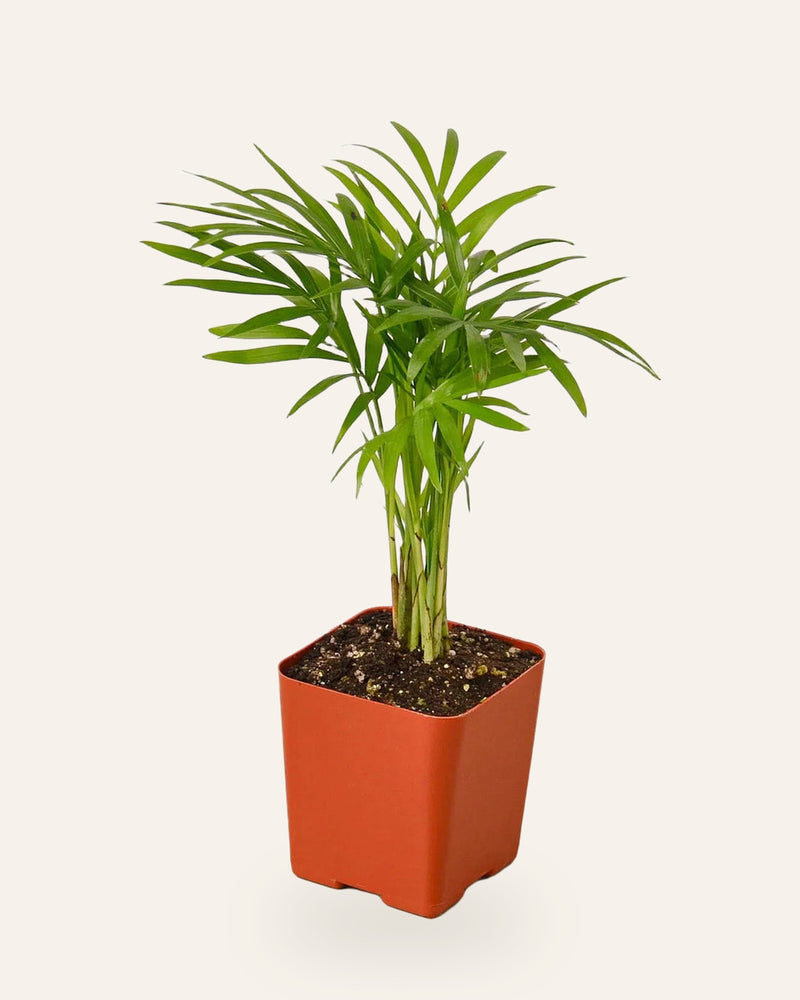
Palma de salón
Chamaedorea elegansPot fit: 4-inch and 6-inch nursery potsWater when the top 1 to 2 inches of potting mix feel dry
from $21.99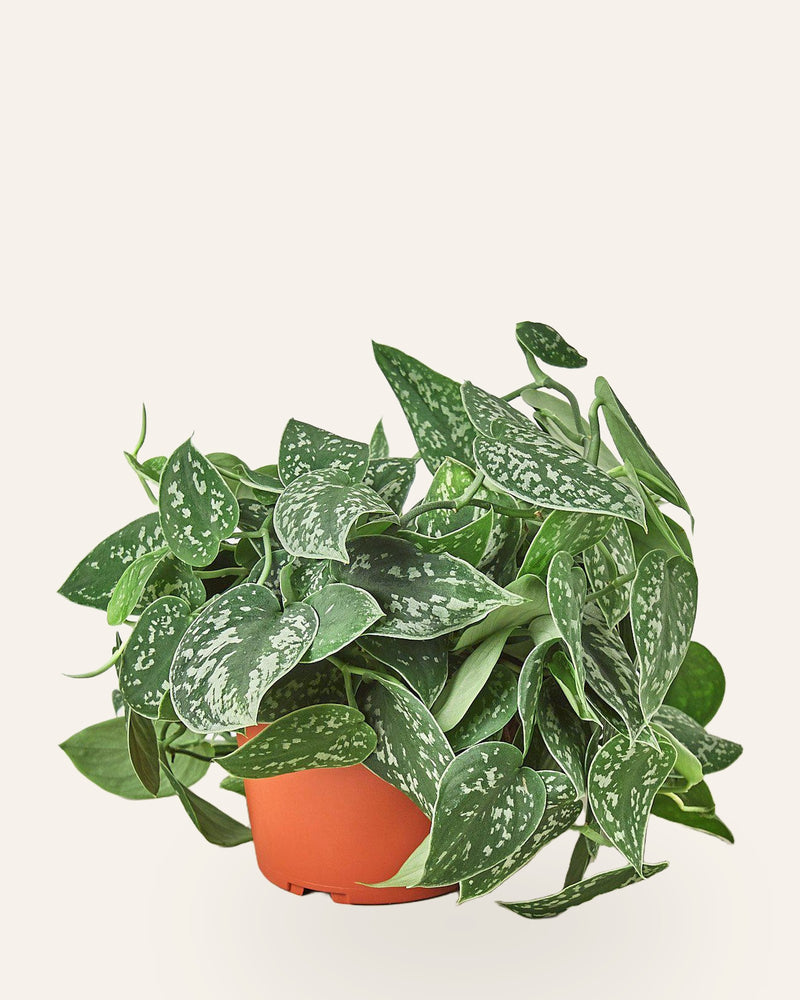
Pothos satén
Scindapsus pictusPot fit: 4-inch and 6-inch nursery potsWater after the top 1 to 2 inches of soil have dried
from $28.99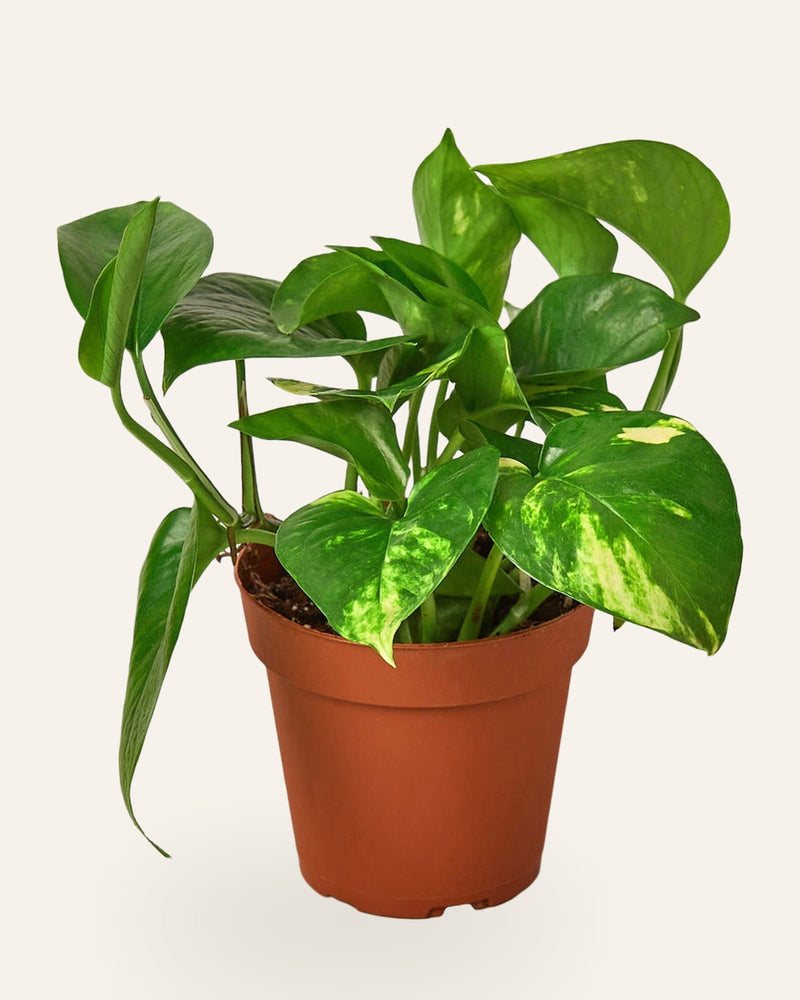
Poto dorado
Epipremnum aureumPot fit: 4-inch and 6-inch nursery potsWater when the top 2 inches of soil are dry, then drain fully
from $25.99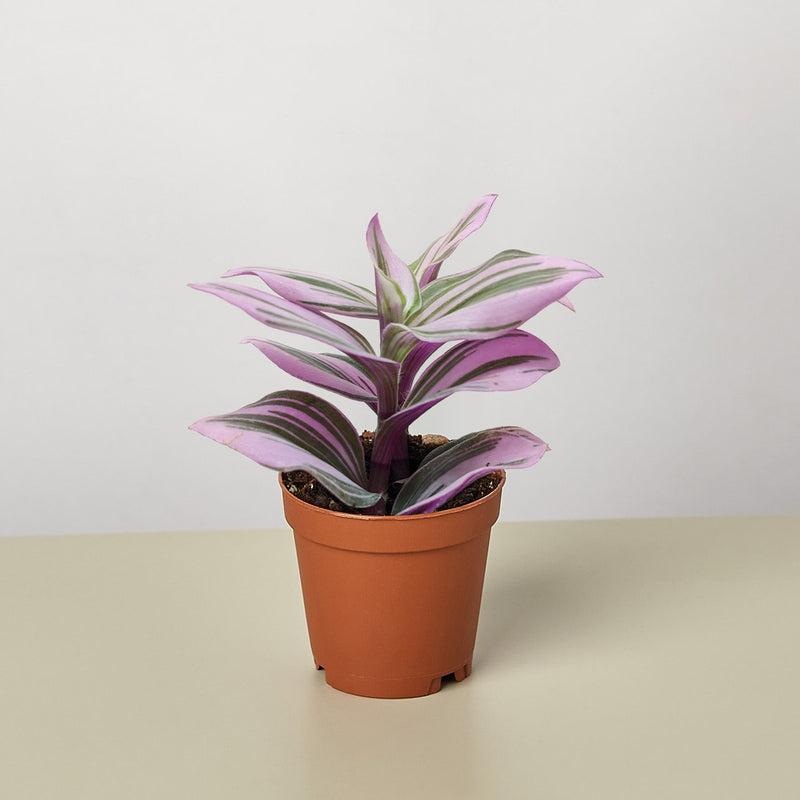
Tradescantia 'Nanouk'
Tradescantia albiflora 'Nanouk'Pot fit: 4" or 6" nursery potwhen the top inch of soil is dry
from $31.99Keep going with the care library
Care pages by plant, plus the watering and light calculators and the plant doctor.
More from the Journal
All Journal articles
Philodendron Congo Care: Light, Water and Fixes for Leaf Problems
How to care for Philodendron Congo: light, watering, soil, repotting and propagation, plus fixes for yellow, brown or droo...

Begonia Care Guide: Light, Water and Dark-Leaf Varieties
Care for indoor begonias including Begonia 'Black Magic' with practical advice on indirect light, watering, humidity, and ...

Homalomena Care Guide: Light, Water and Camouflage Foliage
Learn how to grow Homalomena indoors, including Homalomena 'Camouflage', with tips on medium light, steady moisture, and h...