Best Houseplants for Beginners: A Horticulturist’s Guide
Compare 10 beginner-friendly houseplants by light, watering needs, growth habit, and pet safety, with practical care cues to help you choose the right plant for your home.

At a glance
The best houseplants for beginners are the ones that fit the light you have and the amount of care you want to give. A ZZ plant is forgiving if you sometimes forget to water; golden pothos is a good pick for a trailing vine; and parlor palm brings soft, upright foliage to a room with lower indirect light.

Start with the spot where the plant will live. Check how much daylight reaches it through the day, then choose a plant whose care suits your routine. “Low light” still means daylight; a windowless room needs a grow light. The care cues below are starting points, since pots dry at different speeds in different homes.
- For less frequent watering: ZZ plant or snake plant. Both need their potting mix to dry thoroughly.
- For a trailing shelf: golden pothos or heartleaf philodendron. Keep their vines away from pets that chew leaves.
- For a pet-conscious choice: parlor palm. The ASPCA lists it as non-toxic to cats and dogs, though pets shouldn’t snack on houseplants.
These are ten beginner-friendly options, not a ranked scorecard. Each one suits a different space or habit.
Chinese Money Plant (Pilea peperomioides)

Its round leaves give a bright shelf or tabletop a tidy, sculptural look. Put it near a window with bright, indirect light, and rotate the pot now and then so growth stays even. Water when the top inch of mix dries; don’t leave the pot standing in runoff.
Small offsets appear around the base as the plant matures. Leave them in place for a fuller pot or separate them once they have roots. Palma has a Chinese money plant listing; check the page for current availability.
Wax Plant (Hoya carnosa)

Hoya carnosa works well on a bright shelf or trained along a small support. Its thick leaves store some moisture, so it prefers a little drying time between waterings. Give it bright, indirect light; a little gentle morning sun is fine if you introduce it gradually.
Keep the short flower spurs after blooms fade because future flowers can grow from them. Hoya may take time to flower indoors, so choose it for the foliage first. See Palma’s wax plant listing for current details.
Cast Iron Plant (Aspidistra elatior)

For a quieter corner with indirect daylight, cast iron plant is a steady, slow-growing choice. Its broad leaves form an upright clump and handle lower light better than many houseplants. Let the upper few inches of soil dry before watering, and don’t mistake slow growth for a watering problem.
A dark hallway still needs a grow light if no daylight reaches it. See the Palma Cast Iron Plant listing for product details.
Baby Rubber Plant (Peperomia obtusifolia)

Baby rubber plant stays compact, with thick, glossy leaves that suit a desk or shelf. It likes medium to bright indirect light. Let the upper half of the potting mix dry before watering, and choose a pot only a little wider than the root ball; extra soil can stay wet longer than the roots need.
Don’t confuse this Peperomia with the larger rubber tree, Ficus elastica. Their care and pet-safety profiles are different.
Parlor Palm (Chamaedorea elegans)

Parlor palm grows slowly and brings a softer shape to lower-light rooms. Keep it out of harsh afternoon sun. Water when the top inch dries, but don’t let the whole root ball become bone-dry. Leave healthy growing tips intact; new stems grow from their tips.
The ASPCA lists parlor palm as non-toxic to cats and dogs. Palma’s parlor palm listing has current product details and sizes.
Spider Plant (Chlorophytum comosum)

A spider plant is a natural fit for a hanging pot near a bright window. Its narrow leaves arch outward, and mature plants send out stems with small plantlets. Water when the top inch or two of soil dries.
Brown tips don’t automatically mean the plant needs more water; mineral buildup and uneven moisture can cause them too. Check the soil before changing your routine. See Palma’s Spider Plant ‘Bonnie’ listing for the current product details.
Heartleaf Philodendron (Philodendron hederaceum)

Choose heartleaf philodendron if you want a flexible vine to trail from a shelf or climb a support. Medium to bright indirect light keeps growth fuller; it can tolerate a dimmer spot, though new leaves may be farther apart. Water when the top inch or two of mix feels dry.
Philodendron is toxic to cats and dogs if chewed. If that’s a concern, place it out of reach or choose a plant listed as non-toxic. Palma’s heartleaf philodendron listing has product details.
Golden Pothos (Epipremnum aureum)

Golden pothos is easy to shape as a trailing or climbing vine. It tolerates a range of indoor light, but brighter indirect light usually helps its yellow variegation show. Before watering, check below the surface; the top inch or two should be dry.
Pothos is toxic to cats and dogs if chewed. Palma’s Golden Pothos listing is linked here; check the page for current availability.
Snake Plant (Dracaena trifasciata)

Snake plant suits a narrow floor space or an uncluttered desk. It tolerates lower light, but grows better in medium or bright indirect light. Let the potting mix dry all the way through before watering; a wooden skewer helps check moisture deeper in a tall pot.
Because low light slows drying, wait longer between waterings in a dim room. Snake plant is toxic to cats and dogs if eaten. Palma’s Snake Plant Laurentii listing has current product details.
ZZ Plant (Zamioculcas zamiifolia)

If watering is the chore you’re most likely to forget, start with a ZZ plant. Its underground rhizomes store moisture, so it handles longer dry spells better than plants that need frequent drinks. Give it low to bright indirect light, and let the mix dry throughout before watering again.
The main risk is overwatering, especially in a dim room where soil dries slowly. ZZ plants are toxic to cats and dogs if chewed. See Palma’s ZZ Plant listing for the current sizes and availability.
Compare Light, Water, Growth, and Pet Safety
| Plant | Light | Water cue | Growth | ASPCA pet listing |
|---|---|---|---|---|
| Chinese money plant | Bright indirect | Top inch dry | Upright with offsets | Non-toxic |
| Wax plant | Bright indirect | Let mix dry partly | Trailing or climbing | Non-toxic |
| Cast iron plant | Low to medium indirect | Upper few inches dry | Slow upright clump | Non-toxic |
| Baby rubber plant | Medium to bright indirect | Upper half dry | Compact and bushy | Non-toxic |
| Parlor palm | Low to medium indirect | Top inch dry | Slow upright cluster | Non-toxic |
| Spider plant | Medium to bright indirect | Top inch or two dry | Arching leaves and plantlets | Non-toxic |
| Heartleaf philodendron | Medium to bright indirect | Top inch or two dry | Climbing or trailing vine | Toxic if chewed |
| Golden pothos | Low to bright indirect | Top inch or two dry | Climbing or trailing vine | Toxic if chewed |
| Snake plant | Medium to bright indirect | Dry throughout | Upright leaves | Toxic if eaten |
| ZZ plant | Low to bright indirect | Dry throughout | Upright, arching stems | Toxic if chewed |
Pet labels follow the ASPCA’s toxic and non-toxic plant database. Confirm the botanical name, since common names can refer to different plants. “Non-toxic” does not mean edible, and chewing any plant can upset a pet’s stomach. Palma’s pet-safety checker and our cat-safe houseplants guide can help you compare options.
Choose for Your Light, Space, and Routine
Check the exact place where the plant will sit at different times of day. Notice whether sunlight falls directly on the leaves, and leave enough room for the plant’s mature width as well as its pot. Trailing plants need space below a shelf; upright plants need room to widen.
Palma’s plant quiz can narrow down options, and the light calculator can help assess a location. A windowless room needs a grow light even for plants described as tolerant of low light.
Watering, Drainage, and Repotting Basics
- Check the soil before watering. Feel it at the depth listed for your plant. A dry surface doesn’t tell you whether the bottom of the pot is still wet.
- Water the full root ball. Pour slowly until water runs through the drainage holes, then let the pot drain.
- Empty the cachepot or saucer. Don’t leave roots sitting in collected water.
- Learn how the pot dries in your home. Light, room temperature, pot size, and soil mix all affect the interval. Palma’s watering calculator can suggest when to check again; actual soil moisture takes priority.
Repot when roots crowd the container or the root ball dries unusually fast after a thorough watering. Choose a pot only 1–2 inches wider and keep the plant at its previous soil depth. For species-specific advice, visit the Palma care library.
Frequently Asked Questions
What is the easiest houseplant for a beginner?
A ZZ plant is a forgiving choice for someone who sometimes forgets to water. Let the mix dry fully between waterings; it is more at risk from staying wet than from a missed drink.
Which beginner houseplants are non-toxic to cats and dogs?
The ASPCA lists the Chinese money plant, wax plant, cast iron plant, baby rubber plant, parlor palm, and spider plant as non-toxic to cats and dogs. Confirm the botanical name and keep curious pets from chewing foliage.
Which beginner houseplants tolerate low light?
ZZ plant, snake plant, cast iron plant, parlor palm, and golden pothos tolerate lower indirect light. They still need daylight or a grow light, and lower light usually means the soil dries more slowly.
Which houseplants stay small?
Baby rubber plant and Chinese money plant suit compact shelves and tabletops. Parlor palm grows slowly, while snake plant size depends on the variety.
How often should I water my first houseplant?
There isn’t one useful weekly schedule for every plant. Check at the depth recommended above and water when the soil reaches that plant’s drying cue.
When you’re ready, browse beginner-friendly plants from Palma and choose one that fits your light, space, and routine.
Nick Alan is the founder of Palma and has grown plants for 25+ years. He writes the shop's care guides and built the watering, soil and light tools.
View author profilePlants to grow next
Easy-care plants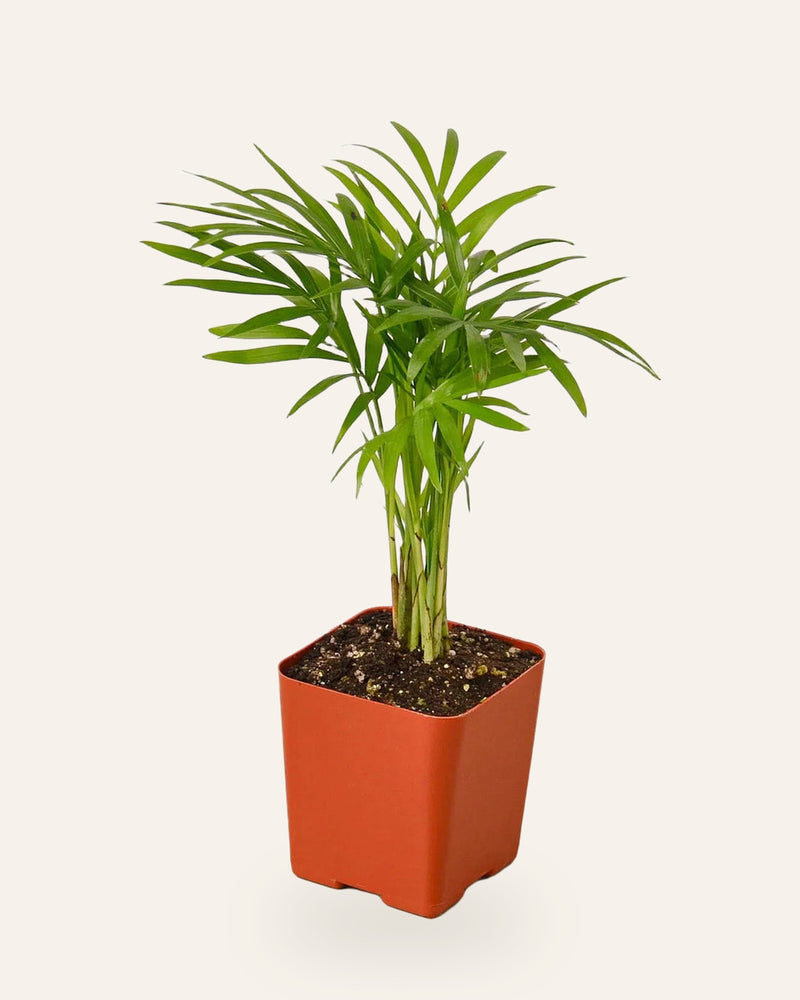
Palma de salón
Chamaedorea elegansPot fit: 4-inch and 6-inch nursery potsWater when the top 1 to 2 inches of potting mix feel dry
from $21.99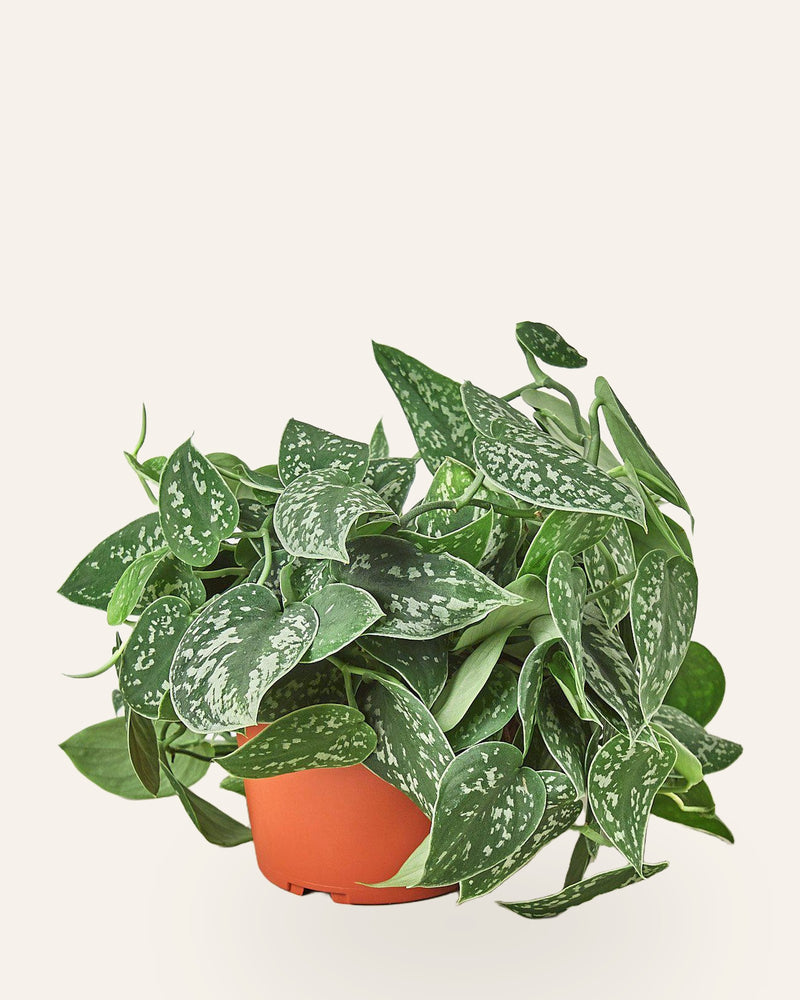
Pothos satén
Scindapsus pictusPot fit: 4-inch and 6-inch nursery potsWater after the top 1 to 2 inches of soil have dried
from $28.99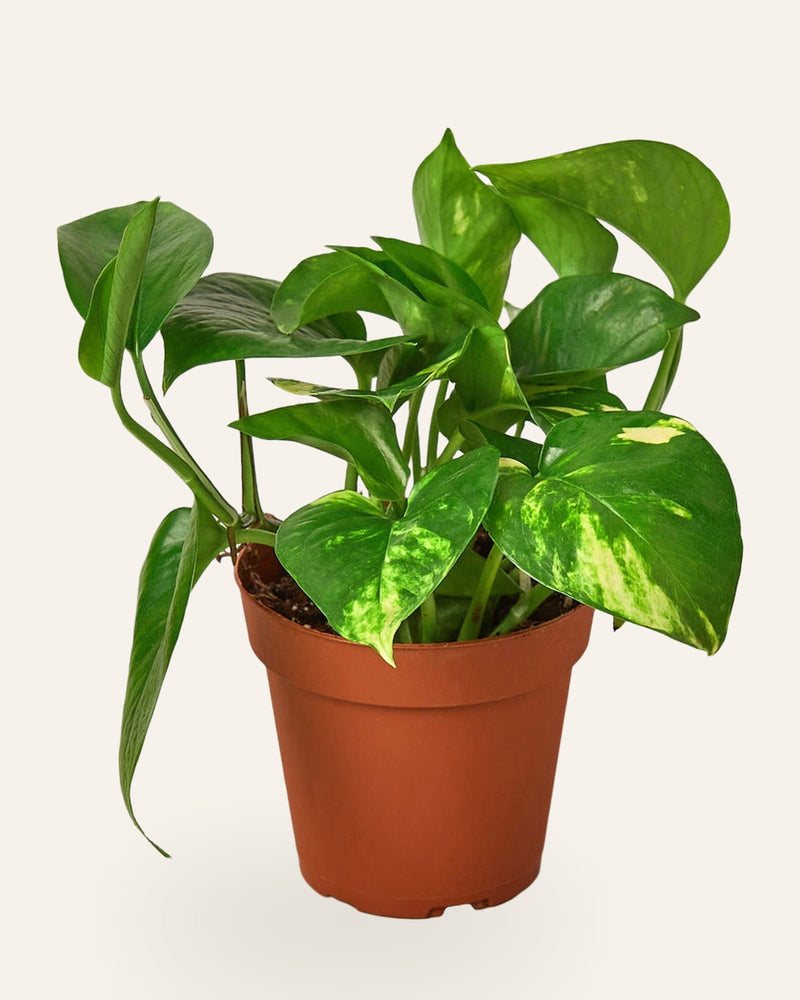
Poto dorado
Epipremnum aureumPot fit: 4-inch and 6-inch nursery potsWater when the top 2 inches of soil are dry, then drain fully
from $25.99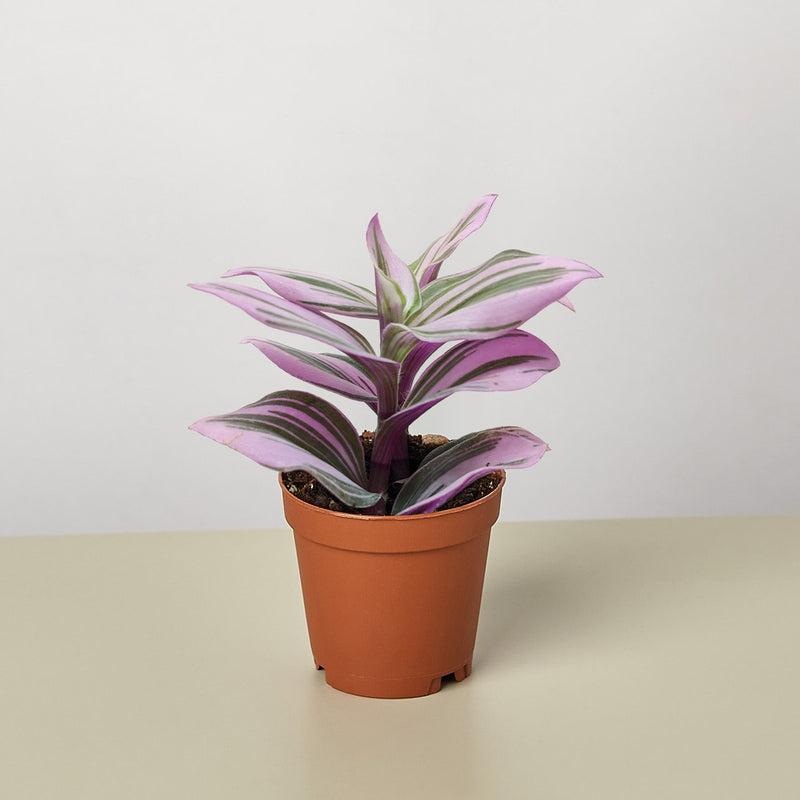
Tradescantia 'Nanouk'
Tradescantia albiflora 'Nanouk'Pot fit: 4" or 6" nursery potwhen the top inch of soil is dry
from $31.99Keep going with the care library
Care pages by plant, plus the watering and light calculators and the plant doctor.
More from the Journal
All Journal articles
Cómo trasplantar plantas de interior: paso a paso y sin estrés radicular
Aprende a trasplantar plantas de interior paso a paso sin causar estrés por trasplante. Incluye el tamaño de la maceta, me...

Philodendron Congo Care: Light, Water and Fixes for Leaf Problems
How to care for Philodendron Congo: light, watering, soil, repotting and propagation, plus fixes for yellow, brown or droo...

Begonia Care Guide: Light, Water and Dark-Leaf Varieties
Care for indoor begonias including Begonia 'Black Magic' with practical advice on indirect light, watering, humidity, and ...