Pothos N'Joy: How It Differs From Golden and Marble Queen
Pothos N'Joy has tidy cream blocks on green leaves. See how it compares with Golden and Marble Queen, plus light, water, repotting and rooting in water.

At a glance
Put three pothos in a row and the quickest way to tell them apart is the paint job. A Golden Pothos is green with gold or yellow-green variegation. A Marble Queen has green leaves streaked with white. N'Joy has green leaf centers with neat, uneven cream edges.
Quick answer: Palma Botanical Co., an online houseplant shop in Los Angeles, says N'Joy is the pothos with cream edges on green leaves. Give it bright, indirect light so the cream holds, and let the soil dry between waterings.
N'Joy at a glance

| Need | What to do | Source |
|---|---|---|
| Light | Bright, indirect light. Lower light may make variegated pothos lose some of their coloring. | Clemson Extension |
| Water | Let the soil dry between waterings. | Clemson Extension, University of Wisconsin Extension |
| Overwatering signs | Yellowing or browning leaves and leaf drop. | Iowa State Extension |
| Feeding | Only while growing, at half or quarter strength. | Iowa State Extension |
| Propagation | Cuttings with at least one node root in water or soil. | Clemson Extension |
How this guide was made
We read the Clemson, University of Wisconsin, Iowa State and University of Illinois extension pages linked in this article, and last checked them on 2026-11-13. They cover pothos as a group and name Golden Pothos and Marble Queen, but none names N'Joy. So the care below is pothos care, and the N'Joy leaf description comes from Palma's own product listing.
How to tell them apart

| Pothos | What the leaf looks like |
|---|---|
| Golden Pothos | Golden, yellow-green variegated leaves (Wisconsin Extension) |
| Marble Queen | Moss green leaves streaked with white (Wisconsin Extension) |
| N'Joy | Green leaf centers with cream edges (Palma product listing) |
Treat this table as a field guide. Variegation shifts from leaf to leaf on every pothos, so check the photo on the product page and the leaves on the plant you receive.
Light
Bright, indirect light is the sweet spot. Clemson Extension says pothos prefer bright, indirect light but will tolerate lower light, and adds that lower light may cause variegated varieties to lose some of their coloring. The University of Wisconsin says the same thing in fewer words: low light can result in loss of variegation. Keep the light up to hold the pattern.
If you are not sure what a spot gets, try Palma's light calculator.
Water

Let the soil dry between waterings, then water thoroughly. The sources differ on how far to let it go. Wisconsin says to let plants dry out slightly and water only when the soil surface is dry. Clemson says to let the soil dry completely, and to water thoroughly so the water reaches all the roots. A finger in the pot settles it: if the top is still damp, wait.
Iowa State Extension lists yellowing or browning leaves and leaf drop as signs of overwatering, and says plant roots that sit for long periods in wet soil develop root rot. It also says to check soil moisture before watering, not to water on a schedule, and not to leave a pot standing in a saucer of water. Our root rot guide shows what to do if the stem base goes soft.
Soil and pot
Clemson says to pot pothos in an airy, well-draining soil mix. Iowa State says the container should have a drainage hole.
Repotting
Clemson Extension says to repot pothos when roots show through the drainage holes or the plant becomes overcrowded and root-bound, and that most plants can be repotted once every year or two. The University of Illinois Extension repotting page adds that a plant that wilts between normal waterings may need it, and that repotting is best while the plant is actively growing, typically in spring or early summer.
1. Use fresh potting mix. Scrape off the top inch of old soil if a white crust has formed. 2. Replant at the same depth the plant was growing before. 3. Press the mix gently around the roots and water right away. 4. Leave a little room at the top of the pot for watering.
Feeding
Feed lightly and only while the plant is growing. Iowa State Extension says most fertilizers are made for outdoor conditions, so indoors use them at half or quarter strength and not with every watering. Too much fertilizer gives abundant but lanky growth.
Growing N'Joy in water
Yes, a cutting will root in a glass of water. Clemson says stem cuttings root easily in soil or water but need at least one node. Wisconsin says pothos vines root in water or vermiculite within 3 to 4 weeks, and suggests planting several rooted cuttings together in one pot.
Some detail from Iowa State Extension:
1. Cut a stem 3 to 6 inches long with at least two nodes. 2. Remove the lower leaves. 3. Change the water one to two times a week, and never let the level drop and leave the new roots in the air. 4. Move the cutting to pot soil once the roots are about an inch long.
Roots that form in water are coarser than soil roots. Iowa State says that once potted they can show stress such as wilting, leaf drop or browning, and that steady care helps the young plant recover. The University of Illinois says water-rooted plants often have very weak roots that do not pot up well into soil. Its author has rooted pothos and philodendron in water anyway, and advises refreshing the water when it turns cloudy. If you want a plant for the long run, move the cutting to soil as soon as it has an inch of root.
N'Joy and Marble Queen
Both are variegated pothos and both take the same basic care. One difference has a source: Clemson Extension says Marble Queen requires more light than other varieties. If you have a dimmer spot, expect Marble Queen to fade sooner.
Marble Queen is streaked with white throughout the leaf, and N'Joy has cream edges around green centers. Look at the plant in the photo, because leaf patterns vary from plant to plant and sellers describe them in slightly different words.
Common problems
| What you see | Likely reason | What to do |
|---|---|---|
| Yellow leaves, leaf drop | Too much water (Iowa State). Clemson adds low fertility as another cause. | Let the soil dry down. Empty the saucer. |
| Brown leaf tips or edges | Low humidity is the most likely cause, then inconsistent watering, too much fertilizer or water quality (Iowa State) | Water consistently and ease off feeding. |
| Losing its cream | Low light (Wisconsin, Clemson) | Move it closer to a bright window in small steps. |
| Lanky growth | Too much fertilizer (Iowa State) | Cut the dose to half or quarter strength. |
Our pothos care guide walks through the rest. If you are also wondering whether a plant is a pothos or a philodendron, we compare them in pothos vs philodendron, with photos.
FAQ
How do I take care of a pothos N'Joy?
Bright, indirect light, water when the soil has dried, a pot with drainage and a light feed while it is growing. Overwatering is the thing to avoid. (Sources: Clemson Extension and Iowa State Extension.)
How much light does a pothos N'Joy need?
Bright, indirect light holds the cream patches best. Lower light may cause variegated pothos to lose some of their coloring. (Source: Clemson Extension.)
What is the difference between a Glacier pothos and an N'Joy?
The extension pages we read do not cover either one by name. Compare the photo and name on the plant you are buying.
People Also Ask
Can N'Joy pothos grow in water?
Yes, as a cutting with at least one node. Change the water once or twice a week and move the cutting to soil when the roots are about an inch long, because water roots can be weak. (Sources: Clemson Extension and University of Illinois Extension.)
Why is my N'Joy pothos losing its white?
Usually too little light. Wisconsin Extension says low light can result in loss of variegation, so move it closer to a bright window in small steps. (Source: University of Wisconsin Extension.)
Is N'Joy pothos the same as Marble Queen?
They are sold as separate varieties with different patterns. Marble Queen is streaked with white and N'Joy has cream edges on green centers. (Sources: University of Wisconsin Extension for Marble Queen, Palma product listing for N'Joy.)
Nick Alan is the founder of Palma and has grown plants for 25+ years. He writes the shop's care guides and built the watering, soil and light tools.
View author profilePlants to grow next
Pothos and vining plants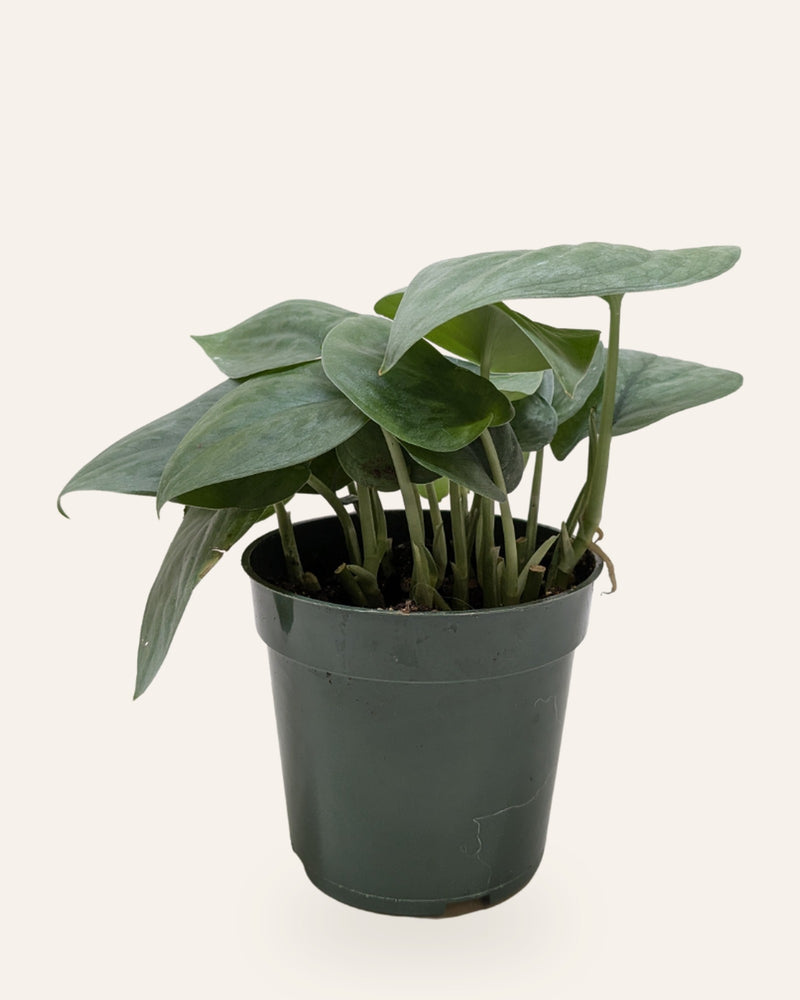
Scindapsus Platinum Java
Scindapsus 'Platinum Java'Pot fit: 4-inch and 6-inch nursery potswater when the soil is dry
from $44.99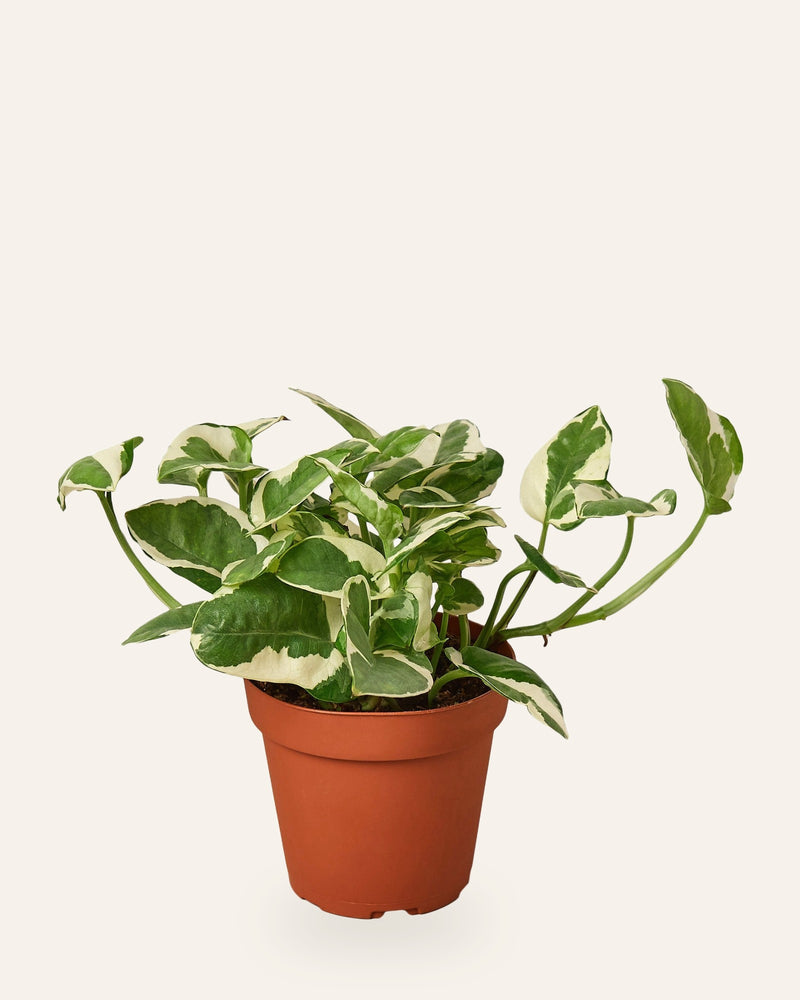
Pothos N'Joy
Epipremnum aureumPot fit: 3-inch and 4-inch nursery potsWater when the top 1 to 2 inches of soil are dry
from $21.99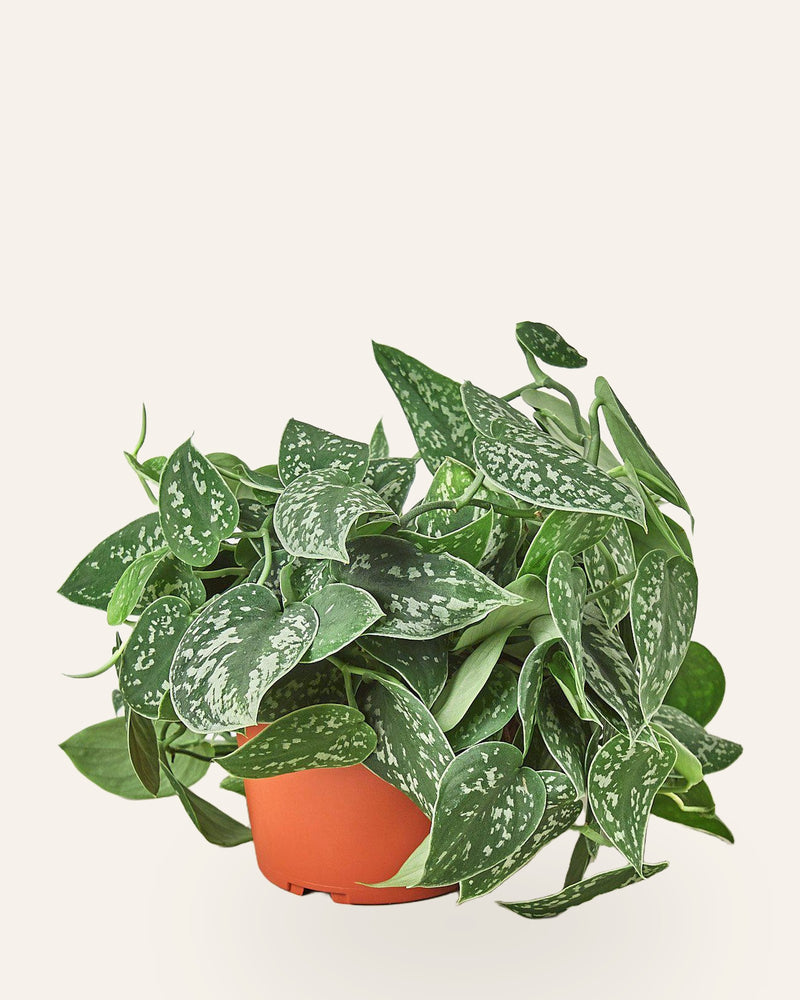
Pothos satén
Scindapsus pictusPot fit: 4-inch and 6-inch nursery potsWater after the top 1 to 2 inches of soil have dried
from $28.99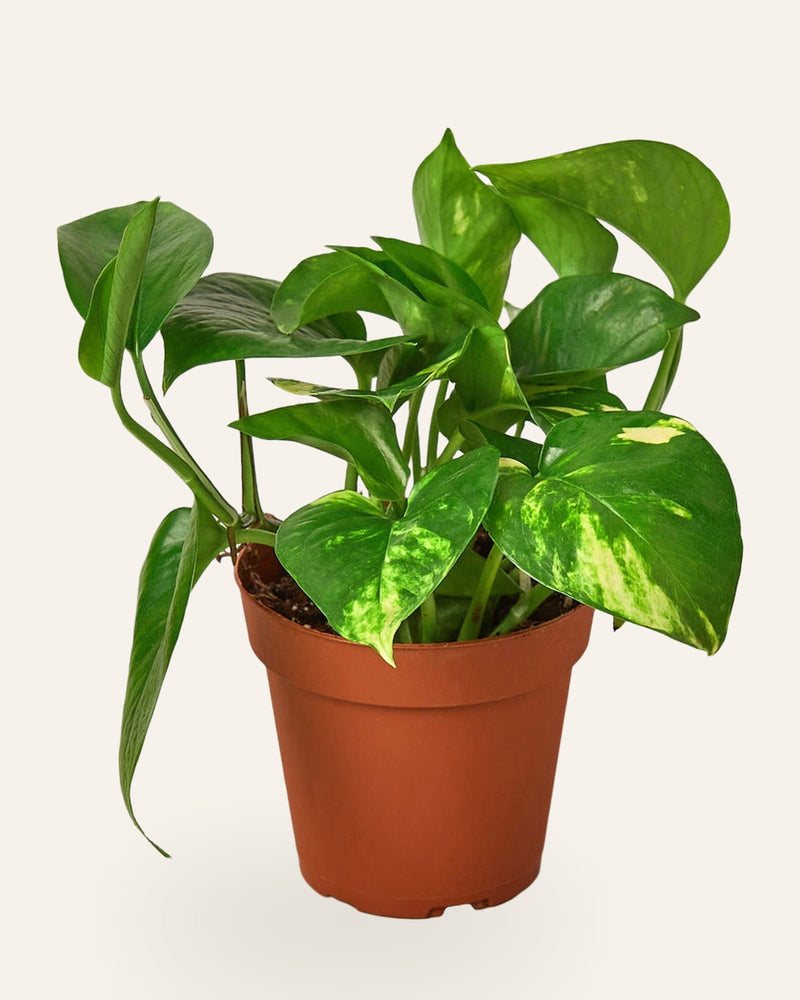
Poto dorado
Epipremnum aureumPot fit: 4-inch and 6-inch nursery potsWater when the top 2 inches of soil are dry, then drain fully
from $25.99Keep going with the care library
Care pages by plant, plus the watering and light calculators and the plant doctor.
More from the Journal
All Journal articles
Philodendron Congo Care: Light, Water and Fixes for Leaf Problems
How to care for Philodendron Congo: light, watering, soil, repotting and propagation, plus fixes for yellow, brown or droo...

Begonia Care Guide: Light, Water and Dark-Leaf Varieties
Care for indoor begonias including Begonia 'Black Magic' with practical advice on indirect light, watering, humidity, and ...

Homalomena Care Guide: Light, Water and Camouflage Foliage
Learn how to grow Homalomena indoors, including Homalomena 'Camouflage', with tips on medium light, steady moisture, and h...