Best Plant Gifts for Christmas and Housewarmings
Compare Golden Pothos, Parlor Palm and Hoya Heart by light, care, space and pet considerations to choose a Christmas or housewarming gift.

At a glance
The best plant gift fits the recipient’s light, space and watering habits. Golden Pothos suits someone who wants a trailing vine, Parlor Palm offers an upright leafy shape, and Hoya Heart makes a compact gift for a brighter spot. If they have cats or dogs, check the exact species before choosing.
Table of Contents
- Golden Pothos
- Parlor Palm
- Hoya Heart (Hoya kerrii)
- Practical Considerations
- Before you order
- Plant gift questions
- Sources
| Plant | Care Level | Light Requirements | Watering Needs | Pet Safety |
|---|---|---|---|---|
| Golden Pothos | Easy | Indirect light; brighter conditions support fuller growth | Check the mix before watering; avoid standing water | Toxic to pets |
| Parlor Palm | Easy | Indirect light; tolerates a dimmer position | Let the mix dry slightly, then water and drain | ASPCA lists this species as non-toxic to cats and dogs |
| Hoya Heart | Easy | Bright indirect | Allow to dry out | ASPCA lists this species as non-toxic to cats and dogs |
Golden Pothos

For a trailing plant that tolerates a range of indirect light conditions, the Golden Pothos works well on a shelf where its vines have room to trail. Check the potting mix before watering and empty any water collected in an outer pot. Drying time changes with light, pot size and the room, so a fixed weekly schedule is not a useful gift instruction. However, if pets are part of the household, it's crucial to note that the Golden Pothos is toxic to cats and dogs.
Parlor Palm

Choose the Parlor Palm for someone who wants arching foliage rather than a trailing vine. Give it indirect light and a draining pot. Let the mix dry slightly between waterings rather than keeping it constantly wet. Its delicate fronds make a visually appealing centerpiece, and the ASPCA lists Chamaedorea elegans as non-toxic to cats and dogs. Non-toxic does not mean edible; chewing plant material can still cause stomach upset.
Hoya Heart (Hoya kerrii)

The Hoya Heart is the smallest-looking gift of these three. Its heart-shaped leaf suits a small shelf or desk with bright indirect light. Keep in mind that without a stem node, the single-leaf Hoya kerrii won't develop into a vine. It thrives best in bright, indirect sunlight and needs the soil to dry completely between waterings. The ASPCA lists Hoya kerrii as non-toxic to cats and dogs, but it should not be offered as something for pets to eat.
Practical Considerations
Before choosing, ask the recipient:
- How much natural light does the recipient’s space get? Ensure your plant gift matches their light availability. Pothos and Parlor Palms handle lower light scenarios, while the Hoya Heart needs more light.
- Do they have enough space for a larger plant? Consider how much room they have; Parlor Palms can grow taller and wider than the more compact Hoya Heart.
- Are pets in the home? Prioritize a pet-friendly plant like the Parlor Palm or Hoya Heart if animals coexist with your loved one.
Before you order
- Ask which window the plant will sit near. A desk across a dark room is different from a desk beside a window.
- Check the selected size and pot option on the product page. Do not assume a decorative planter is included.
- For Christmas gifts, check current shipping information instead of assuming a delivery deadline.
- For a housewarming, choose for the new home’s conditions rather than the old address.
Plant gift questions
What if I do not know their light conditions?
Ask for a quick description or photo of the intended spot before choosing. A plant’s tolerance for lower light cannot make up for a windowless position without suitable artificial light.
Is a single Hoya heart a full climbing plant?
Do not assume it is. A rooted leaf without a viable stem node may remain a leaf rather than develop a vine. Check the actual listing and choose it for the form being sold.
Should I repot a plant before giving it?
A new decorative outer pot does not require immediate repotting. Keep drainage accessible and avoid adding unnecessary root disturbance simply to make a gift look finished.
Sources
Choose the shape and care routine that fit: shop Golden Pothos, Parlor Palm or Hoya Heart. Check each listing for current options.
Nick Alan is the founder of Palma and has grown plants for 25+ years. He writes the shop's care guides and built the watering, soil and light tools.
View author profilePlants to grow next
Easy-care plants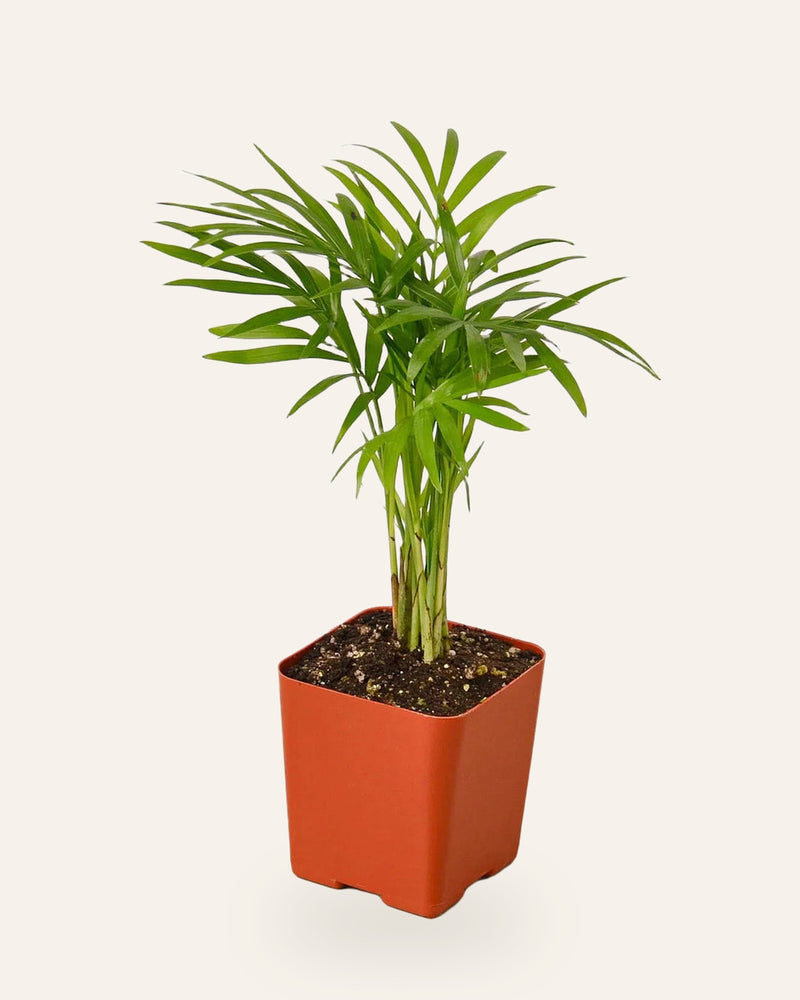
Palma de salón
Chamaedorea elegansPot fit: 4-inch and 6-inch nursery potsWater when the top 1 to 2 inches of potting mix feel dry
from $21.99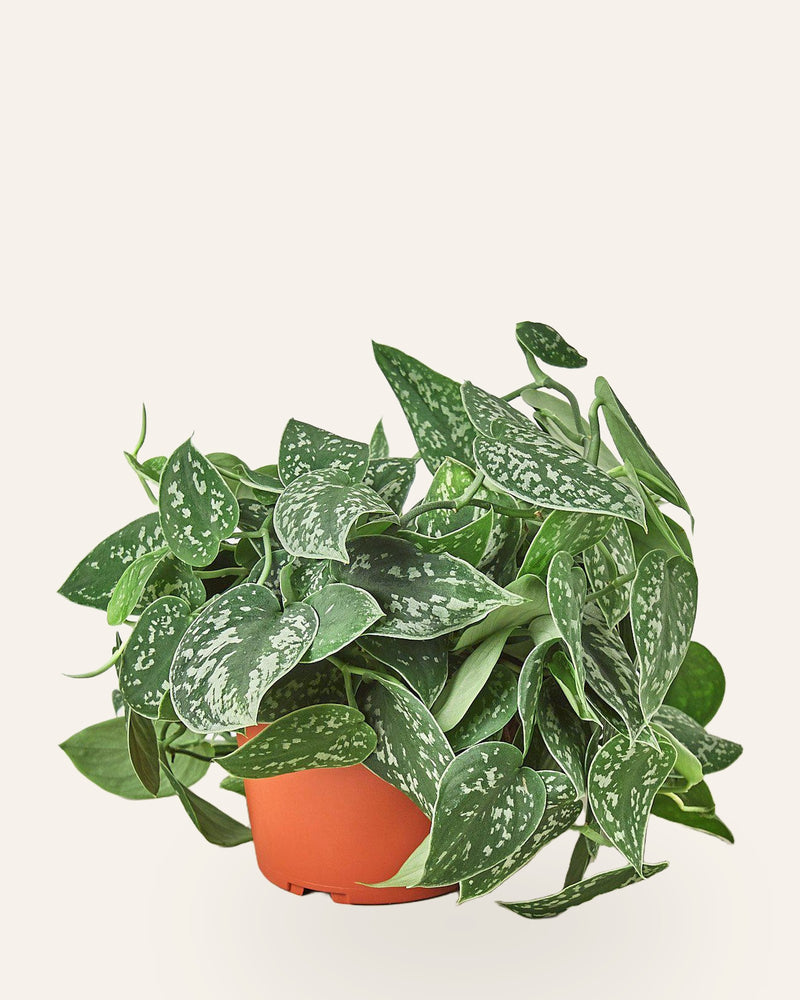
Pothos satén
Scindapsus pictusPot fit: 4-inch and 6-inch nursery potsWater after the top 1 to 2 inches of soil have dried
from $28.99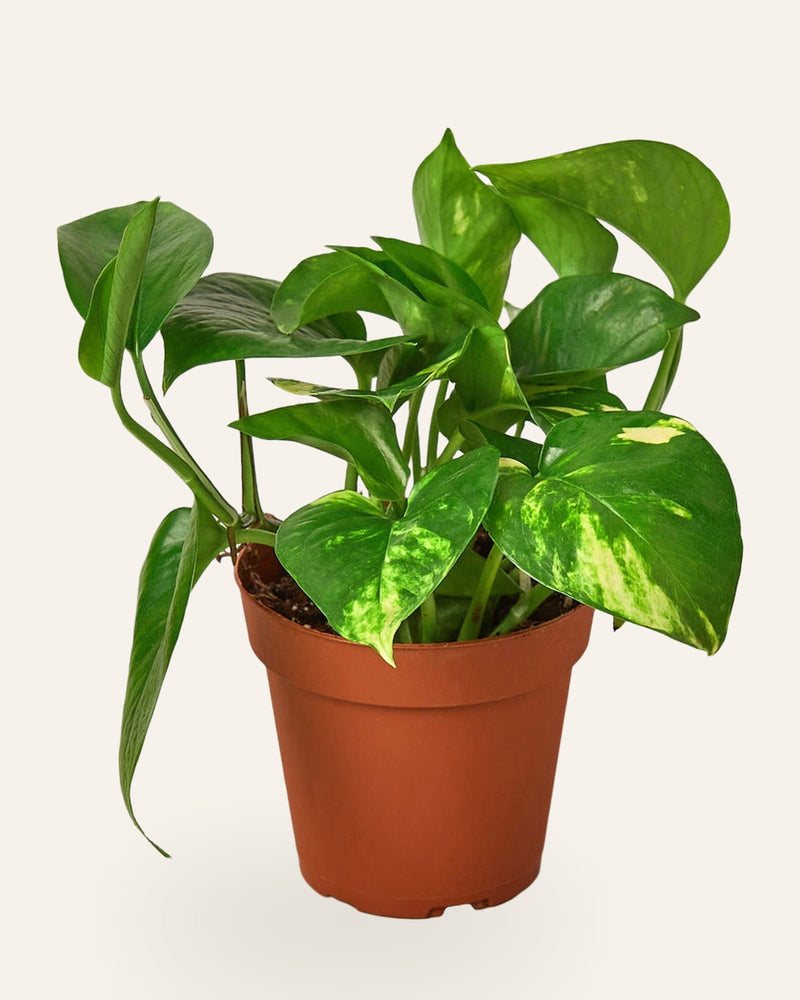
Poto dorado
Epipremnum aureumPot fit: 4-inch and 6-inch nursery potsWater when the top 2 inches of soil are dry, then drain fully
from $25.99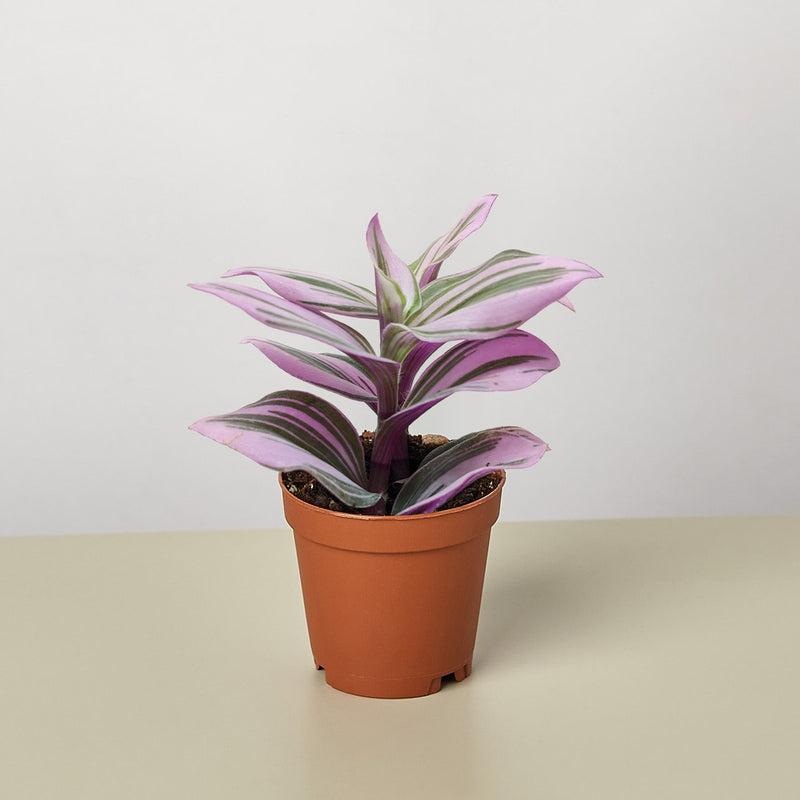
Tradescantia 'Nanouk'
Tradescantia albiflora 'Nanouk'Pot fit: 4" or 6" nursery potwhen the top inch of soil is dry
from $31.99Keep going with the care library
Care pages by plant, plus the watering and light calculators and the plant doctor.
More from the Journal
All Journal articles
Best Plants for North-Facing Windows: What Actually Works
Compare Parlor Palm, ZZ Plant and Golden Pothos for north-facing windows, with practical light checks and watering decisions.

Philodendron Congo Care: Light, Water and Fixes for Leaf Problems
How to care for Philodendron Congo: light, watering, soil, repotting and propagation, plus fixes for yellow, brown or droo...

Begonia Care Guide: Light, Water and Dark-Leaf Varieties
Care for indoor begonias including Begonia 'Black Magic' with practical advice on indirect light, watering, humidity, and ...