Hoya Varieties Guide: Krimson Queen, Australis, Sweetheart, Rope and More
A guide to eight hoya varieties: Krimson Queen, Australis, Australis 'Lisa', Tricolor, Sweetheart, Variegated Sweetheart, Rope and Publicalyx, with light and watering notes and how to choose.

At a glance
Hoyas share the same basic needs, but the varieties look and grow very differently, so the right one depends on your light and how much trailing you want.
> Quick answer: The hoya varieties Palma Botanical Co. carries are Krimson Queen, Australis, Australis 'Lisa', Tricolor, Sweetheart, Variegated Sweetheart, Rope and Publicalyx. Most want bright, indirect light and a wet-dry watering cycle (Iowa State). Sweetheart is the fussiest about light and humidity (Iowa State). Rope grows much more slowly than the standard wax plant (Iowa State). Palma lists each one below with a care note and a link.
Key terms
- Bright indirect light: a bright spot where the sun does not land on the leaves. Iowa State: bright enough to read a book by.
- Wet-dry cycle: water the whole root zone, then let the mix dry almost completely before watering again (Iowa State).
- Peduncle (spur): the short stalk that carries the flowers. Many hoyas bloom from the same one again, so leave it alone (Iowa State, UF/IFAS).
What all hoyas have in common
Iowa State Extension says the genus includes hundreds of species from tropical and subtropical Asia and Australia. UF/IFAS puts it at 200 to 300 species. Many grow on tree branches in the wild, so they like a chunky, airy mix and a pot that drains.
Light does most of the work. Iowa State says hoyas thrive in bright, indirect light, often in one of the brightest windows in the house, especially if you want flowers. Low light gives thin, stretched growth and little or no blooming. UF/IFAS agrees that a plant that never flowers is usually short on light.
Iowa State puts comfortable indoor temperatures at 65 to 80 F and says hoyas do not tolerate anything below 55 F.
Two more Hoyas to compare
Explore Hoya Sunrise and Hoya crassipetiolata. Check each product page for the current pot options and availability. For the wider selection, browse the Hoya collection or return to the Hoya field guide.
The varieties
Krimson Queen
Krimson Queen is a form of Hoya carnosa, the classic wax plant. NC State lists 'Krimson Queen' with a green center and creamy white to pink margins. Like the species, it wants bright indirect light year-round and soil that dries between waterings (NC State). Our hoya care guide covers light and watering, plus how to get blooms.
Shop it: https://palmaplants.com/products/hoya-krimson-queen

Australis
Iowa State describes Hoya australis as a vigorous grower with round to oval leaves, sweetly fragrant white flowers with a pinkish-red center, and a habit of flowering sooner indoors than other species. UF/IFAS calls it common waxflower. Give it a bright window, and let the top third to half of the mix dry between waterings (UF/IFAS).
Shop it: https://palmaplants.com/products/hoya-australis

Australis 'Lisa'
Lisa is a cultivar of Hoya australis. We found no extension page on this cultivar, so treat the Australis guidance as your starting point: bright indirect light, a wet-dry cycle, and a pot that drains (Iowa State, UF/IFAS). Judge Lisa's look from the photos on its product page.
Shop it: https://palmaplants.com/products/hoya-australis-lisa

Tricolor
NC State lists 'Krimson Queen' or 'Tricolor' as one cultivar, a Hoya carnosa with a green center ringed by creamy white to pink margins. So Tricolor shares Krimson Queen's care: bright indirect light, a fast-draining mix, and soil that dries between waterings (NC State). Palma lists it as its own plant, so compare the photos.
Shop it: https://palmaplants.com/products/hoya-tricolor

Sweetheart (Hoya kerrii)
Sweetheart has thick, heart-shaped leaves spaced along thin, twining vines (Iowa State). It is less vigorous and more particular about light and humidity than the common species, and it can take years to flower (Iowa State). NC State says it likes warm, humid spots, ideally 65 to 80 F, and room-temperature water, because cold water can shock it. Let it dry somewhat between waterings.
NC State says not to cut back the long, bare, twining stems, because they come before new leaves or flowers. Flowers produce reddish-brown nectar that can stain fabric and walls (NC State, Iowa State).
Shop it: https://palmaplants.com/products/hoya-sweetheart

Variegated Sweetheart
This is the sweetheart with a color border on the heart. NC State lists a 'Variegata' form of Hoya kerrii with a green leaf center and a creamy white border. Care follows the standard Sweetheart notes above: warm, humid, bright light, and a pot that lets the soil dry somewhat between waterings (NC State, Iowa State).
Shop it: https://palmaplants.com/products/hoya-sweetheart-variegated

Rope (Hoya carnosa 'Compacta')
Rope is Hoya carnosa 'Compacta', sometimes called 'Krinkle Kurl' or Hindu rope. NC State says the leaves are folded over, which gives the rope-like look. Iowa State says it has the same care and flowering habits as the typical species, with the main difference that it grows much more slowly. UF/IFAS compares the curved leaves of 'Krinkle Kurl' to fortune cookies.
Shop it: https://palmaplants.com/products/hoya-rope

Publicalyx
We found no extension page on Hoya publicalyx, so this section stays short and general. The genus guidance still applies: bright indirect light, an airy mix that drains fast, and a wet-dry cycle (Iowa State). Check the product page for the leaf color and size that Palma lists today.
Shop it: https://palmaplants.com/products/hoya-publicalyx

Hoya varieties at a glance
| Variety | Look | Light | Water note | Palma link |
|---|---|---|---|---|
| Krimson Queen | Green center, creamy white to pink margins (NC State) | Bright indirect (NC State) | Dry between waterings (NC State) | https://palmaplants.com/products/hoya-krimson-queen |
| Australis | Round to oval leaves (Iowa State) | Bright window (UF/IFAS) | Top third to half dries (UF/IFAS) | https://palmaplants.com/products/hoya-australis |
| Australis 'Lisa' | See product page (no extension source) | Bright indirect (Iowa State) | Wet-dry cycle (Iowa State) | https://palmaplants.com/products/hoya-australis-lisa |
| Tricolor | Green center ringed in creamy white to pink (NC State) | Bright indirect (NC State) | Dry between waterings (NC State) | https://palmaplants.com/products/hoya-tricolor |
| Sweetheart | Heart-shaped leaves (Iowa State) | More particular about light (Iowa State) | Dry somewhat between waterings (NC State) | https://palmaplants.com/products/hoya-sweetheart |
| Variegated Sweetheart | Green center, creamy white border (NC State 'Variegata') | More particular about light (Iowa State) | Dry somewhat between waterings (NC State) | https://palmaplants.com/products/hoya-sweetheart-variegated |
| Rope | Tightly curled, folded leaves (NC State, Iowa State) | Bright indirect (Iowa State) | Wet-dry cycle, slower growth (Iowa State) | https://palmaplants.com/products/hoya-rope |
| Publicalyx | See product page (no extension source) | Bright indirect (Iowa State) | Wet-dry cycle (Iowa State) | https://palmaplants.com/products/hoya-publicalyx |
Palma Botanical Co. offers free shipping on live plants in the 48 contiguous states.
Which hoya is right for you
You want the easiest start. Krimson Queen, Tricolor and Australis follow the common pattern: bright light, a drying-out cycle, and a pot that drains. Iowa State says Australis flowers sooner indoors than other species.
You want something slow and tidy. Rope grows much more slowly than the typical species (Iowa State).
You want the heart shape. Sweetheart and Variegated Sweetheart look the part, but Iowa State says they are less vigorous and fussier about light and humidity. Pick a warm, humid room, and do not expect quick vining.
You want the longest trailing vines. Australis is the vigorous one (Iowa State). Plan for a hanging basket or a trellis. UF/IFAS suggests a basket so the tendrils hang freely.
You are short on light. Low light means stretched growth and little flowering in any hoya (Iowa State), so the window matters more than the variety.
FAQ
How do I care for Hoya australis?
Give it a bright window and a fast-draining mix. UF/IFAS says to let the top third to half of the soil dry out between waterings and to water very sparingly in winter. Iowa State says it is a vigorous grower that often flowers sooner indoors than other species.
How do I take care of Hoya kerrii?
Keep it warm and humid, ideally 65 to 80 F, and water with room-temperature water (NC State). Let the soil dry somewhat between waterings, and give it bright light. Iowa State says it is more particular about light and humidity than the common species.
How do I root Hoya kerrii cuttings?
Make sure the cutting includes a node. Iowa State and NC State both warn that a single heart-shaped leaf sold without stem tissue may root but will not grow into a vine. With a node, stem cuttings should root in water, moist sphagnum or a light mix, often within weeks (Iowa State).
People Also Ask
How do I propagate Hoya australis?
Take a stem cutting with at least one or two nodes. Iowa State says to remove the lowest leaves and set the node in water, moist sphagnum or a light propagation mix.
Why does my Hoya kerrii have brown spots or wrinkled leaves?
NC State says thinning, brown or wrinkled leaves can mean the plant is drying out too much between waterings. It also warns that overwatering can lead to root rot.
Why is my Hoya australis 'Lisa' dropping leaves?
Check watering first. NC State says too wet or too dry soil can cause hoya leaves to drop (carnosa page), and Iowa State calls overwatering in a poorly drained mix the quickest path to root decline. Lisa has no extension page of its own, so this answer applies the general guidance.
What is a rope hoya?
It is Hoya carnosa 'Compacta', also called Hindu rope or 'Krinkle Kurl', with tightly curled leaves close together on trailing stems. Iowa State says it grows much more slowly than the typical species.
Nick Alan is the founder of Palma and has grown plants for 25+ years. He writes the shop's care guides and built the watering, soil and light tools.
View author profilePlants to grow next
Hoyas
Hoya 'Sunrise'
Hoya 'Sunrise' (Hoya lacunosa x obscura)Pot fit: 4" or 6" nursery pot from $32.99
Hoya 'Crassipetiolata'
Hoya crassipetiolataPot fit: 4" nursery pot $38.99
Hoya Wayetii Variegated, 4" Pot
$33.99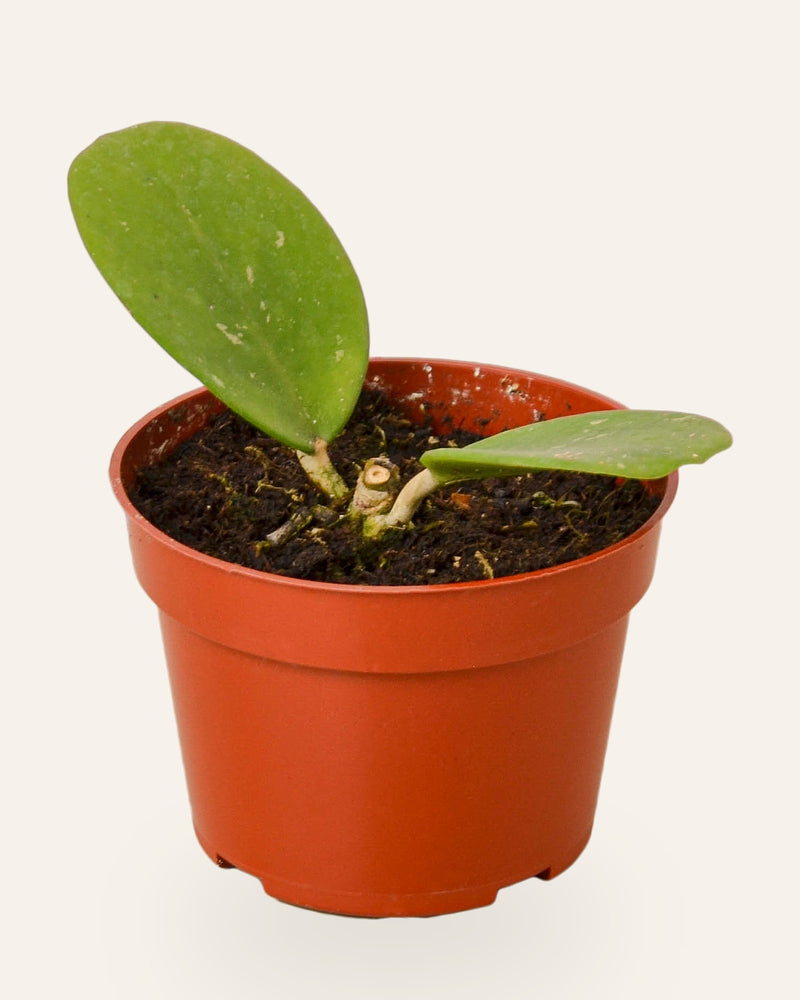
Round Leaf Hoya
Hoya obovataPot fit: 4" nursery potWater only when the soil is fully dry
$31.99Keep going with the care library
Care pages by plant, plus the watering and light calculators and the plant doctor.
More from the Journal
All Journal articles
Philodendron Congo Care: Light, Water and Fixes for Leaf Problems
How to care for Philodendron Congo: light, watering, soil, repotting and propagation, plus fixes for yellow, brown or droo...

Begonia Care Guide: Light, Water and Dark-Leaf Varieties
Care for indoor begonias including Begonia 'Black Magic' with practical advice on indirect light, watering, humidity, and ...

Homalomena Care Guide: Light, Water and Camouflage Foliage
Learn how to grow Homalomena indoors, including Homalomena 'Camouflage', with tips on medium light, steady moisture, and h...