
Pet-Safe Plant Trio
$57.99
Three cat- and dog-safe houseplants in one box: patterned, striped and feathery.
At a glance
- LightMedium to bright, indirect
- WaterTop 1 in. starting to dry; keep evenly moist
- Care levelModerate
- LightBright, indirect
- WaterTop 2 in. dry
- Care levelEasy
- LightLow to bright, indirect
- WaterTop 1 in. dry
- Care levelEasy
What’s in the bundle
Each plant ships in its own nursery pot.
Free shipping on live plants. Shipping details · Claim window
About this bundle
Three 4" houseplants for a medium-light shelf: a Rattlesnake Calathea, a Watermelon Peperomia and a Parlor Palm. One has wavy leaves with dark green markings and purple undersides, one has round leaves striped like a watermelon rind, and one has soft, feathery fronds. All three grow well in bright, indirect light, and the palm also copes with dimmer corners.
What is in the box: Rattlesnake Calathea, Watermelon Peperomia and Parlor Palm
- Rattlesnake Calathea (Goeppertia insignis), 4" pot. Long, wavy leaves with dark green markings on top and purple undersides. It wants medium to bright light with no direct sun, and water when the top inch of soil starts to dry.
- Watermelon Peperomia (Peperomia argyreia), 4" pot. Thick, round leaves with silver stripes that look like a watermelon rind. It likes bright, indirect light, and water when the top 2 inches of soil are dry.
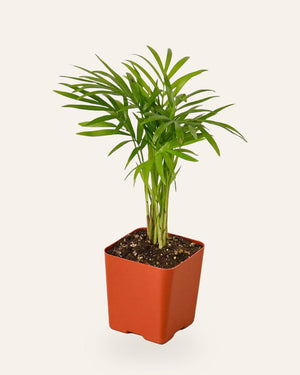
- Parlor Palm (Chamaedorea elegans), 4" pot. Soft, feathery fronds on thin stems. It tolerates lower light than the other two and wants water when the top inch of soil is dry.


Why this bundle
The leaf shapes are wavy, round and feathery, so a small group on one shelf reads as a collection. All three are happy near an east window, or a few feet back from a south or west window.Their water needs differ a little. The calathea likes steadier moisture than the peperomia, which stores water in its leaves. Check each pot with a finger before you water instead of doing all three on one day.
The box ships free. Each plant arrives in a 4" nursery pot, which is included. Photographed in decorative pots for styling. Shop our pots.
Who this trio suits
It suits a desk, bookshelf or side table that gets bright light but no direct sun, and a first collection for someone who wants more than one leaf shape. It also works as a gift for a friend with a bright room, since three small plants arrive in one order.Care guides from the Journal
All articlesQuestions people ask
How to care for a rattlesnake plant?
Give it medium to bright light without direct sun, which scorches the leaves. Water when the top inch of soil starts to dry and keep the soil evenly moist, not soggy. It likes humid air, so keep it away from heating vents. Brown leaf edges usually point to dry air or minerals in tap water.
How to care for a parlor palm?
Parlor palms accept low to bright indirect light, but direct sun scorches the fronds. Water when the top inch of soil is dry and empty the saucer so the roots do not sit in water. Brown tips usually mean dry soil, dry air or too much fertilizer. It grows slowly.
How to care for peperomia?
Most peperomias like bright, indirect light and a pot with drainage. Water when the top 2 inches of soil are dry, because the thick leaves hold water and the roots rot in wet soil. Feed with diluted houseplant fertilizer once a month in spring and summer.
People also ask
Why is my parlor palm turning brown?
Dry soil, dry air and direct sun are the usual causes. Check the soil first and water when the top inch is dry. Move the plant out of direct sun and cut fully brown fronds at the base. Brown tips can be trimmed, following the natural shape of the frond.
Why are rattlesnake plant leaves turning brown?
Dry air, soil that dried out completely, direct sun and minerals in tap water are the common causes. Keep the soil evenly moist and out of direct sun. If the edges keep browning, try filtered or rain water.
Why is my peperomia drooping?
Droopy leaves mean the plant is too dry or too wet. If the soil is dry and the leaves feel soft, water it. If the soil is wet and the stems feel mushy, let it dry out and check that the pot drains.
When to water peperomia?
Water when the top 2 inches of soil are dry, then let the extra drain away. In winter the soil dries more slowly, so check with a finger before you water.
When to repot calathea?
Repot when roots grow out of the drainage holes or fill the pot, usually in spring. Go up one pot size only, since calatheas do not like sitting in a lot of wet soil.Care guides and tools for these plants Prayer plant and calathea care guide Indoor palm care guide Peperomia care guide Light calculator Watering calculator Plant quiz What is wrong with my plant? Care library