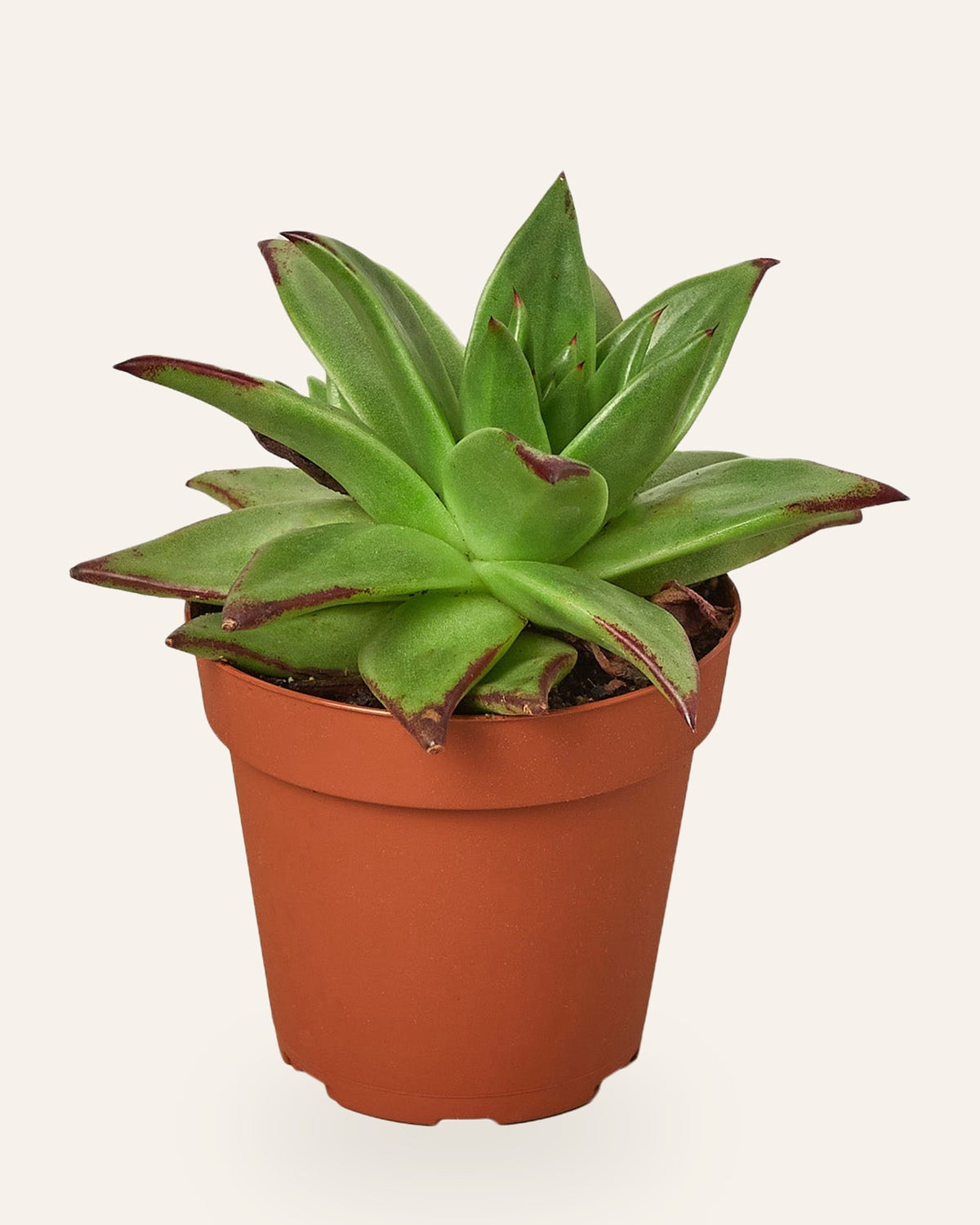
Echeveria 'Lipstick'
Live Plant
$20.00
Back in stock alert
Enter your email and we will write once when Echeveria 'Lipstick' (4" Pot) is available.
- LightBright indirect
- Pot size4" nursery pot
How to check your light
Hold your hand a foot above the spot at midday and look at the shadow it casts.
- Sharp, dark shadow: bright light.
- Soft, blurry shadow: medium light.
- Faint shadow or none: low light.
Care at a glance (click to expand or collapse)
| Light | Bright indirect light |
|---|---|
| Pot fit | 4" nursery pot |
| Care level | Easy: forgives a late watering and copes with a range of light |
Free shipping on live plants. Shipping details · Claim window
We couldn't confirm pet safety for this plant. Keep it out of reach of pets and ask your vet. Look it up in the pet-safe checker
About this plant
Echeveria 'Lipstick' is a compact succulent rosette with pointed green leaves tipped in bright red. The color deepens when the plant gets plenty of light. It stays small, so it fits a windowsill, a desk or a shallow dish garden.
Quick care
- Light: Bright light, including several hours of direct sun. A south or west window works well.
- Water: Soak the soil, then wait until it is fully dry before watering again.
- Soil and pot: Gritty cactus and succulent mix in a pot with drainage holes. Terra cotta helps soil dry faster.
- Temperature: 60 to 80°F
Care guide
Light is what matters most. Red tips show best in strong sun. In a dim spot the plant stretches toward the window and the red fades to green.
Water deeply, then let the soil dry out completely. In summer that may be every one to two weeks, in winter much less. Pour water at the base and keep it off the leaves, since water sitting in the rosette can cause rot.
Use a fast-draining mix. Regular potting soil holds too much moisture. Feed lightly in spring and summer with a diluted cactus fertilizer, and skip it in winter.
Lower leaves will dry and shrivel as the plant grows. Pull them off gently. If the plant gets tall and leggy, it needs more light.
Where to put this plant
Needs: Bright, indirect light
Find the window you have. Each one gives a different kind of light.
-
East-facing windowGentle morning sun, then bright shade.Best spot
-
South-facing windowBrightest, with sun most of the day.3 to 5 ft back
-
West-facing windowStrong, hot afternoon sun.Use a sheer curtain
-
North-facing windowSoft, steady light with no direct sun.Too dim
Distance changes it too
Grows well alongside
Succulents & Hoya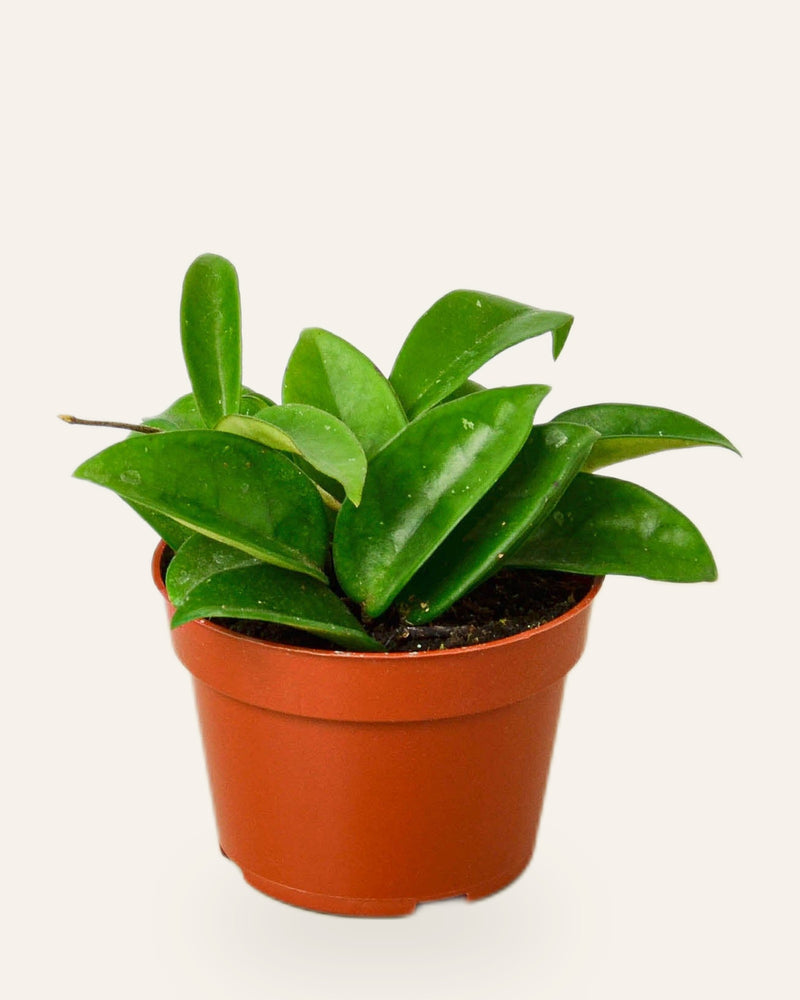
Wax Plant
Hoya carnosaPot fit: 4-inch nursery potPet-friendly for cats and dogsLet the soil dry out between waterings, then water well
$23.99Sold out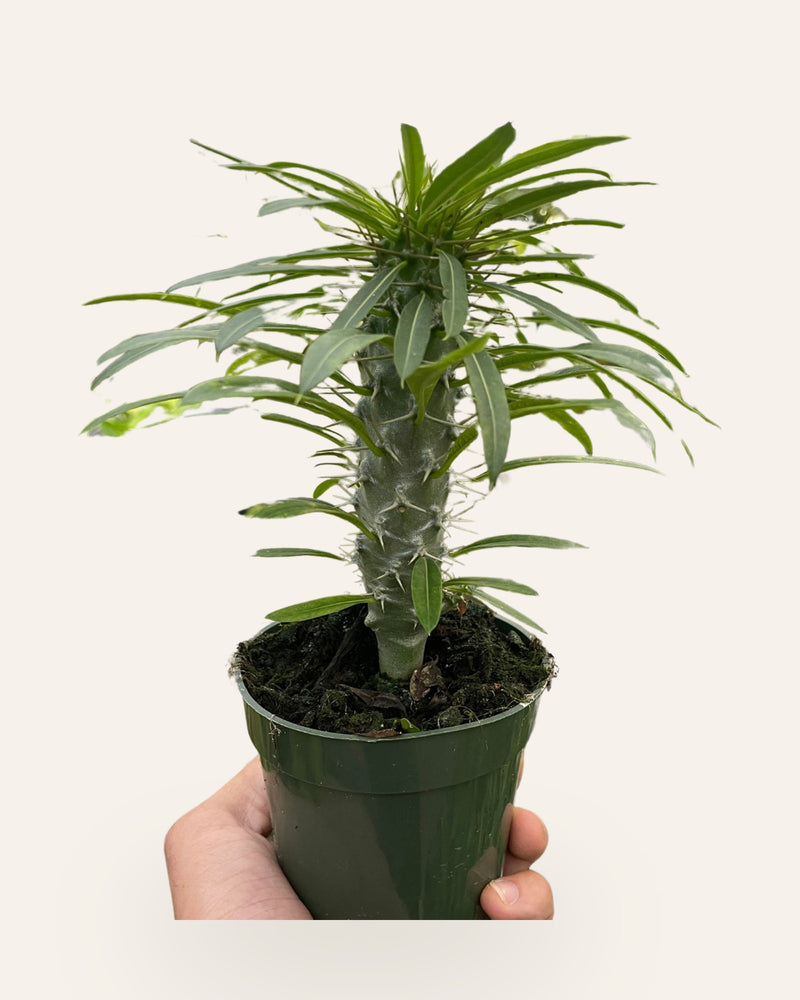
Madagascar Palm
Pachypodium lamereiToxic to cats and dogsWater deeply, then let the soil dry out completely
$32.49
Hoya 'Sunrise'
Hoya 'Sunrise' (Hoya lacunosa x obscura)Pot fit: 4" or 6" nursery pot from $32.99
Hoya 'Crassipetiolata'
Hoya crassipetiolataPot fit: 4" nursery pot $38.99Planters that fit this plant
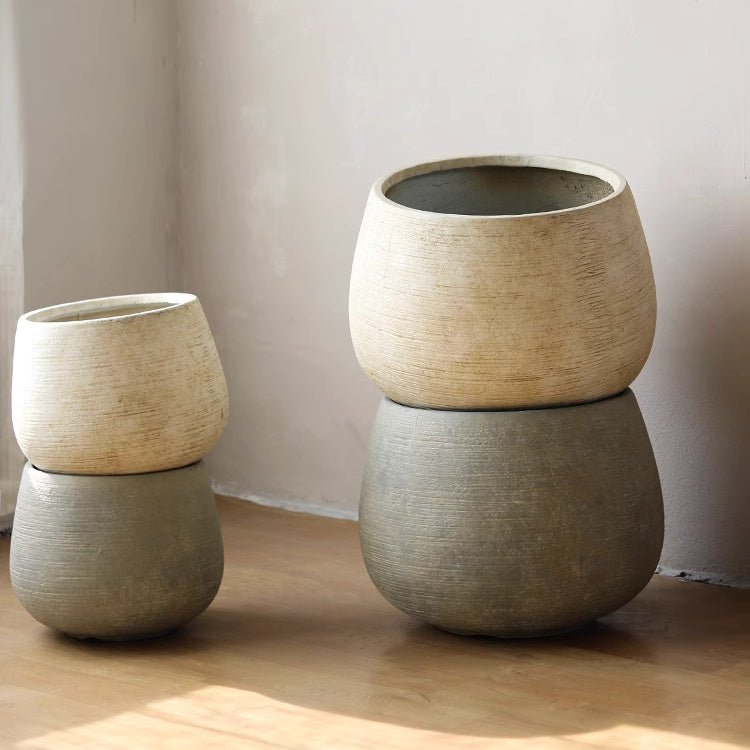
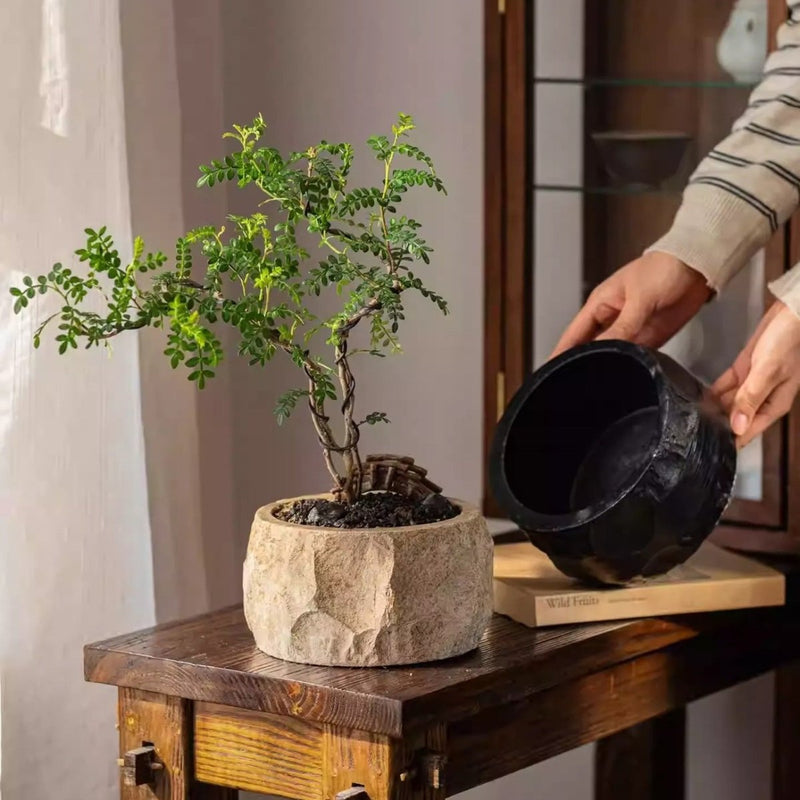
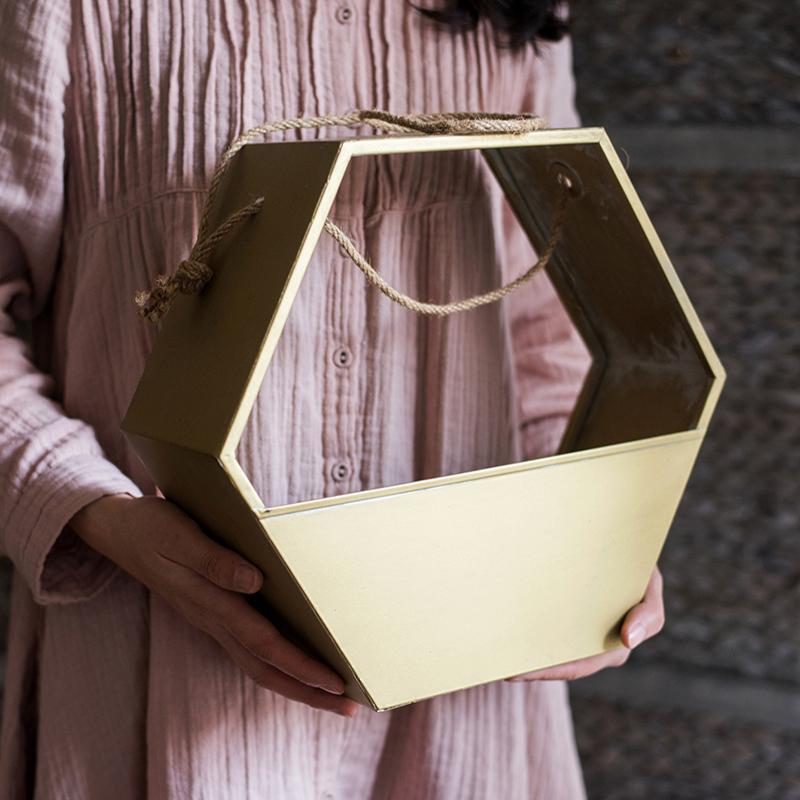
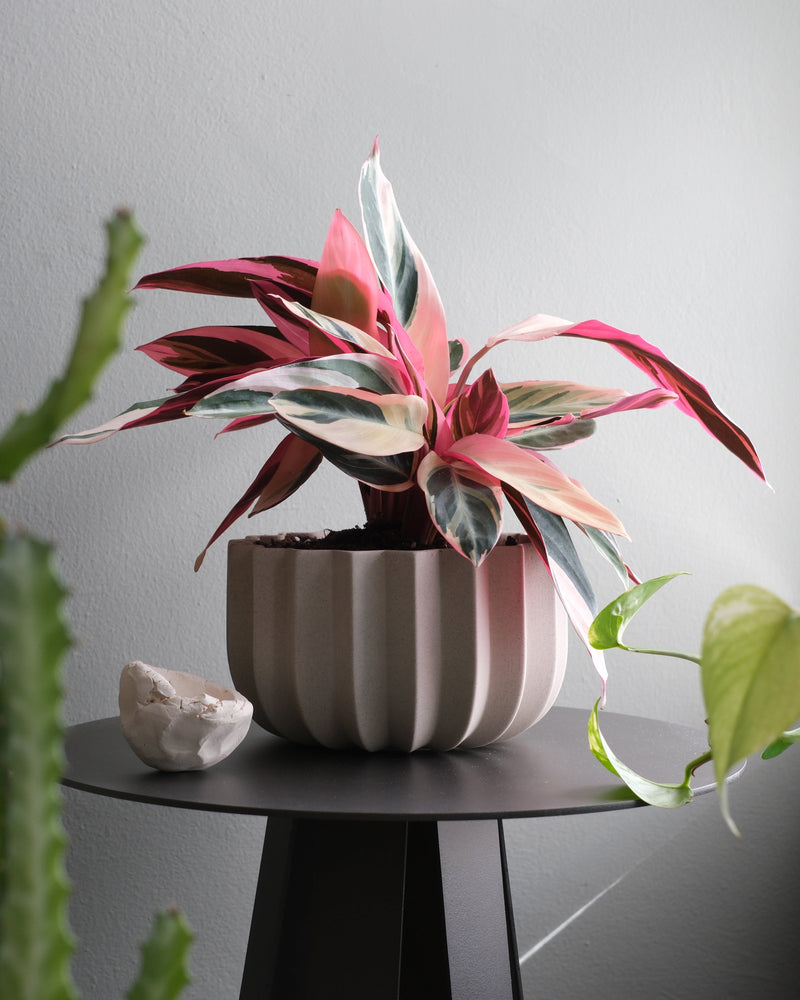
See all plantersMatched to the pot size of Echeveria 'Lipstick'. Planters ship separately from live plants.
Care guides from the Journal
All articlesQuestions people ask
How often to water succulents?
Water only after the soil is completely dry, roughly every 10 to 14 days in summer and every three to four weeks in winter. Soak until water runs out the drain hole, then empty the saucer. Soft, wrinkled lower leaves mean thirst, and mushy translucent ones mean too much water.
How to propagate succulents?
Twist a healthy leaf off cleanly, with no torn stub left on the stem, and let the cut end dry for a day or two. Lay it on dry succulent mix in bright, indirect light. Roots and a tiny rosette appear in a few weeks. Offsets can be separated with a bit of root and potted on their own.
How to plant succulents?
Use a pot with a drainage hole and a gritty succulent or cactus mix, ideally with extra perlite or pumice. Set the rosette so the lowest leaves sit just above the soil. Wait about a week before the first watering so any damaged roots can heal, and keep it in bright light.
People also ask
Why is my succulent dying?
Mushy, translucent leaves mean overwatering, so let the soil dry fully and check that the pot drains. Shriveled leaves mean thirst. A pale, stretched rosette needs more light. If the stem turns black and soft, cut above the rot, let the top dry for a few days, and re-root it.
How long do succulents live?
Indoors, an Echeveria can live for many years, and well-kept plants often go five to ten or more. The bottom leaves dry up as the rosette grows, which is normal. Fresh gritty soil every year or two, strong light and careful watering keep it going.
How big can succulents grow?
'Lipstick' stays compact, a rosette about 4 to 6 inches across that slowly forms offsets around the base. A bigger pot and plenty of light let it spread. A long, leggy stem means it wants more light and is stretching toward the window.Succulents vary a lot by genus, so a result for another succulent does not carry over to this one