Parent Botanical Hub Accepted: Dracaena trifasciata Synonym: Sansevieria trifasciata

Snake Plants (Dracaena trifasciata & Varieties)

Snake Plants (historically Sansevieria, scientifically classified as Dracaena trifasciata) are iconic architectural succulents native to west-central tropical Africa. Their upright foliage, drought tolerance and ability to cope with a range of indoor conditions make them popular houseplants.

🌿 Botanical Taxonomy & Trade Synonyms:

Royal Botanic Gardens, Kew (POWO) recognizes Dracaena trifasciata as an accepted botanical name. Retail names such as Zeylanica do not by themselves authenticate a species or cultivar. The trade name Sansevieria remains a beloved consumer synonym preserved throughout retail. While famous for surviving in dim corners, snake plants tolerate low light but thrive in bright indirect light.

Cultivar Guide

Snake Plant Cultivar Comparison

Compare every currently available snake plant in our collection. Choose a product to see its available pot sizes.

Cultivar / Trade Form Botanical Identity Foliage Characteristics Variegation Preservation Growth Form
Lengua de suegra 'Fabi' (Sansevieria trifasciata) Lengua de suegra 'Fabi' (Sansevieria trifasciata) Snake plant trade form See product photos and details Divide a healthy rooted clump to retain its form See product details
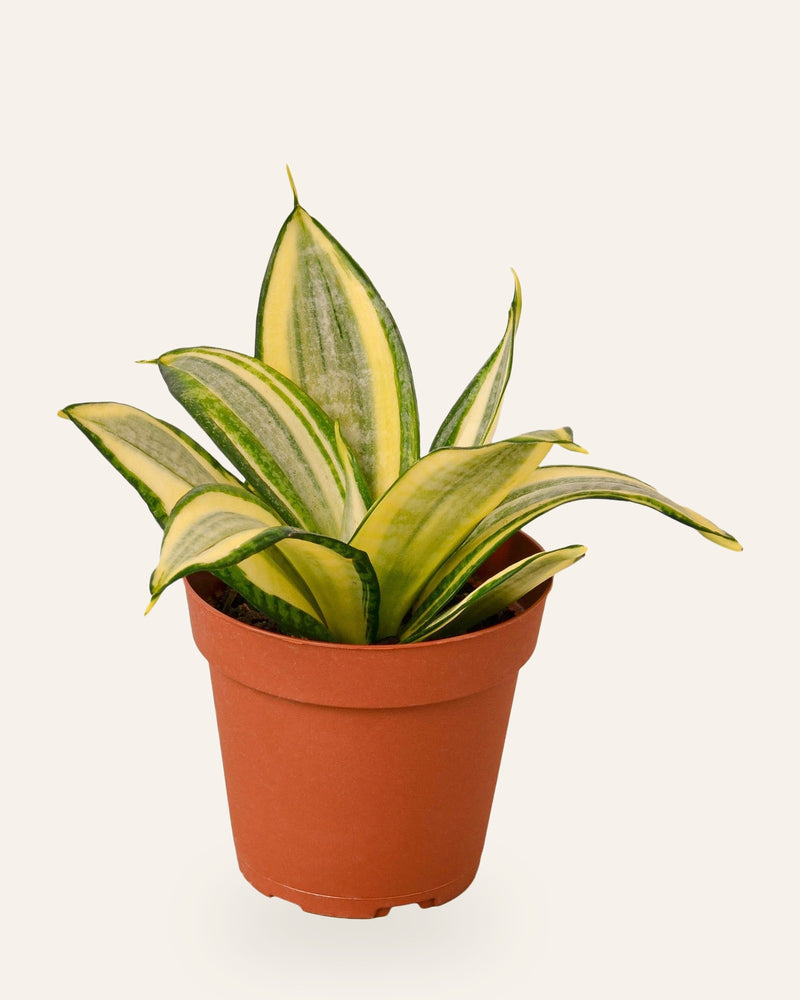
Lengua de suegra Hahnii dorada (Sansevieria trifasciata) Lengua de suegra Hahnii dorada (Sansevieria trifasciata) Dracaena trifasciata / Gold Hahnii trade form Green leaves with golden edges Divide rooted clumps to preserve golden edges Compact rosette
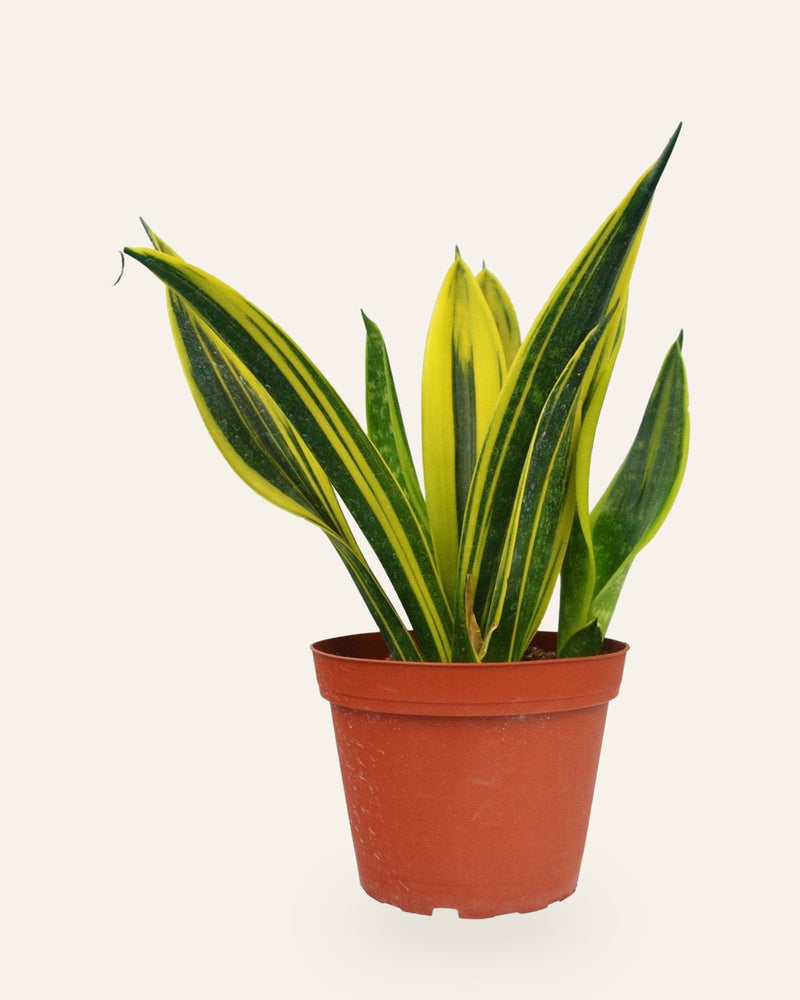
Lengua de suegra llama dorada (Sansevieria trifasciata) Lengua de suegra llama dorada (Sansevieria trifasciata) Dracaena trifasciata / Gold Flame trade form Green leaves with gold striping Divide a healthy rooted clump to retain its form Upright leaves
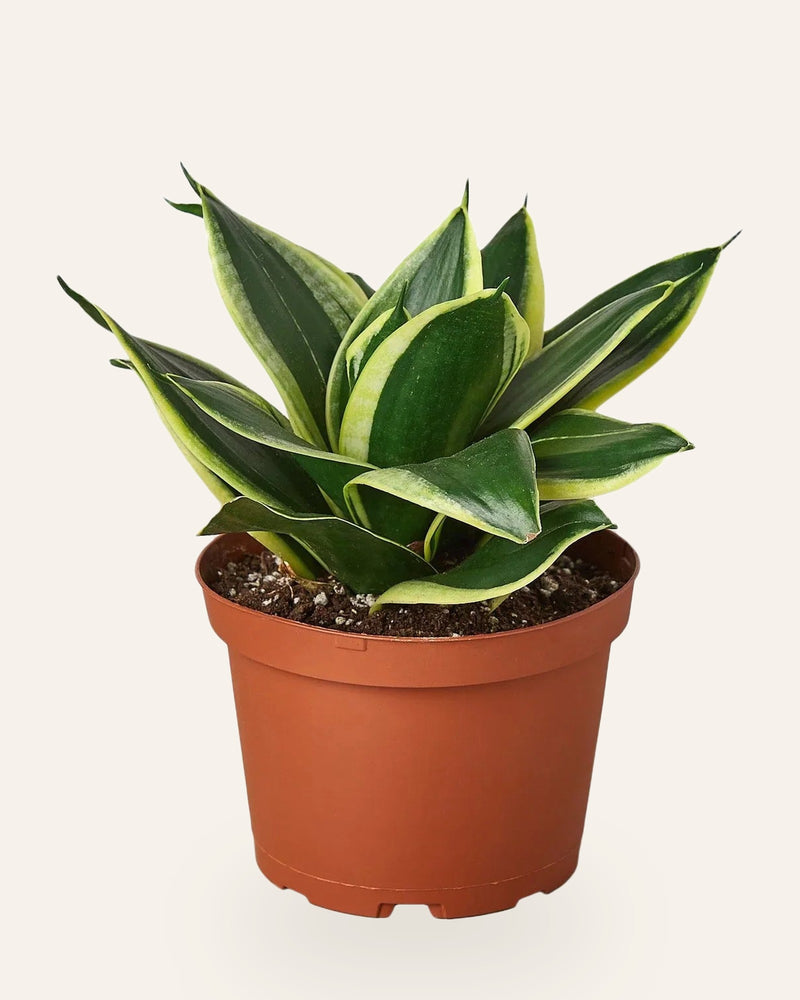
Sansevieria Black Gold Sansevieria Black Gold Dracaena trifasciata 'Black Gold' Dark green leaves edged in gold Divide rooted clumps to preserve gold margins Upright leaves
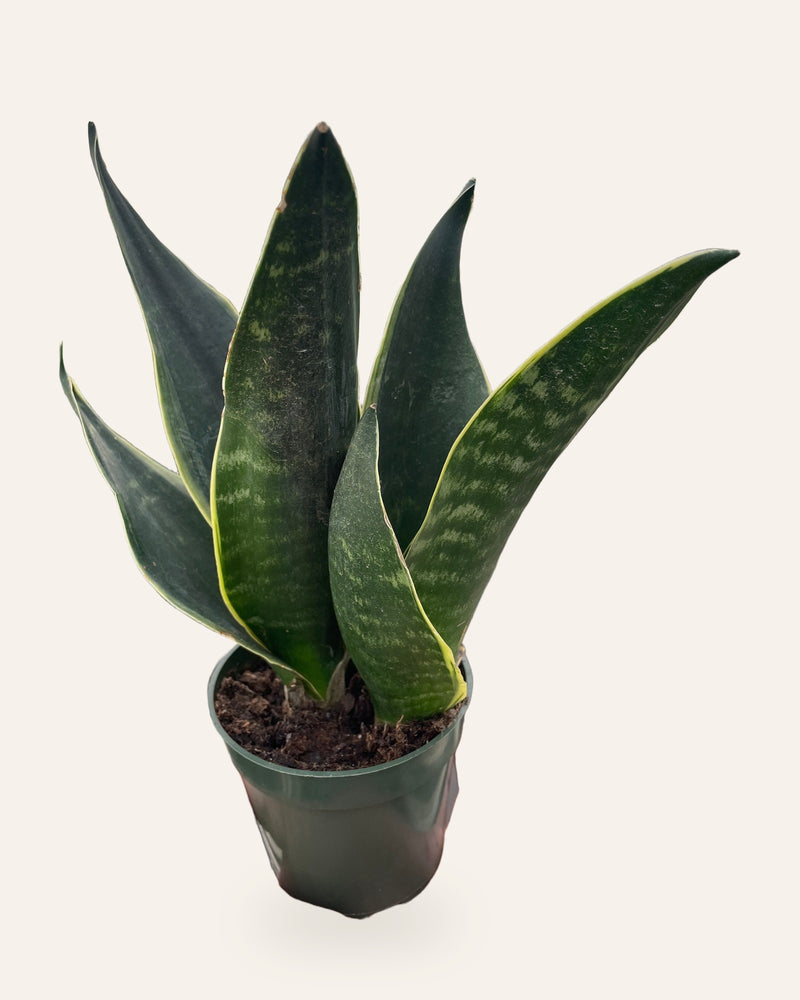
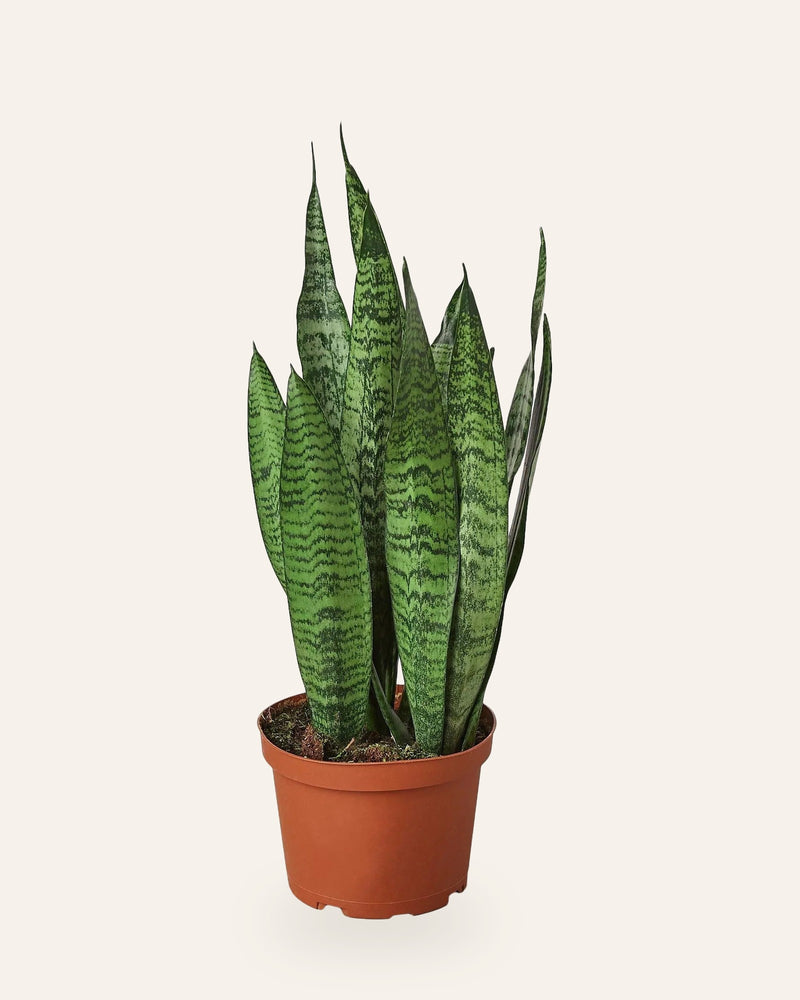
Sansevieria 'Zeylanica' Sansevieria 'Zeylanica' Zeylanica trade name; botanical identity not verified Deep forest green blades with pale gray-green horizontal chevron bands Divide a healthy rooted clump to retain its form Tall, upright leaves
Lengua de suegra 'Moonshine' (Sansevieria trifasciata 'Moonshine') Lengua de suegra 'Moonshine' (Sansevieria trifasciata 'Moonshine') Dracaena trifasciata 'Moonshine' Silvery-gray leaves with light green markings and narrow dark green margins Divide a healthy rooted clump to retain its form Broad, upright leaves
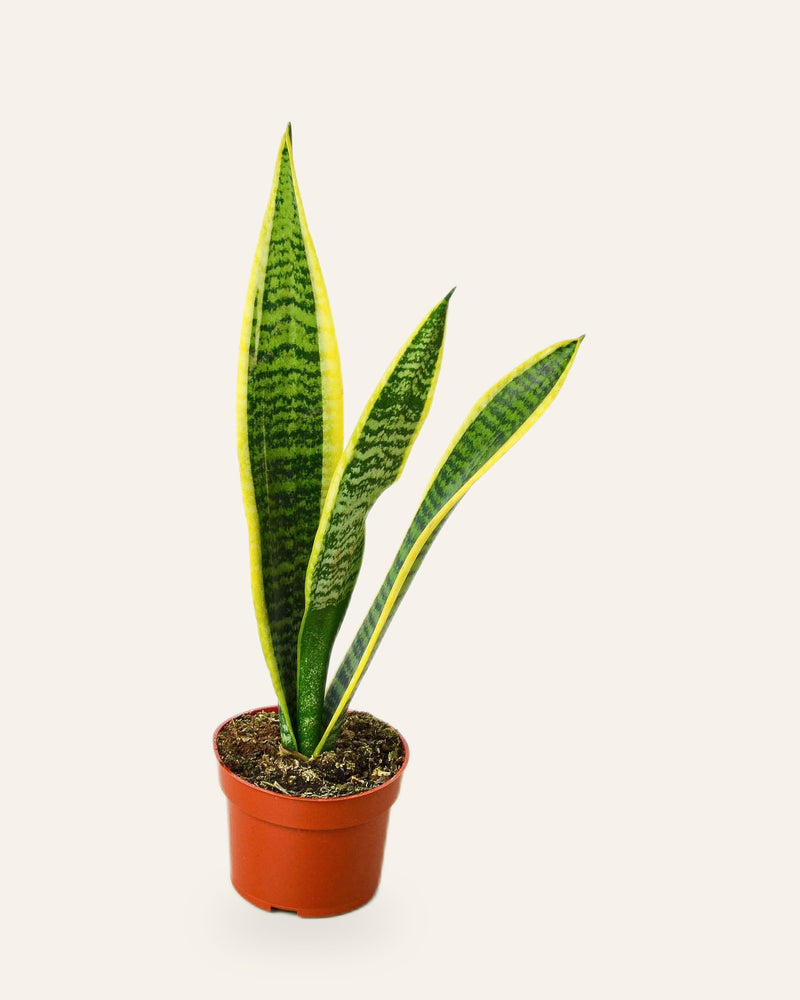
Sansevieria Laurentii Sansevieria Laurentii Dracaena trifasciata 'Laurentii' Upright green marbled swords edged with bright golden-yellow borders Divide rooted clumps to preserve yellow margins Tall, upright leaves
Practical care / start here

10 snake plant questions, answered

Not sure whether to water, move or repot? Start with the condition you can check. These answers cover the everyday care decisions, then the steps for making more plants and dealing with yellow leaves.

01

How do you care for a snake plant indoors?

Give it a bright position, a pot with drainage and a mix that dries between waterings. Check the soil before adding water, and reduce watering when growth slows in winter. Ordinary indoor humidity is sufficient. Look over the leaves regularly for pests, and keep the plant away from cold drafts. Low maintenance still means checking its conditions.

02

How often should you water a snake plant?

Water when the potting mix has dried, rather than on a fixed weekly schedule. Check below the surface; a dry top can hide damp mix underneath. Wet the root ball, avoid pouring into the leaf rosette and empty the saucer. In cooler or dimmer conditions, wait longer between waterings.

03

How much sunlight does a snake plant need?

Choose a bright spot with filtered light. Snake plants can tolerate lower light, but growth slows there; a dark corner is not an ideal growing position. Check direct sun at leaf height, especially through a hot south-facing window. Introduce stronger sun gradually so leaves have time to adjust instead of scorching.

Yellow-edged snake plant in a raised white planter beside a window.
Check the light at leaf height and introduce stronger sun gradually. Photo: Kelly Sikkema · Unsplash License
Tall, banded snake-plant leaves beside a sheer curtain.
A tall plant needs room above its pot. Decorative stones hide the mix; check moisture underneath before watering. Photo: Jonathan Borba · Unsplash License
04

When and how should you repot a snake plant?

Repot when roots fill the container or the pot begins to distort. Choose a pot only slightly larger, with drainage holes, and a free-draining cactus or succulent mix. Keep the plant at its previous planting depth. Do not move a small root ball into a large pot of wet soil.

05

How do you propagate a snake plant?

Separate a healthy, rooted offset when repotting, or start a new plant from a leaf section. Use clean tools. For leaf cuttings, keep track of the original bottom: that end goes into the rooting medium. Allow cut surfaces to dry before planting. Keep the medium lightly moist, not soggy, in bright indirect light. Divide yellow-edged forms if you want to preserve their margins; leaf cuttings can lose them.

06

How big does a snake plant get?

Size depends on the species and cultivar. Some compact forms stay around 6–7 inches tall; taller forms can reach roughly 2–4 feet. Those are growth ranges, not the size of a plant being sold or a promise for every room. Identify your variety before choosing a shelf or floor space.

07

Can you cut or trim snake plant leaves?

Remove a damaged or floppy leaf close to the soil with a clean, sharp blade. Wear gloves: the sap can irritate skin. Cutting across a tip leaves a permanent cut edge. Keep the wound dry, and correct the light or watering problem before expecting healthier new growth.

Overhead view of a snake plant with mottled green leaves and a central new leaf.
Natural leaf bands are normal. When yellowing appears, check moisture and leaf firmness before choosing a treatment. Photo: Kari Shea · Unsplash License
08

Why are my snake plant leaves turning yellow?

Start by checking moisture and the leaf bases. Yellowing with soft, weak tissue can signal that conditions are too wet. Stop adding water to already damp soil, check that the pot drains and inspect roots if the plant is collapsing. Yellow alone is not a diagnosis: review light, cold exposure and pests before choosing a treatment.

09

How should you fertilize a snake plant?

Feed lightly while the plant is actively growing. Use a houseplant or cactus fertilizer at its labeled dilution and frequency. Skip routine feeding during the winter rest. Extra fertilizer cannot compensate for poor light, soggy soil or damaged roots.

10

Can a snake plant live outdoors?

It can spend summer outside after gradual acclimation. Start in shelter from intense midday sun. Bring it indoors before frost, and protect it from cold drafts. Outdoor rain changes how quickly pots get wet, so check the mix instead of carrying over an indoor watering schedule.

Care Guides, Watering Science & Diagnostics

Care Fundamentals

Snake Plant Care at a Glance

Light Adaptability

Tolerates low light, but thrives in medium to bright indirect light. Introduce stronger sun gradually and protect from harsh summer midday sun.

Succulent Watering

Let the potting mix dry between waterings. Check below the surface, then water the root ball and drain fully. Growth usually slows in winter, so check before watering again.

Porous Cactus/Grit Soil

Use a free-draining cactus or succulent mix in a pot with drainage holes. Avoid dense soil that stays wet around the roots.

Temperature & Humidity

Ordinary room temperatures and low humidity suit snake plants. Keep away from cold drafts and heaters; bring outdoor pots inside well before frost.

Live Catalog

Available Snake Plants & Varieties

Browse Snake & ZZ Plants →
Propagation Science

Variegation Warning: Division vs Leaf Cuttings

Propagating variegated snake plants (such as 'Laurentii') from sliced leaf cuttings can produce green offspring without the yellow borders; they do not become a different named cultivar. To maintain yellow margins, always propagate via rhizome clump division.

ASPCA Pet Toxicity Warning

Toxic to Cats & Dogs

Snake plants contain saponins and are toxic to cats and dogs. Ingestion can cause nausea, vomiting and diarrhea. Keep plants out of pets' reach. If a pet chews or swallows the plant, contact a veterinarian. Source: ASPCA snake plant entry.

Related Botanical Collections
Compare care needs

Compare with ZZ Plant (Zamioculcas zamiifolia)

Explore another champion low-light indoor survivor powered by subterranean moisture rhizomes.

Explore ZZ Plant Hub →