Monstera (Monstera deliciosa & Varieties)
Monstera is a celebrated genus of tropical hemiepiphytic lianas and climbing aroids native to the humid rainforests of Central and South America. Famous for iconic leaf fenestrations (natural slits and perforations) Monstera thrives indoors in bright, indirect light and airy, well-draining potting media.
While historically nicknamed "Split-Leaf Philodendron" in the retail trade, true Monstera belongs to a distinct genus characterized by perforated leaf blades and genuine fenestrations. Furthermore, "Mini Monstera" (Rhaphidophora tetrasperma) is a distinct Southeast Asian aroid genus that shares similar fenestrated aesthetics.
Care Guides, Moss Poles & Diagnostic Tools
Monstera Watering Guide
Seasonal watering schedules, root hydration physics, and container dry-down benchmarks.
How Often to Water a Monstera
Use season, light, pot size, and drying behavior instead of a fixed calendar.
Monstera Troubleshooting Guide
Yellow leaves, root rot, drooping, and environmental stress in a practical diagnostic sequence.
Brown & Yellow Leaves Triage
Diagnose root rot, underwatering, sun scorch, and fertilizer salt buildup on broad leaves.
Monstera Species & Cultivar Comparison
Compare fenestration habits, adult leaf scales, and lighting requirements across popular species.
| Species / Cultivar | Botanical Identity | Fenestration Pattern | Light Requirement | Growth Form |
|---|---|---|---|---|
| Monstera Deliciosa | Monstera deliciosa | Deep side splits + secondary circular perforations with age | Bright indirect light | Large climbing hemiepiphyte |
| Thai Constellation | Monstera deliciosa 'Thai Constellation' | Splits with stable lab-cultured cream/yellow marble variegation | High bright indirect light (sustains white sectors) | Climbing variegated specimen |
| Swiss Cheese Vine | Monstera adansonii | Enclosed elliptical fenestrations throughout leaf surface | Medium to bright indirect light | Trailing or pole climbing |
| Monstera Minima | Rhaphidophora tetrasperma (Distinct Genus) | Open split margins resembling miniature deliciosa | Bright indirect light | Fast vertical climber |
*Botanical taxonomy anchor: Kew POWO classifies Monstera deliciosa under Araceae. Fenestration emergence is triggered by maturity, light intensity, and physical climbing support—not age alone.
Monstera Care at a Glance
Give Monstera bright, indirect light. Leaf shape also varies with species, maturity and growing conditions; splits are not guaranteed by a particular light reading.
Water well, then let the top 1 to 2 inches of soil dry. Empty drainage saucers so roots never sit in water.
Wipe the dust off with a soft, damp cloth. Do it regularly so the leaves stay clear and glossy.
Porous blend of 40% coco coir, 30% chunky orchid bark, 20% perlite, 10% worm castings for root aeration.
Aerial roots are normal climbing anchors. Tuck them into the soil or guide them into a damp moss pole.
Available Monstera Plants & Cultivars
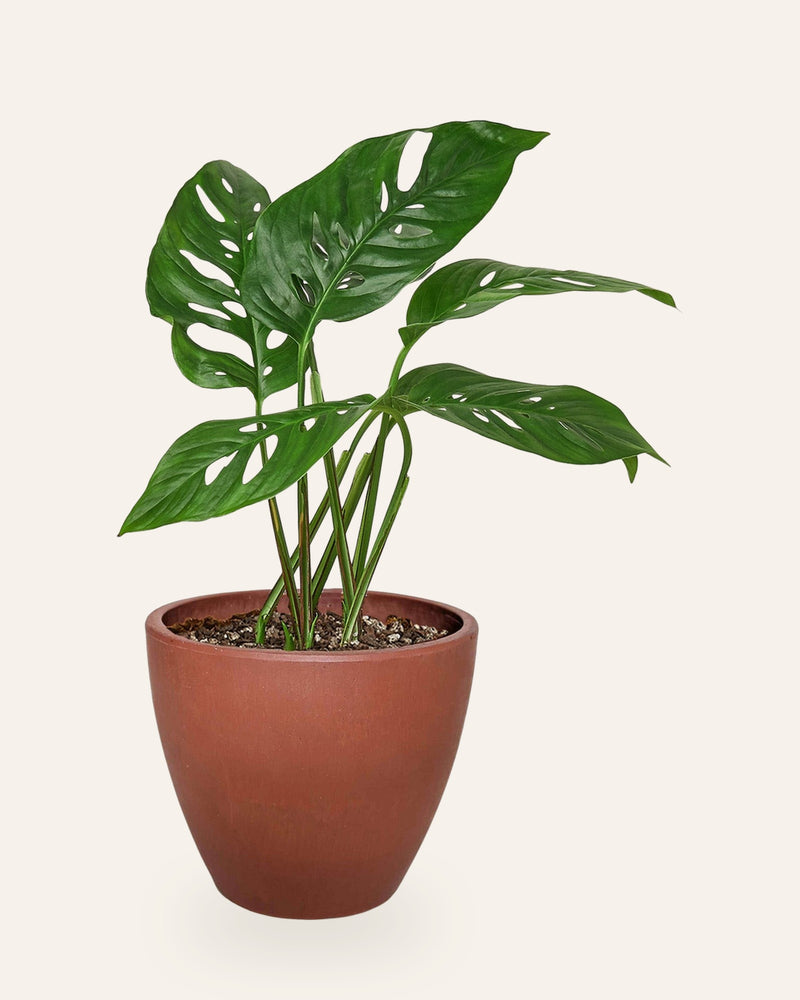
Monstera adansonii
Monstera adansoniiPot fit: Macetas de vivero de 4 y 6 pulgadasRiegue cuando los primeros 2,5 to 5 cm de tierra estén secos
from $28.99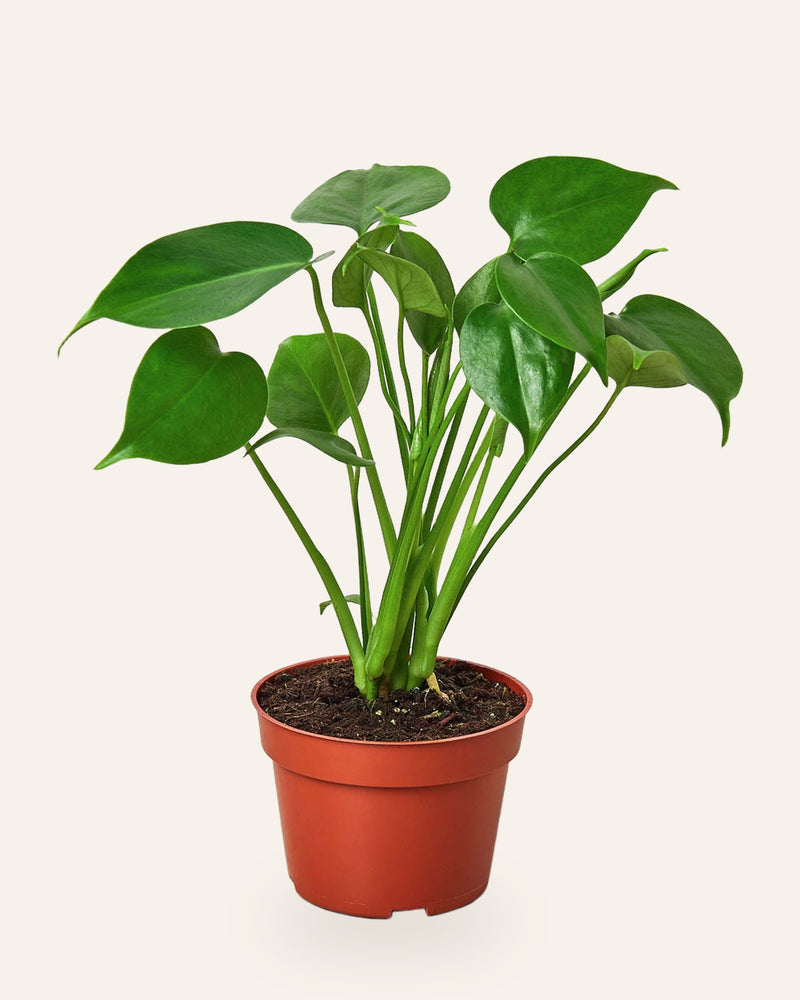
Monstera deliciosa
Monstera deliciosaPot fit: Macetas de vivero de 4 y 6 pulgadasToxic to cats and dogsRiega cuando los primeros 2,5 to 5 cm de tierra estén secos
from $24.99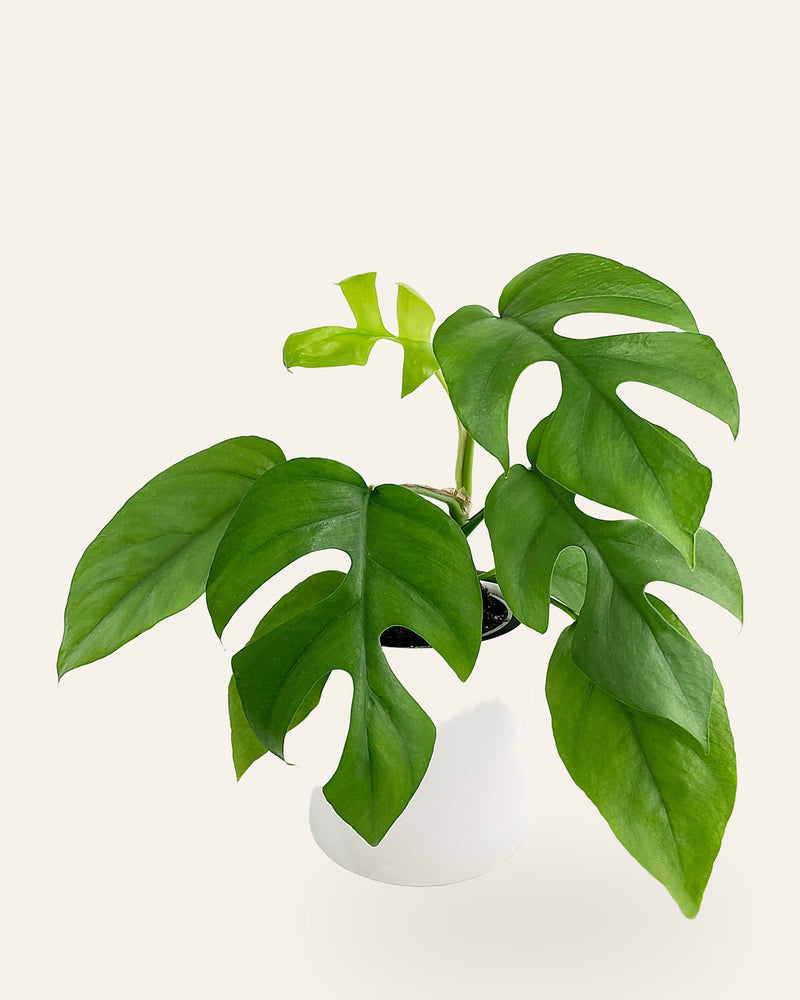
Mini monstera
Rhaphidophora tetraspermaPot fit: Macetas de vivero de 4 y 6 pulgadasToxic to cats and dogsRiega cuando los primeros 2,5 to 5 cm de tierra se sientan secos
from $29.99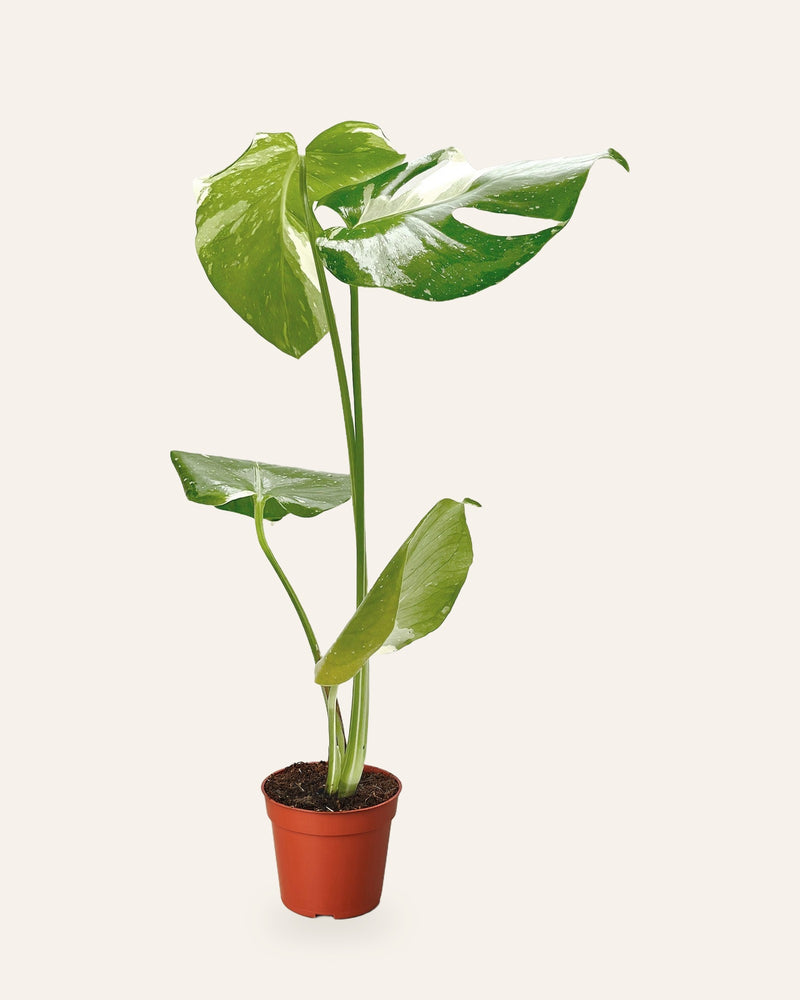
Monstera 'Thai Constellation'
Monstera deliciosa 'Thai Constellation'Pot fit: Macetas de vivero de 3, 4 y 8 pulgadasToxic to cats and dogsRiega cuando los 5 cm superiores del suelo estén secos
from $34.99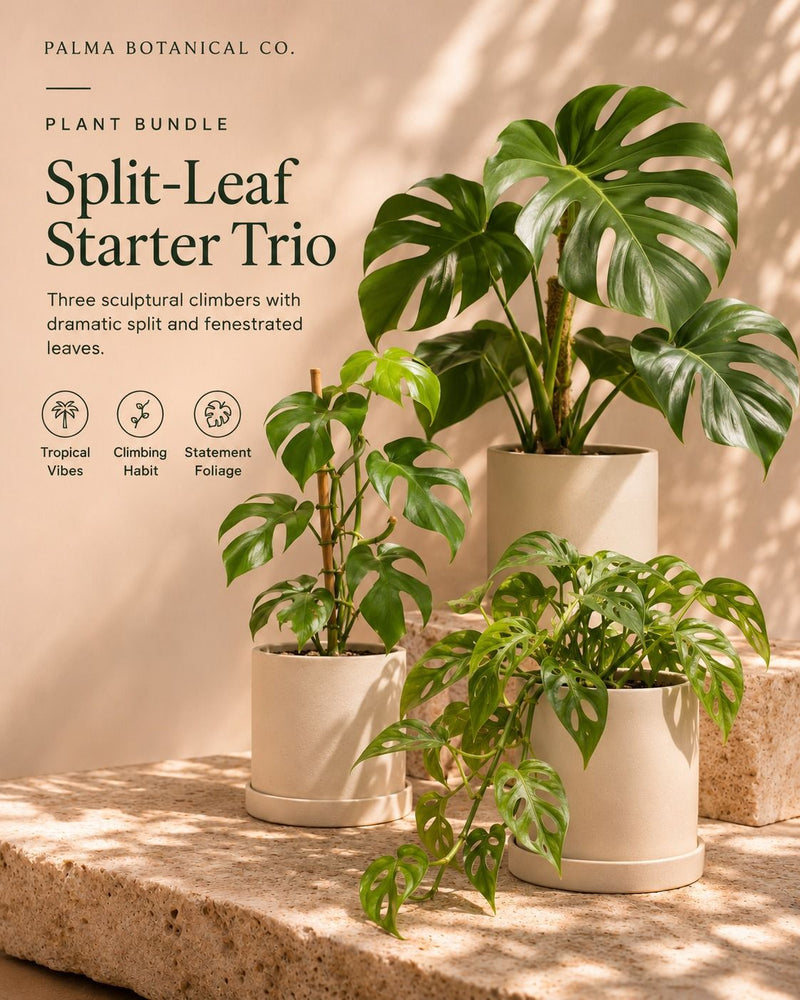
Trío de plantas de interior de hoja dividida
Cuando los 2,5 a 5 cm superiores del suelo estén secos
$71.97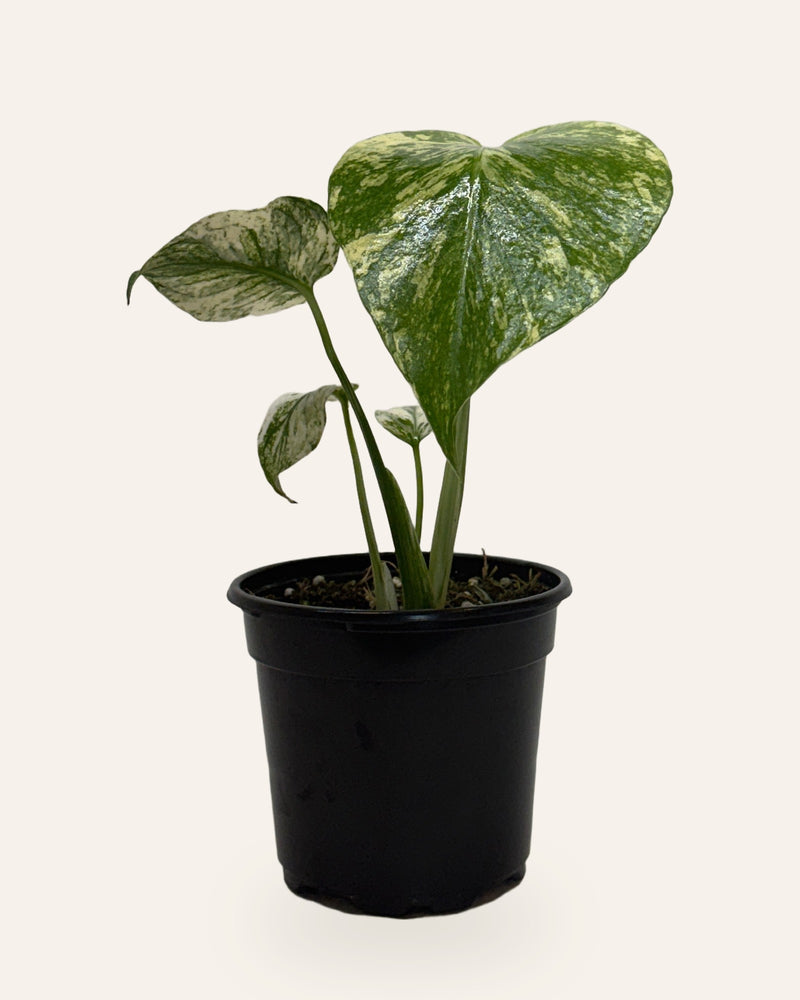
Monstera 'Mint'
Monstera 'Mint'Pot fit: Macetas de vivero de 4 y 8 pulgadasRiega abundantemente y luego deja que se seque la capa superior de 5 a 10 cm del suelo
from $63.99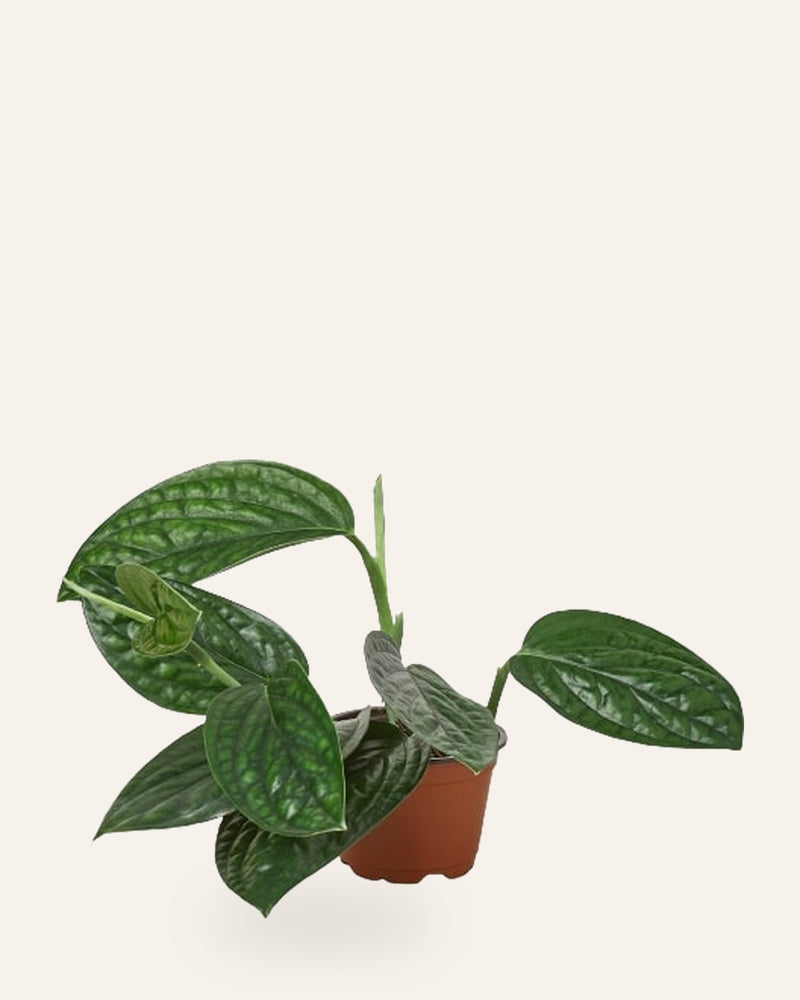
Monstera 'Perú'
Monstera 'Perú'Pot fit: Macetas de vivero de 2, 4, 6 y 8 pulgadasPara las macetas pequeñas, deje que los 5 a 8 centímetros superiores de la mezcla para macetas se sequen antes de regar
from $28.99Why & When Do Leaves Split?
Young Monstera deliciosa leaves can be solid, while mature leaves develop holes and splits. Leaf form varies by species and growing conditions. Provide suitable light and support for a climbing plant; there is no verified universal light threshold that guarantees fenestration.
What Are Aerial Roots For?
Brown aerial roots extending from stem nodes are not a sign of drought or disease. In nature, they latch onto host tree trunks and seek ground nutrients. Do not cut healthy aerial roots off aggressively; gently direct them into the pot mix or wrap them around a moss pole.
Toxic to Cats & Dogs
All Monstera species contain microscopic insoluble calcium oxalate crystals. Chewing on leaves causes mechanical oral pain, tongue swelling, drooling, and vomiting. Keep floor specimens positioned where pets cannot nibble foliage.
The Node Requirement Rule
To grow a new Monstera plant, take a stem cutting with a healthy node and axillary bud. A leaf and petiole alone do not provide the growing point needed for a new vine. An existing aerial root is helpful but is not a substitute for the node.
Aroid Soil Recipe Maker
Calculate exact orchid bark, perlite, and coir ratios for root health.
Explore Philodendrons
Discover Pink Princess, Birkin, and self-heading aroids.
Care references: University of Minnesota Extension: Monstera propagation.