Peace Lily (Spathiphyllum spp.)
The Peace Lily (Spathiphyllum spp.) is a beloved tropical shade-loving perennial prized for its lush, deep emerald ribbed foliage and pure white architectural blooms. Highly communicative, the Peace Lily gently droops its leaves when thirsty, serving as one of the clearest visual communicators in the plant world.
What is commonly called the Peace Lily "flower" is actually a modified white protective leaf bract known as a spathe. The true flowers are the tiny, dense florets clustered along the central vertical spike, known as the spadix.
Care Science & Diagnostic Tools
Brown Tips & Drooping Triage
Triage crisp brown tips, tap water salt buildup, and dramatic foliage wilting symptoms.
Watering Schedule Calculator
Plan moisture checks and review the plant's conditions; water only when the mix is ready.
Pet-Safe Plant Alternatives
Explore pet-safe non-toxic blooming and foliage alternatives including Calatheas and Peperomias.
Peace Lily Care at a Glance
Medium to bright indirect light stimulates blooms. Tolerates low light, but flowers will be sparse or greenish.
Keep the mix lightly moist without waterlogging. Check the upper mix regularly and water as it starts to dry; do not deliberately wait for repeated wilting.
Brown tips can have several causes, including water quality, inconsistent watering and excess fertilizer. Review those conditions; a different water source may help when water quality is the cause.
Keep in a warm room, away from cold drafts and heating or cooling vents. Review humidity along with moisture and root health if foliage deteriorates.
Available Peace Lily Plants & Sizes
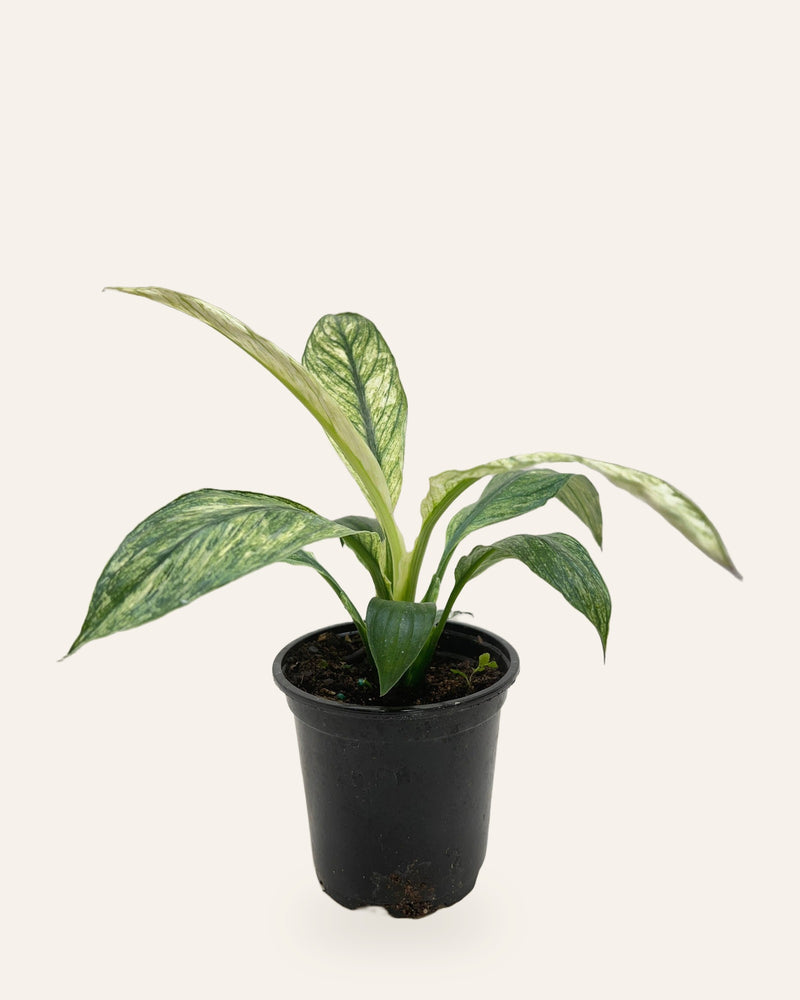
Lirio de la Paz
Spathiphyllum wallisiiPot fit: 4-inch and 6-inch nursery potsWater when the top 1 to 2 inches of soil have dried
from $27.99
Spathiphyllum variegado 'Domino'
Spathiphyllum 'Domino'Pot fit: 2-inch, 4-inch and 6-inch nursery potswater when the top of the soil dries
from $18.99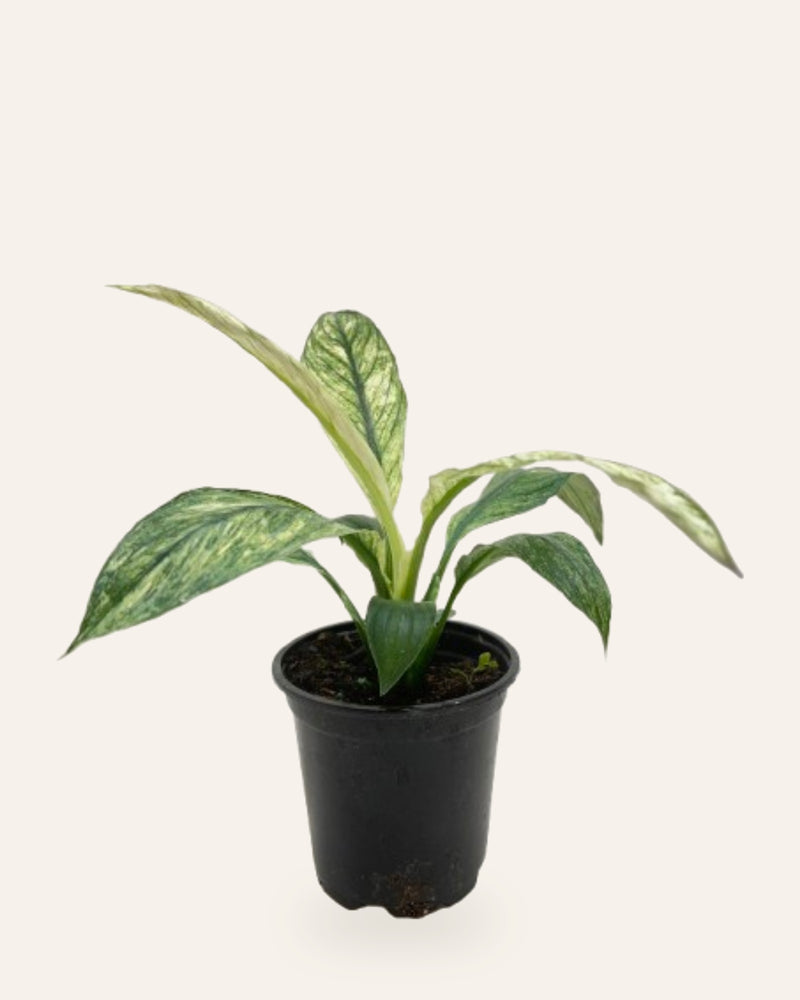
Spathiphyllum Jessica
Spathiphyllum 'Jessica'Pot fit: 4-inch nursery potwater when the top of the soil dries
$28.99
Spathiphyllum 'Platinum Mist'
Spathiphyllum 'Platinum Mist'Pot fit: 4-inch nursery potwater when the top of the soil dries
$27.99Peace Lily is NOT a "True Lily"
True lilies (genera Lilium and Hemerocallis, like Easter or Tiger lilies) contain a severe, unidentified toxin that causes acute, fatal renal failure in cats from even minor pollen ingestion. In contrast, Peace Lily (Spathiphyllum) is not a true lily. It contains insoluble calcium oxalate crystals which cause mouth irritation, drooling, and vomiting, but does NOT cause feline kidney failure.
Why Won't My Peace Lily Bloom?
Peace lilies tolerate lower light but generally flower better with bright, indirect light. Move gradually to a suitable brighter position if needed, and check care conditions before adding fertilizer. A fixed window distance or extra feed does not guarantee flowers.
Looking for a Lower-Risk Alternative?
Some prayer-plant taxa have ASPCA non-toxic listings. Verify the exact species before relying on a pet-safety claim.
Care and problem-solving references: RHS: Peace lilies; Iowa State Extension: Brown leaf tips.