Dracaena & Dragon Trees (Dracaena spp.)
Dracaena is a classic genus of durable architectural statement trees and canes. Featuring slender palm-like tufts (Dragon Trees) and ribbon-banded corn leaves (Janet Craig, Song of India), Dracaenas are celebrated for their high environmental resilience in low to medium indirect light.
The Dracaena genus now includes plants formerly called Sansevieria. This page focuses on woody, cane-forming dracaenas; do not assume they need the same drying routine as snake plants.
Stocked Dracaena Cultivars & Species
Explore foliage form, light benchmarks, and growth habits across our collection.
| Cultivar / Trade Name | Botanical Species | Foliage Characteristics | Light Preference | Growth Habit |
|---|---|---|---|---|
| Dragon Tree (Marginata) | Dracaena marginata | Slender arching sword leaves with vibrant crimson red margins | Medium to bright indirect | Architectural Cane Tree |
| Song of India | Dracaena reflexa | Spiraled bright golden-yellow margins enclosing emerald green centers | Bright indirect light | Branching Shrub/Tree |
| Janet Craig Compacta | Dracaena fragrans | Glossy deep emerald broad leaves clustered tightly along woody stems | Low to medium indirect | Columnar Upright |
| White Jewel | Dracaena warneckii | Wide lanceolate leaves striped with clean white and silver-grey | Medium indirect | Upright Bush |
| Dracaena Tornado | Dracaena deremensis | Tightly twisted spiraling leaves with lime-green edges | Low to medium indirect | Compact Upright |
Dracaena Care at a Glance
Low to bright indirect light. Avoid harsh direct sun which causes dry leaf bleached patches.
Water after the top 2 inches of mix feel dry, then drain fully. Some dracaenas are sensitive to fluoride; if water quality is a concern, choose a suitable alternative source.
Well-draining, aerated houseplant mix: 60% potting soil, 25% coarse perlite, 15% pine bark.
Keep in a warm room, away from cold drafts and hot radiators. Review humidity together with watering and root health if leaf tips brown.
Currently Stocked Dracaena Varieties
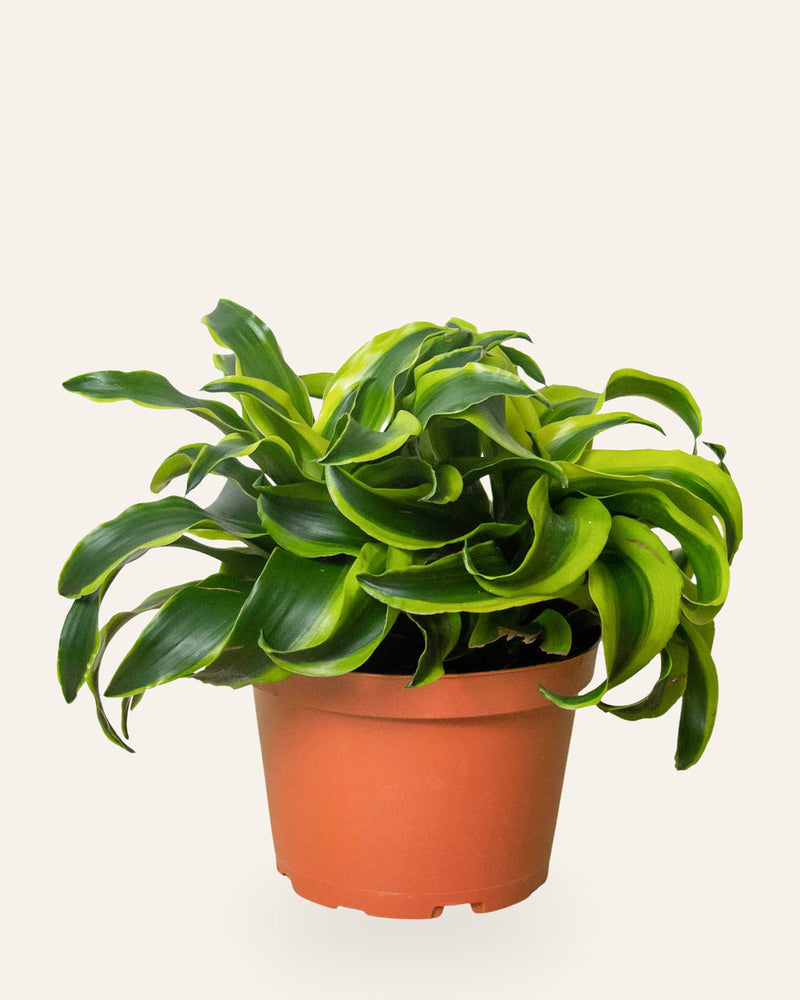
Dracaena 'Tornado'
Dracaena 'Tornado'Pot fit: 4-inch and 6-inch nursery potswater moderately and regularly, letting the top of the soil dry between waterings
from $27.99
Drácena Song of India
Dracaena 'Song of India'Pot fit: 4-inch and 6-inch nursery potswater moderately and regularly, letting the top of the soil dry between waterings
from $30.45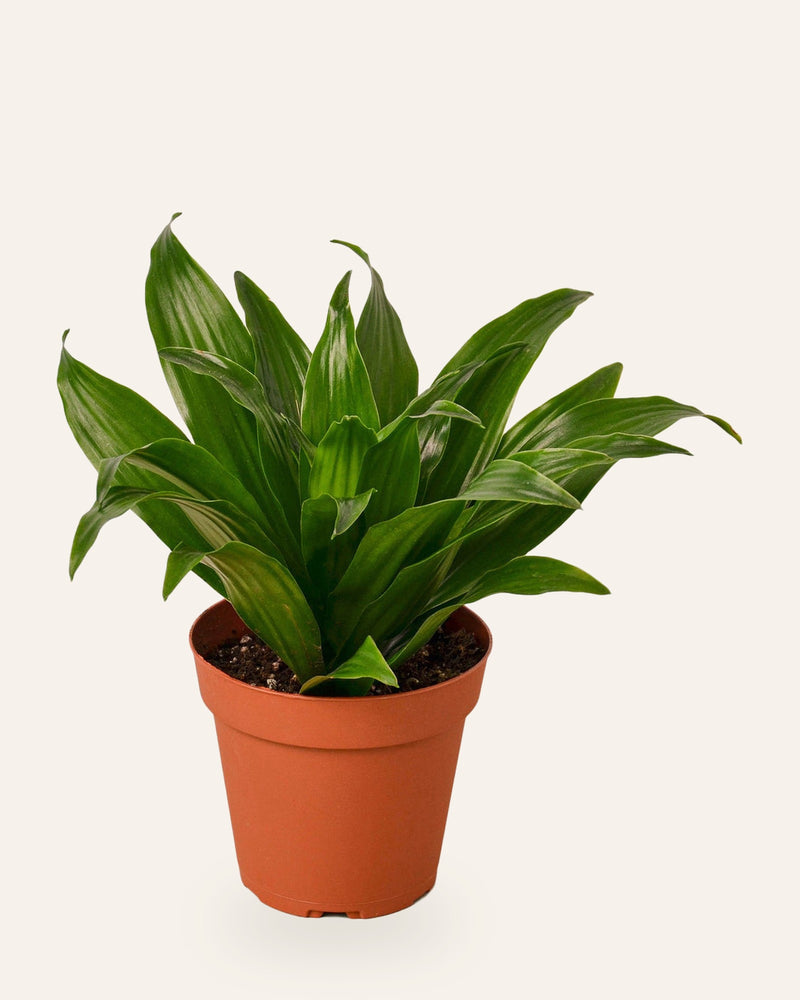
Dracaena 'Janet Craig'
Dracaena 'Janet Craig'Pot fit: 3-inch, 4-inch, 6-inch and 8-inch nursery potsWater when the top of the soil has dried
from $21.99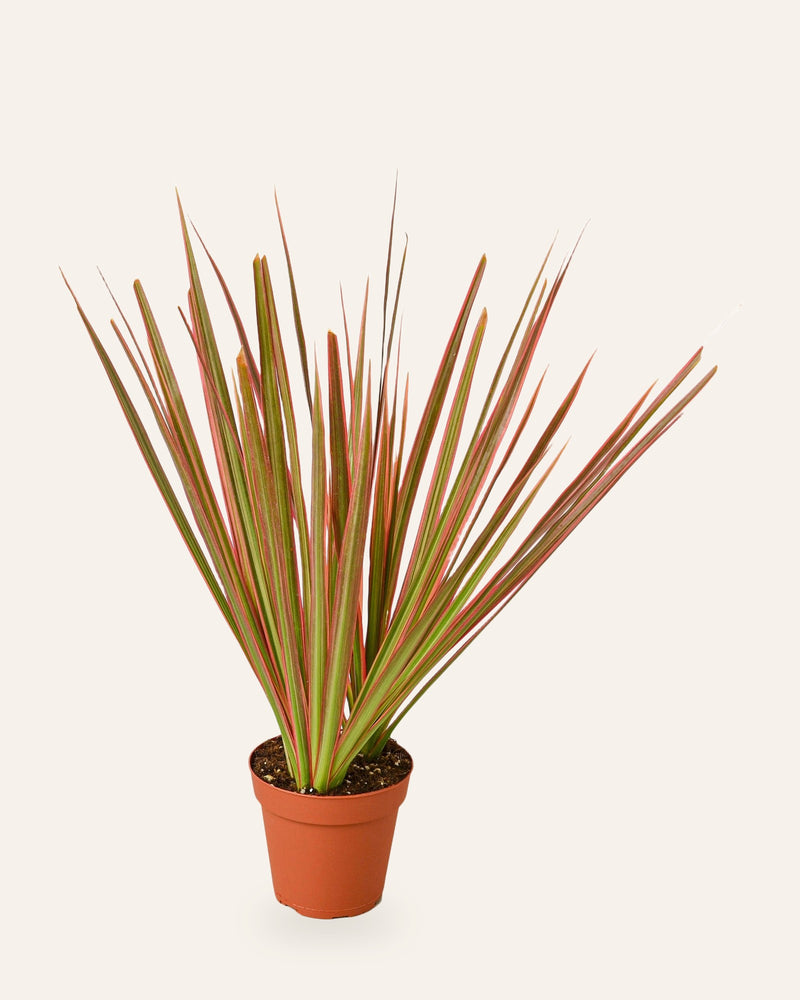
Dracaena 'Colorama'
Dracaena 'Colorama'Pot fit: 3-inch, 4-inch and 6-inch nursery potswater moderately and regularly, letting the top of the soil dry between waterings
from $21.99
Dracaena 'Lemon Lime'
Dracaena 'Lemon Lime'Pot fit: 4-inch, 6-inch and 10-inch nursery potsLet the top inch of potting mix dry before watering, and allow excess water to drain
from $36.99
Drácena de hojas rojas
Dracaena 'Red Margined'Pot fit: 4-inch nursery potwater moderately and regularly, letting the top of the soil dry between waterings
$24.99Toxicity Notice for Pet Owners
Dracaena foliage contains steroidal saponins. If ingested by dogs or cats, it can cause vomiting (occasionally with blood), salivation, loss of appetite, and pupil dilation in cats. Keep placed out of pet reach.
Scientific Calculators & Triage Lab
Use care tools to plan moisture checks, compare potting mixes and review symptoms. Estimates do not replace checking your plant and pot.
Care and problem-solving references: RHS: Growing dracaenas.