How to Take Care of a Zygo Cactus Plant
Short answer: Give a zygo cactus bright light without hot direct sun, water it when the top inch of soil feels dry, and keep...

At a glance
Short answer: Give a zygo cactus bright light without hot direct sun, water it when the top inch of soil feels dry, and keep it in a steady spot away from drafts and heater vents. Feed it monthly in spring and summer, repot it only every few years, and it will live for a very long time. Zygo cactus is the casual name for the Thanksgiving and Christmas cactus (Schlumbergera), and both get the same everyday care. For the full guide, see Christmas cactus care.
This post covers the daily care. You can also see our Christmas cactus plant.
How do you take care of a zygo cactus?
A zygo cactus needs bright, indirect light, water when the top inch of soil is dry, and a loose, fast-draining mix in a pot with a drainage hole. It is not a desert cactus: in the wild it grows on trees in Brazilian forests. Feed it monthly at half strength from spring to summer and repot about every three years.
Here is the whole routine at a glance.
- Light: bright, indirect
- Water: when the top inch of soil is dry
- Soil: loose, fast-draining mix with perlite, in a pot with a drainage hole
- Feeding: monthly from spring through summer at half strength
- Repotting: about every three years, in spring

Zygo cactus care at a glance
Shop Christmas Cactus Browse holiday and winter plants
Our Christmas cactus
 Christmas Cactus
Light, water and soil in brief
Give it bright, filtered light, water when the top inch of soil feels dry, and use a loose, fast-draining mix in a snug pot with drainage holes. Repot about every three years, in spring. For the full detail, see Christmas cactus care.

Feeding a zygo cactus
From spring through summer, feed once a month with a soluble houseplant fertilizer mixed at half strength. Stop in late summer. Clemson Cooperative Extension recommends this pause because it helps the plant set buds in fall. Skip feeding through autumn and winter.

How to take care of a Christmas cactus in summer
Summer is growing season. Keep the plant in a bright spot out of hot direct sun, water when the top inch dries, and keep up the half-strength monthly feeding. Warm rooms dry the soil faster, so check more often than you did in winter.
Late spring or early summer is also the time to prune. Pinch or cut off a few stem sections where two segments join and the plant will branch and fill out. Pieces with three to five segments can be rooted in moist potting mix in a bright, warm spot if you want a second plant. Check for roots after about two weeks.
Temperature and humidity
Normal room temperatures suit the plant fine. The things to avoid are sudden changes: cold drafts from a door, hot air from a vent, or a spot right over a radiator. University of Minnesota Extension lists drafts and sudden swings in temperature or humidity among the main causes of bud drop.
These plants like fairly humid air, so keep them away from heat vents and radiators, especially in winter.
How to get a Christmas cactus to flower
Flowering needs a cue. These plants are short-day plants, so buds form after long, cool nights. For about six weeks starting in early October, give the plant at least 12 to 14 hours of complete darkness each night and keep nights cool, ideally below 65°F. Clemson notes that even a couple of hours of light in the middle of the night can stop buds from forming. Cut back on water a little and skip fertilizer during this stretch.
Once buds appear, which Clemson says usually takes three to four weeks, stop moving the plant and keep the soil evenly moist so the buds do not drop.
A note on the spring cactus
If your plant flowers in late winter or spring, you may have an Easter cactus, sometimes called a spring cactus. How to take care of a spring cactus is much like the routine above: bright filtered light, water when the soil is dry, and a steady spot. The main difference is timing. It needs about eight to twelve weeks of short days to set buds, and it flowers in late winter or spring.
Common problems at a glance
- Buds dropping: usually a move, a draft, or uneven watering. Keep it steady.
- Limp, wrinkled segments: check the roots. Soft, dark roots mean overwatering. Dry soil and dry roots mean it needs a drink.
- No flowers: the plant likely did not get long, cool nights. Try the October routine next year.
- Pale segments: too much direct sun. Move it back.
Ready to add one to your shelf? Browse the Succulents & Hoya collection.
Are zygo cacti safe for cats and dogs?
ASPCA lists the Christmas cactus (Schlumbergera bridgesii) as non-toxic to dogs and cats. You can see the listing on the ASPCA page for the Christmas cactus. That listing is for that one species, so we make no claim about other holiday cacti. "Non-toxic" does not mean a pet will be fine after chewing a plant. If your pet seems unwell, call your vet.
FAQ
How do I care for a Xmas cactus?
Put it in bright, filtered light and water when the top inch of soil is dry, letting extra water drain out. Keep it away from drafts and heaters, feed monthly at half strength from spring through summer, and repot about every three years in spring. Give it long, cool nights in October if you want holiday blooms.
How often should I water a Christmas cactus?
Water when the top inch of soil feels dry, and the timing depends on your pot and room. Soak the pot, let it drain, and empty the saucer. Check the soil first each time, because overwatering can cause root rot and bud drop.
How do I get a Christmas cactus to flower?
Starting in early October, give it at least 12 to 14 hours of uninterrupted darkness each night for about six weeks, with cool nights and slightly less water. Buds usually show within three to four weeks. After that, leave the plant where it is and keep the soil evenly moist.
Nick Alan is the founder of Palma and has grown plants for 25+ years. He writes the shop's care guides and built the watering, soil and light tools.
View author profilePlants to grow next
Succulents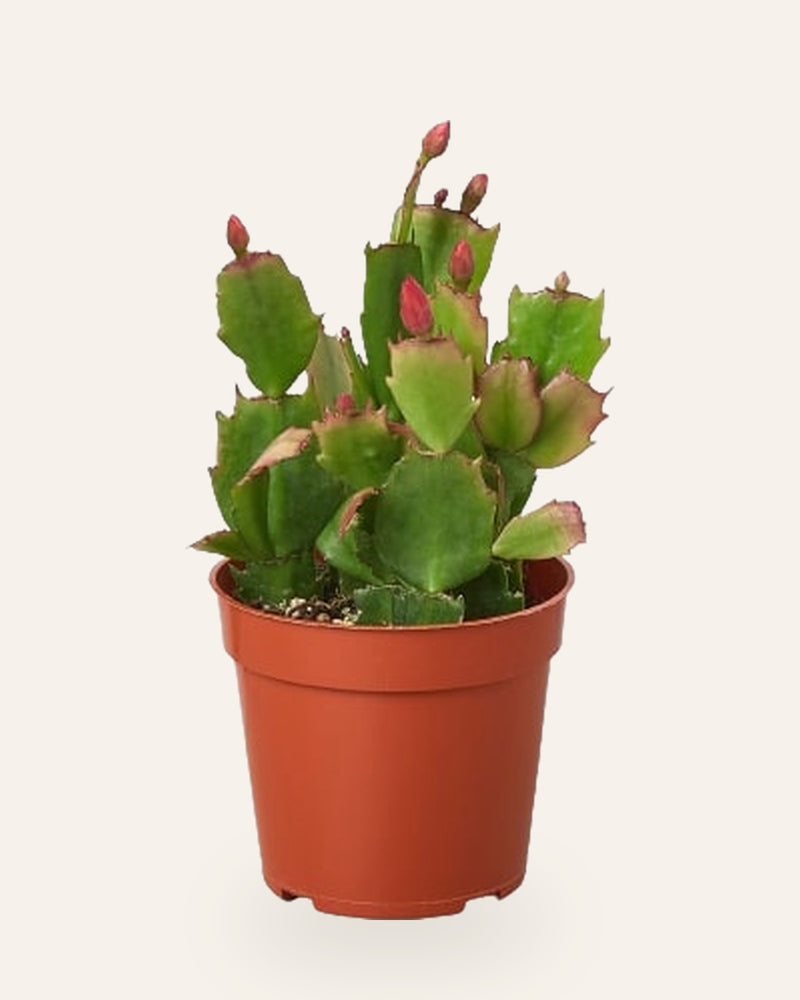
Christmas Cactus
Schlumbergera truncataPot fit: 4" or 6" nursery potWater when the top inch is dry
from $35.98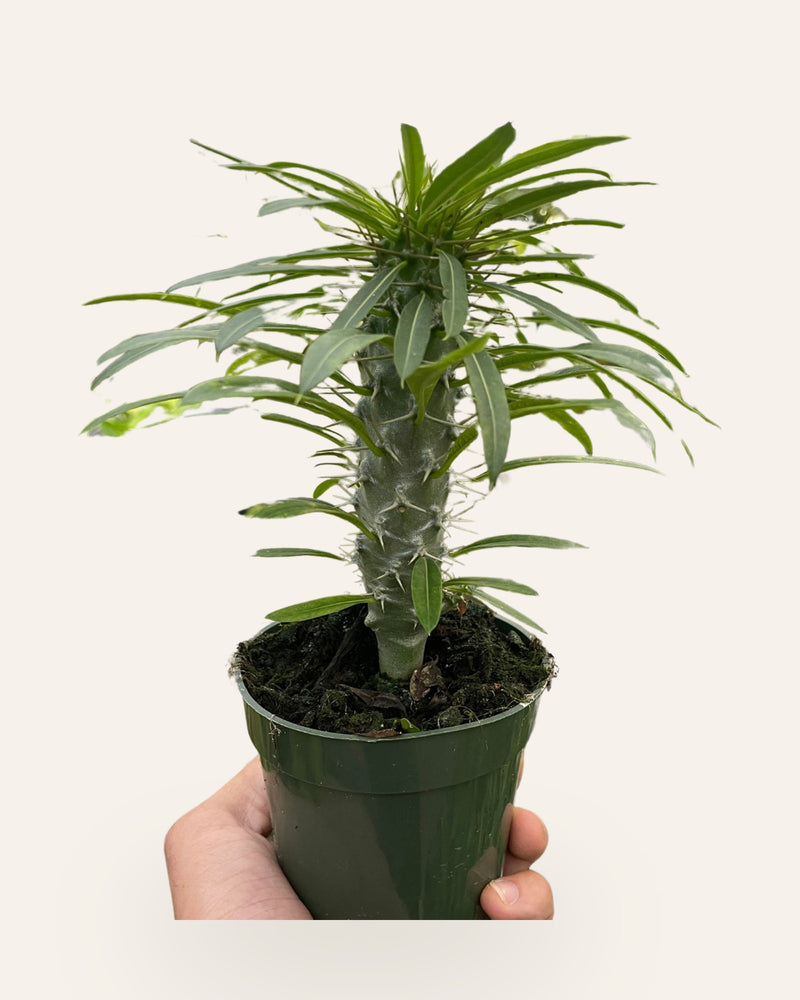
Madagascar Palm
Pachypodium lamereiWater deeply, then let the soil dry out completely
$32.49
Hoya 'Sunrise'
Hoya 'Sunrise' (Hoya lacunosa x obscura)Pot fit: 4" or 6" nursery pot from $32.99
Hoya 'Crassipetiolata'
Hoya crassipetiolataPot fit: 4" nursery pot $38.99Keep going with the care library
Care pages by plant, plus the watering and light calculators and the plant doctor.
More from the Journal
All Journal articles
Philodendron Congo Care: Light, Water and Fixes for Leaf Problems
How to care for Philodendron Congo: light, watering, soil, repotting and propagation, plus fixes for yellow, brown or droo...

Begonia Care Guide: Light, Water and Dark-Leaf Varieties
Care for indoor begonias including Begonia 'Black Magic' with practical advice on indirect light, watering, humidity, and ...

Homalomena Care Guide: Light, Water and Camouflage Foliage
Learn how to grow Homalomena indoors, including Homalomena 'Camouflage', with tips on medium light, steady moisture, and h...